The best LinkedIn headline for sales tells a buyer who you help, what result you help them get, and why you are worth trusting, in up to 220 characters. A reliable formula is [Your Role] + [Who You Help] + [Proof]. For example: "Enterprise AE | I help logistics companies cut fuel spend with route AI | 3x President's Club." Lead with your buyer's outcome, drop labels like Guru or Rockstar, and front-load the first few words because most previews cut your headline off early.
This headline is the version that works when you are selling rather than job-hunting. Below are the formula, a step-by-step build, 12 examples worth copying, 12 weaker ones and why, a copy-paste AI prompt, and what to write when you have no impressive number yet.
What Is a LinkedIn Headline?
Your LinkedIn headline is the line of text directly under your name on your profile. LinkedIn gives you up to 220 characters for it. If you never edit it, LinkedIn fills it with your current job title and company, which is why so many sales profiles read "Account Executive at [Company]" and nothing more.
The headline travels with you across the platform. It shows under your name in search results, next to your name on every post and comment, in connection requests, in "People You May Know," and in the messaging window. A prospect often reads your headline several times before they ever open your profile.
Why Does It Matter?
Your headline is usually the first thing a person reads about you, so it gives them quick context for deciding whether to open your profile. It carries a one-line pitch in the places where you have no other space: a search result, a comment thread, a pending invitation. A vague or default headline gives the right people little reason to look closer; a specific one gives them a clearer reason. How much the headline changes on its own, separate from your name, company, and message, is worth testing rather than assuming.
Why Does a LinkedIn Headline Matter for Sales Professionals?
For a salesperson, the headline is what a prospect reads right after your connection request or cold email lands. They check who you are before they decide whether to accept, reply, or ignore you. The headline is your answer to their first silent question: "Why should I talk to this person?"
This is where most sales headlines go wrong. They are written to impress recruiters or peers ("Top performer," "President's Club, 3 years running") instead of speaking to buyers. A sales award signals you can sell, though on its own it does not tell a buyer you understand their problem, which is what they are weighing. Keep the number if you have one, and pair it with a line that names the buyer's world.
The distinction is simple:
- A recruiter-facing headline sells your career: titles, rankings, tenure.
- A buyer-facing headline sells your relevance: who you help and the result you help them reach.
When you are prospecting, write the buyer-facing version.
How Do LinkedIn Headlines Impact Sales Growth?
A headline does not close deals on its own. It influences one specific moment in your pipeline: whether a prospect who has just seen your name decides to engage. That moment sits early in outbound, and small improvements there change how many conversations you start.
Here is where the headline does its work:
- In search and "People You May Know": a prospect scanning names decides who to click based on the headline alone.
- On a connection request: your name and headline are most of what the person sees before accepting or declining.
- After a cold email: many prospects look you up before replying. A headline that matches the email you sent them builds continuity and trust.
- On your posts and comments: every time you show up in a buyer's feed, the headline reframes who is talking.
What a headline cannot do is manufacture a result you cannot deliver, or fix a weak offer. Treat it as the hinge between getting noticed and getting a reply rather than a growth lever by itself.
The Headline Formula That Works
A strong sales headline carries three things: your role, the buyer you serve and the outcome you help them reach, and a piece of proof. You can lead with your role or with the buyer, and both are valid:
- Role-first (clear professional identity): "Enterprise AE | Helping logistics teams cut fuel spend with route AI"
- Buyer-first (for a narrow outreach audience): "Helping logistics teams cut fuel spend with route AI | Enterprise AE"
Neither is automatically better. Lead with whichever gives your prospect faster understanding: your role when the title itself signals relevance, the buyer when your niche does.
Two kinds of proof. Proof is what makes the claim believable, and it comes in two forms that do different jobs:
- Buyer-relevant proof: industry experience, a relevant customer result, specialist knowledge, or a clear method. It tells a buyer you understand their world.
- Sales-performance proof: quota, rankings, or revenue closed (President's Club, "$2M+ closed"). It signals you can sell, though not that you understand this particular buyer.
Use either where it fits, and when you use a performance number, pair it with a line that names the buyer's world. Proof strengthens a headline when you have it, and it is not a mandatory field to pad with a weak or borrowed credential. What to do when you have no number at all comes next.
Two rules govern the whole thing:
- Keep it tight, within the 220-character limit. You have room, but a wall of text reads as noise. One role, one outcome, and at most one proof point is enough.
- Front-load the opening words. Previews truncate your headline, and how much shows depends on the placement, screen, and layout. Write the first few words so the line still makes sense when the rest is hidden, and check how it displays where your prospects will see it.
How to Create Your Own LinkedIn Headline for Sales Success: Step by Step Process
Build your headline in six steps. Each one narrows the sentence until only the parts a buyer cares about remain.
Step 1: Name your buyer. Write down exactly who you sell to, such as "RevOps leaders at B2B SaaS companies" or "operations managers at mid-market logistics firms," and avoid a vague "businesses." The narrower the buyer, the sharper the headline.
Step 2: Name the outcome they want. State the result your buyer is trying to reach in their words: book more qualified demos, cut fuel spend, renew more accounts. Use their language rather than your product's feature names.
Step 3: Add proof if you have it. Pick one credential that makes the claim believable: relevant experience, a customer result, or a method (buyer-relevant proof), or a sales number like "$2M+ closed" (performance proof). Keep it to one, and skip this step rather than invent or borrow a credential. The next section covers what to use when you have no number.
Step 4: Front-load it. Put the words that matter most to your buyer at the very start, since previews cut off the rest.
Step 5: Cut every buzzword. Delete Guru, Ninja, Rockstar, "results-driven," and "passionate about sales." They take space and prove nothing.
Step 6: Read it as your buyer. Ask one question: if this person landed in my inbox, would this line make me curious enough to reply? If not, sharpen the outcome.

12 Best LinkedIn Headlines for Sales
These 12 examples span common sales roles. The names, companies, and metrics are illustrative: swap in your own real details. Each leads with the buyer or the outcome and avoids buzzwords. Most carry a proof point, and the ones that do not lean on a specific niche or method instead, which is the right move when you have no number to show.
Sales Development (SDR / BDR)
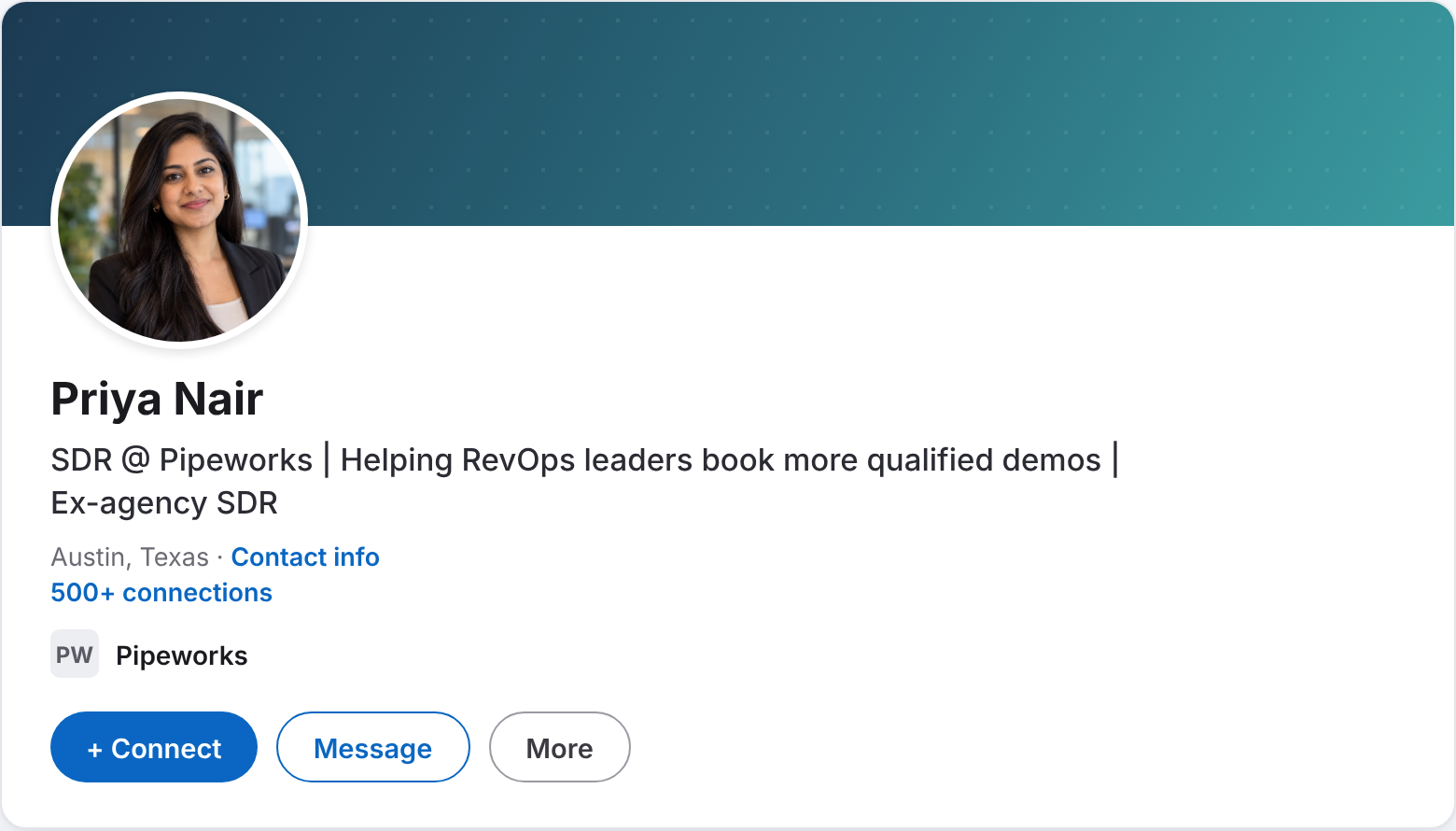
1. "SDR @ Pipeworks | Helping RevOps leaders book more qualified demos | Ex-agency SDR"
2. "Helping B2B marketing teams fill pipeline without raising ad spend | Sales Development @ Loopline"

Account Executive
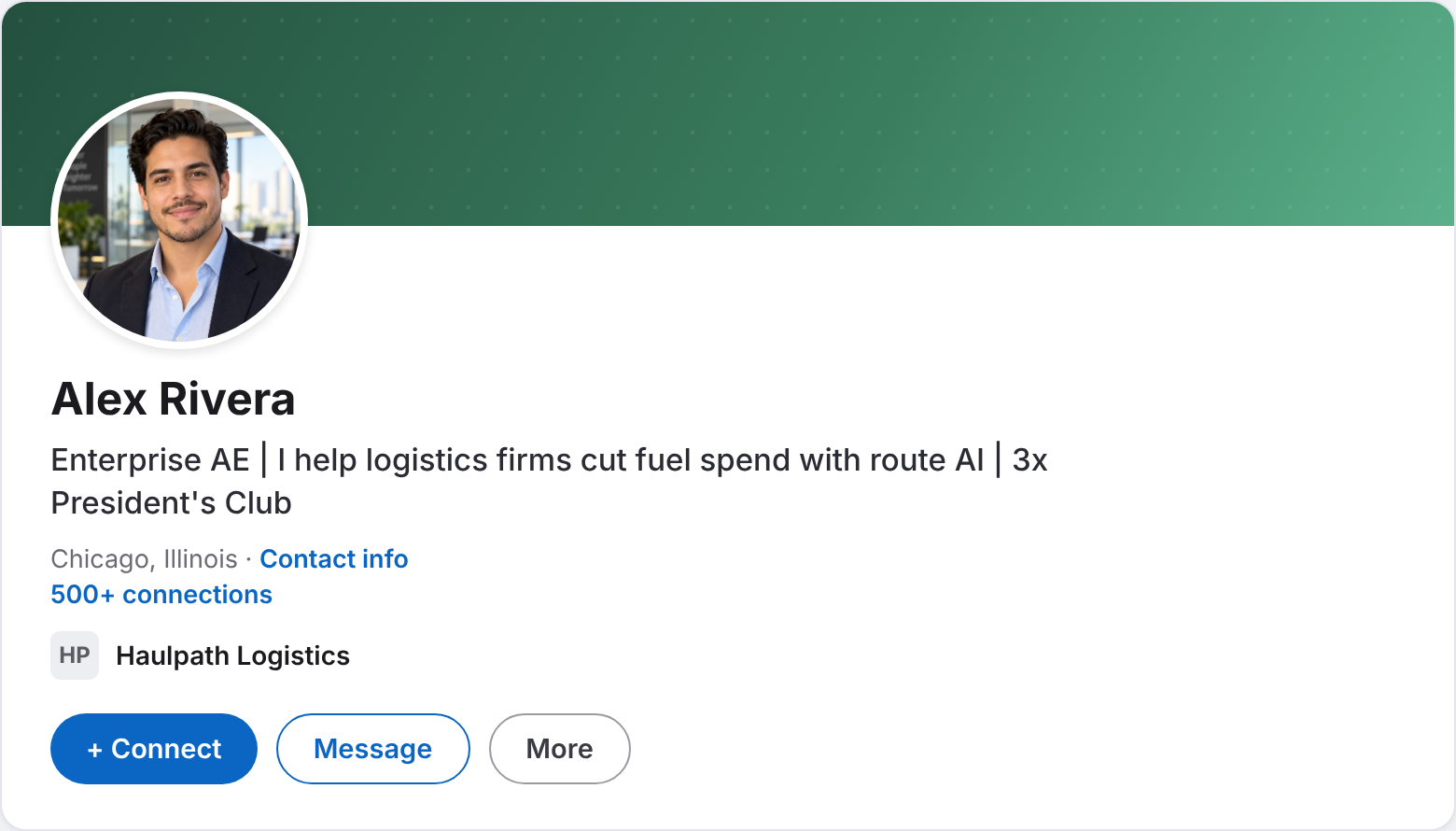
3. "Enterprise AE | I help logistics firms cut fuel spend with route AI | 3x President's Club"
Why it works: it names the market (logistics), the outcome (cut fuel spend), and the method (route AI). The President's Club line rides along as a competence signal rather than the main pitch.
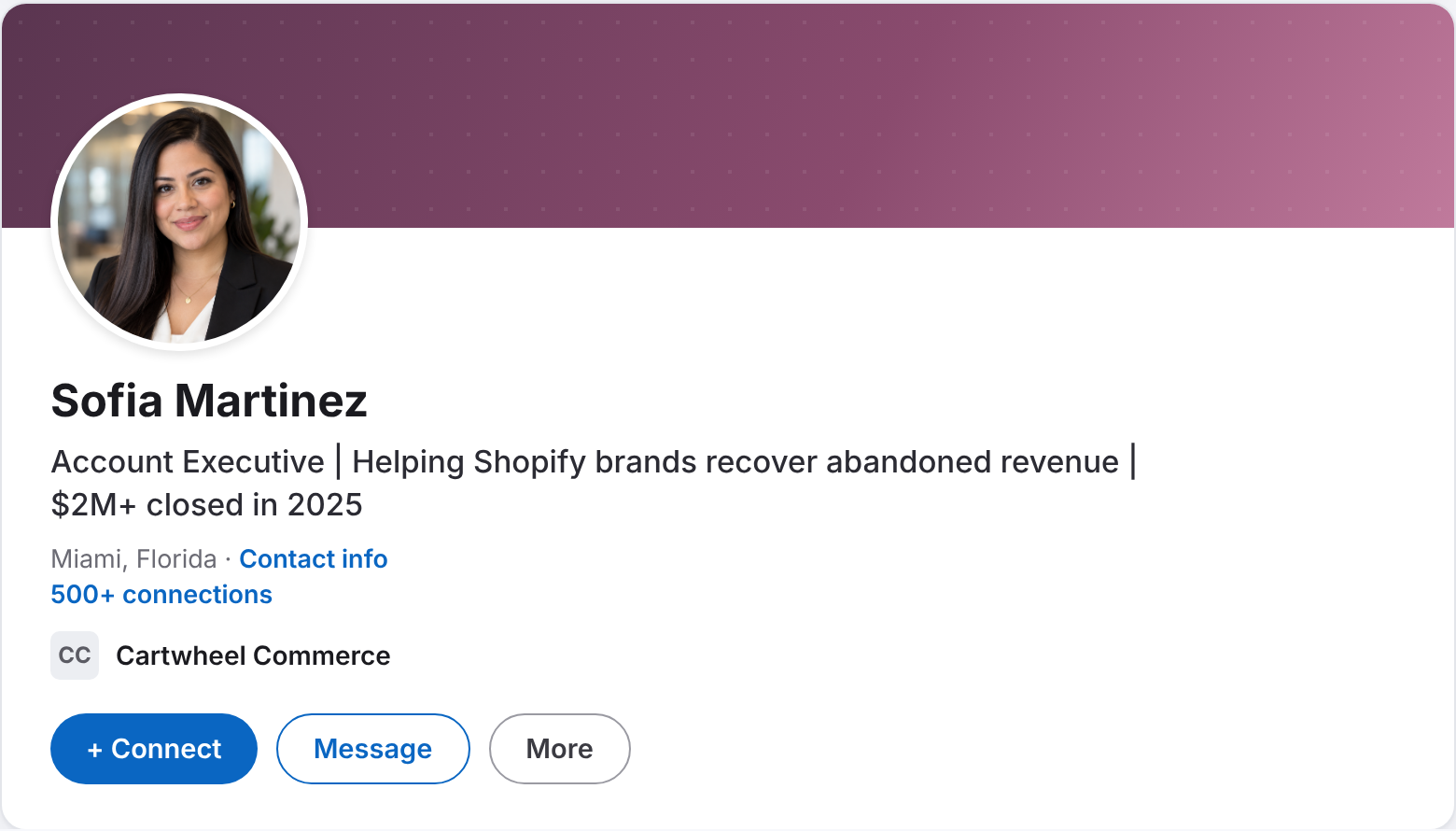
4. "Account Executive | Helping Shopify brands recover abandoned revenue | $2M+ closed in 2025"
Account Manager
5. "Account Manager @ Helpstack | Keeping SaaS customers renewing and expanding | 120%+ net retention on my book"

Sales Manager / Director
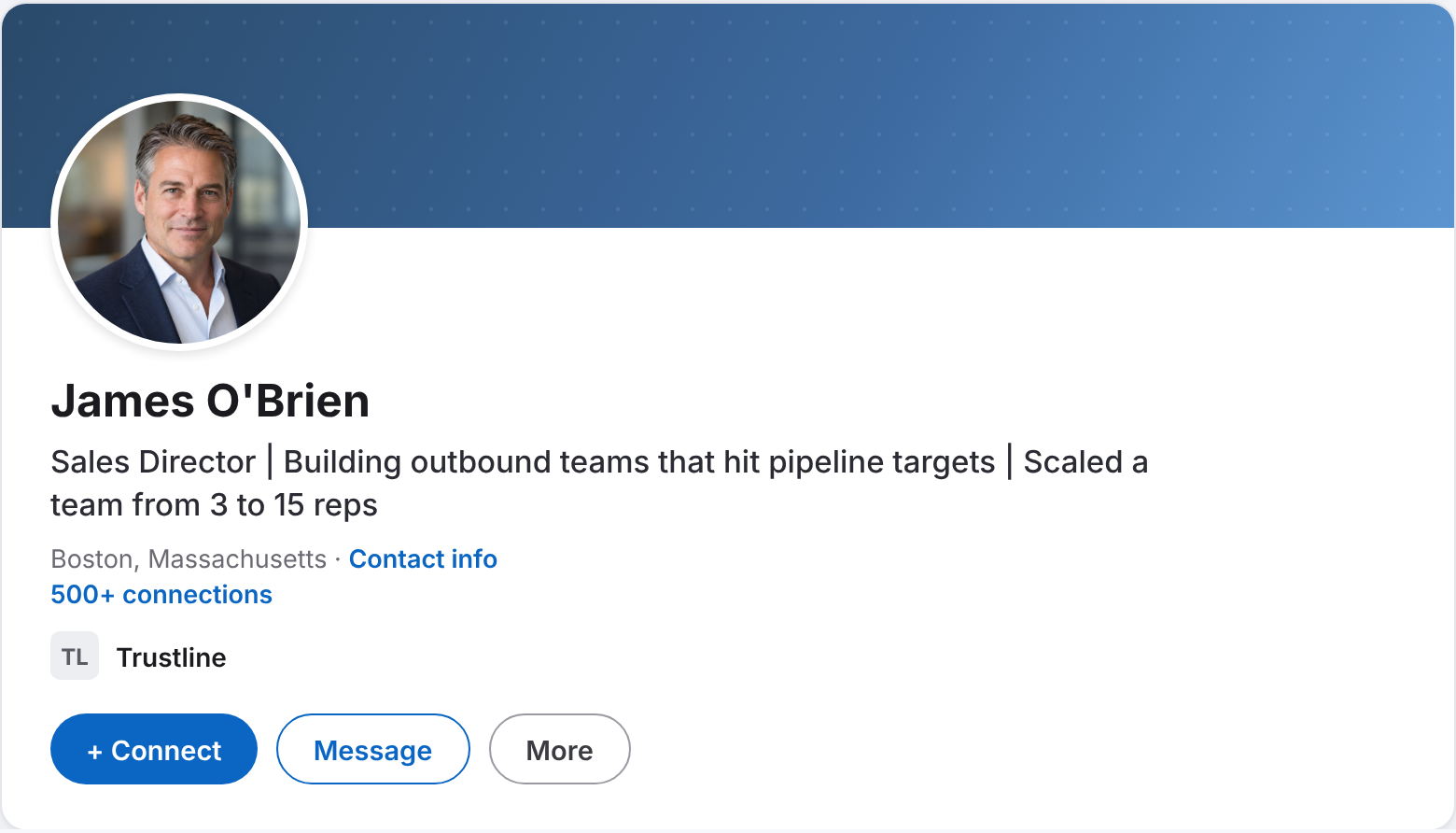
6. "Sales Director | Building outbound teams that hit pipeline targets | Scaled a team from 3 to 15 reps"
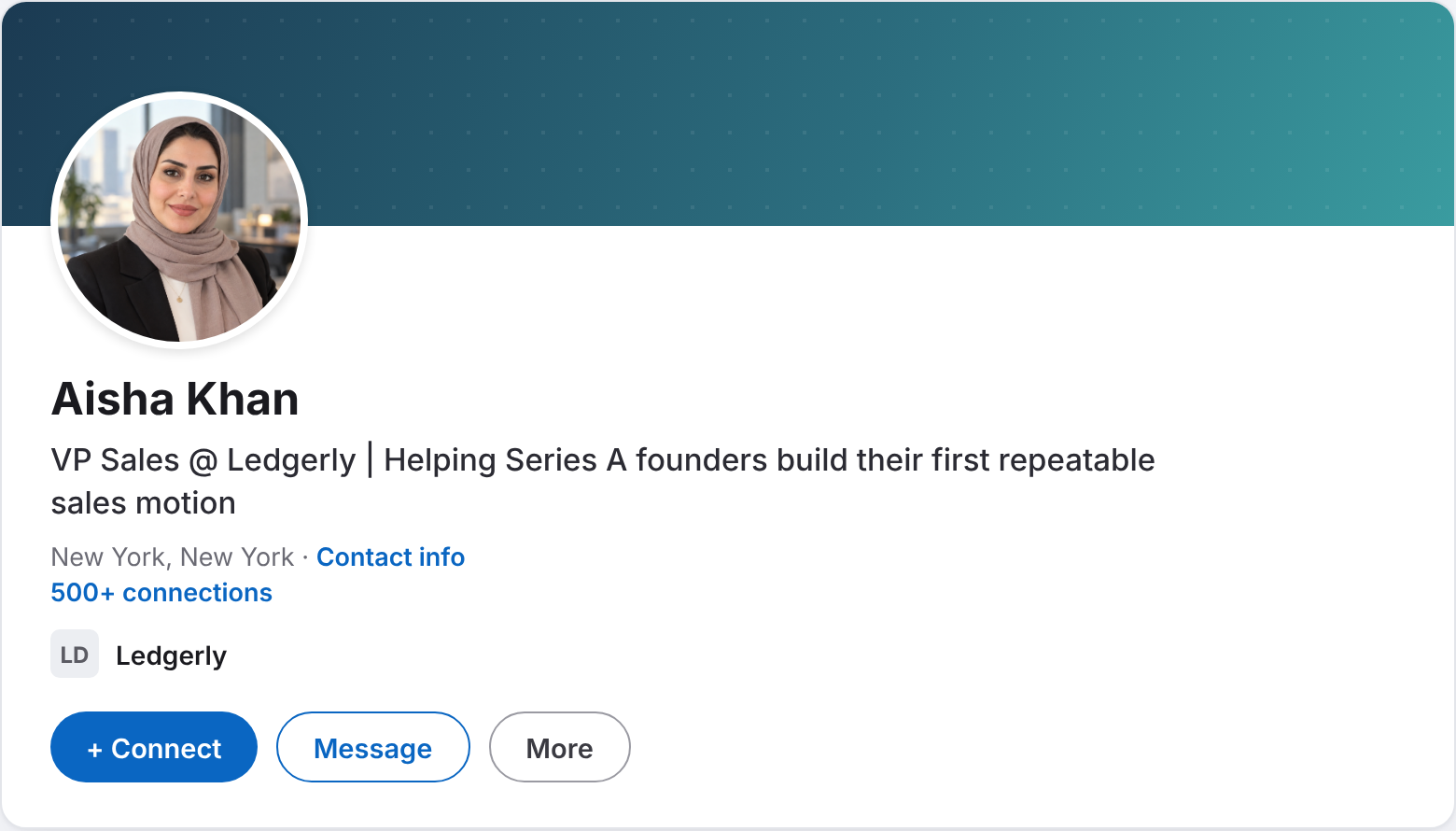
7. "VP Sales @ Ledgerly | Helping Series A founders build their first repeatable sales motion"
Why it works: the buyer (Series A founders) and the job (first repeatable sales motion) are specific enough that it needs no number to feel credible.
Founder-led sales
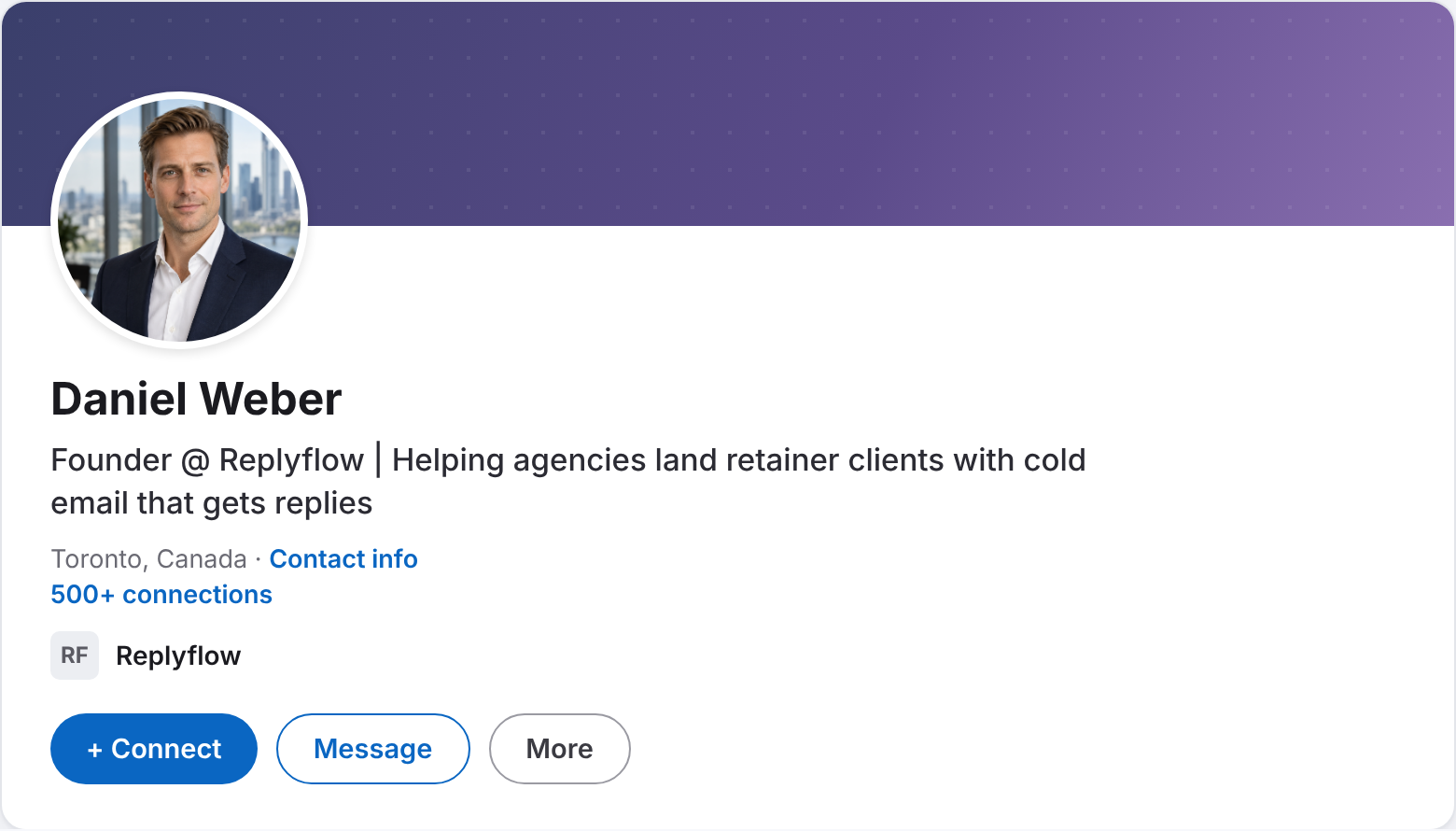
8. "Founder @ Replyflow | Helping agencies land retainer clients with cold email that gets replies"
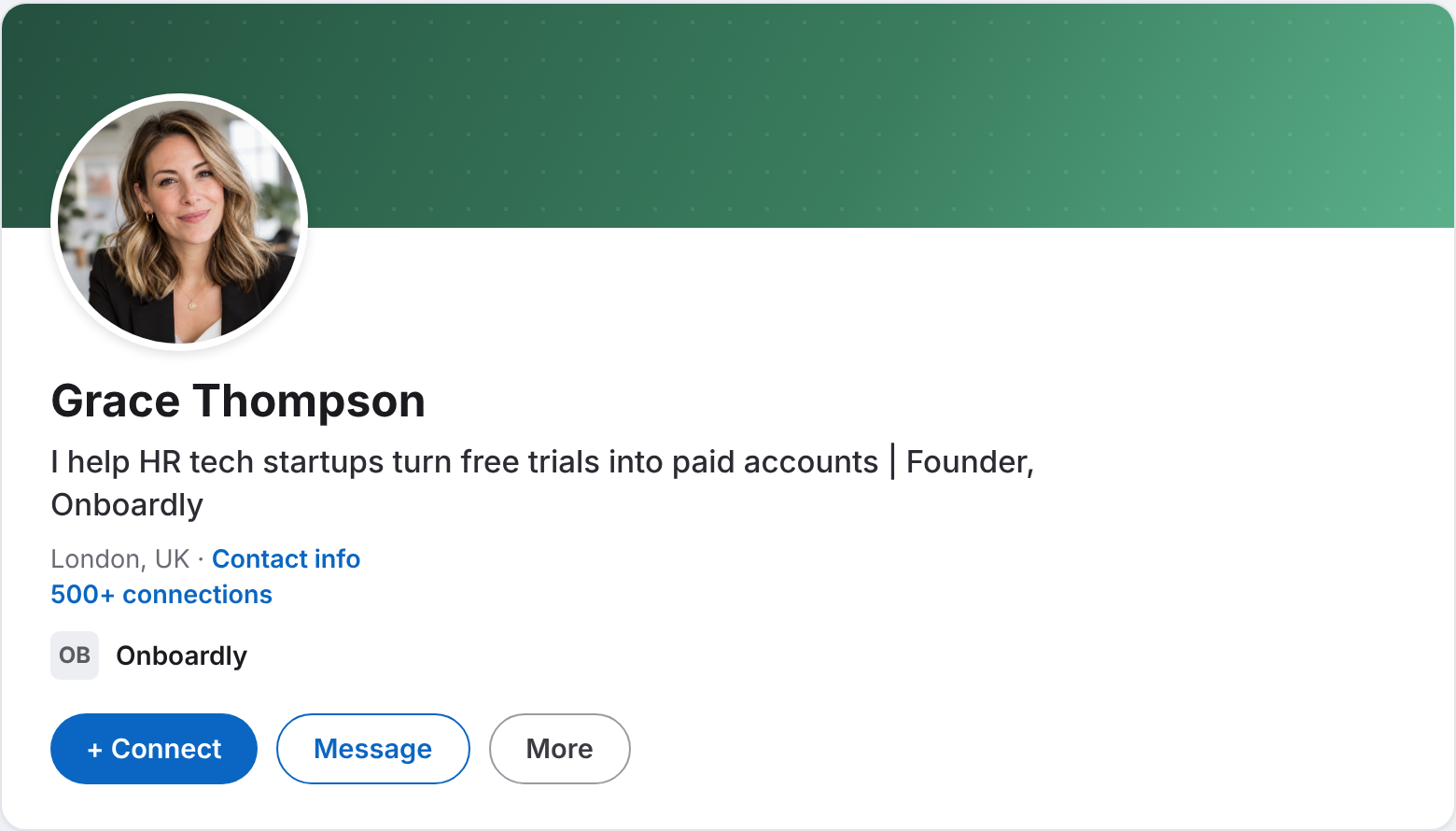
9. "I help HR tech startups turn free trials into paid accounts | Founder, Onboardly"
Agency / Consultant
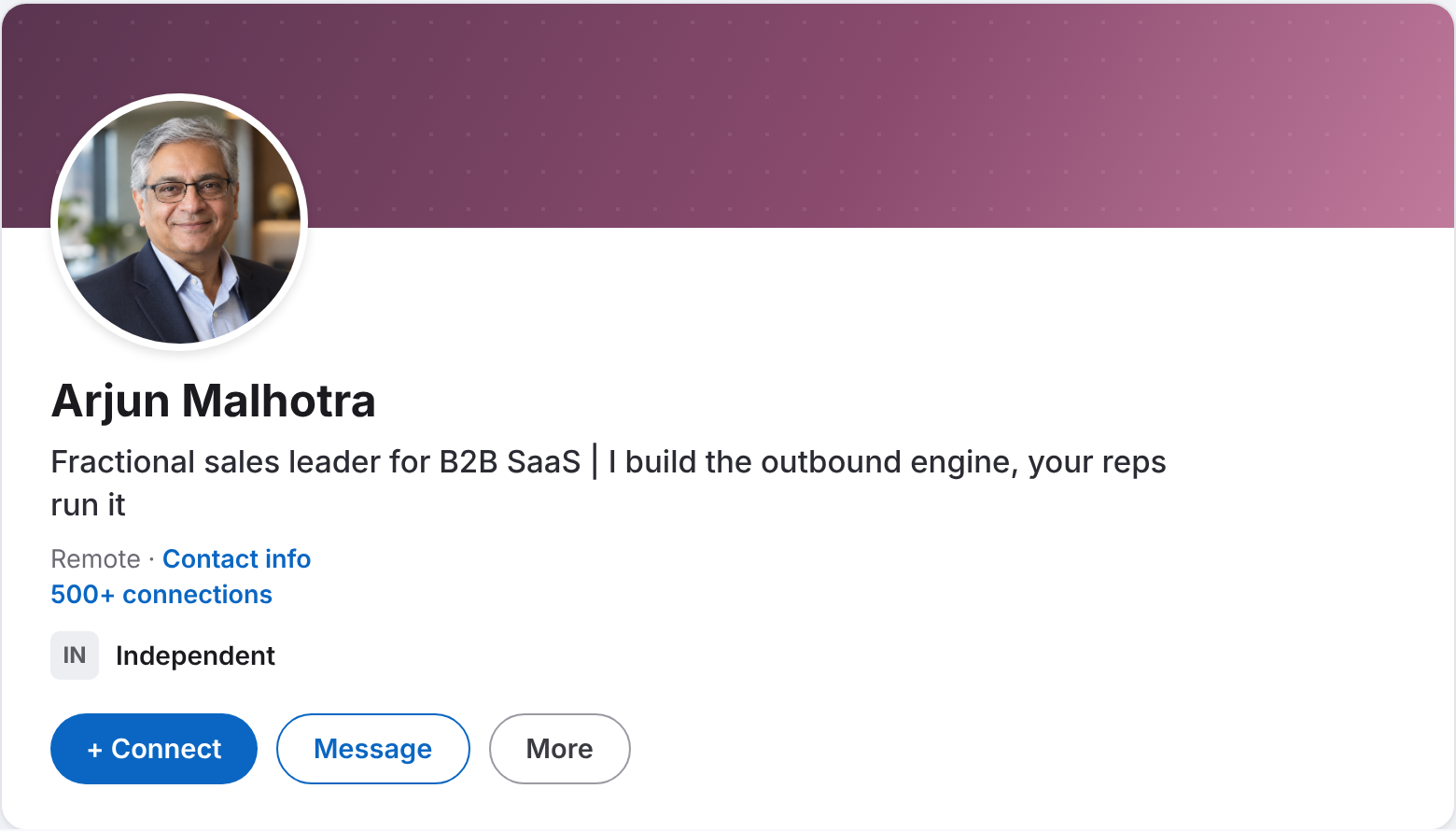
10. "Fractional sales leader for B2B SaaS | I build the outbound engine, your reps run it"
Why it works: it states the service and who owns what, which reads as a clear method rather than a metric.
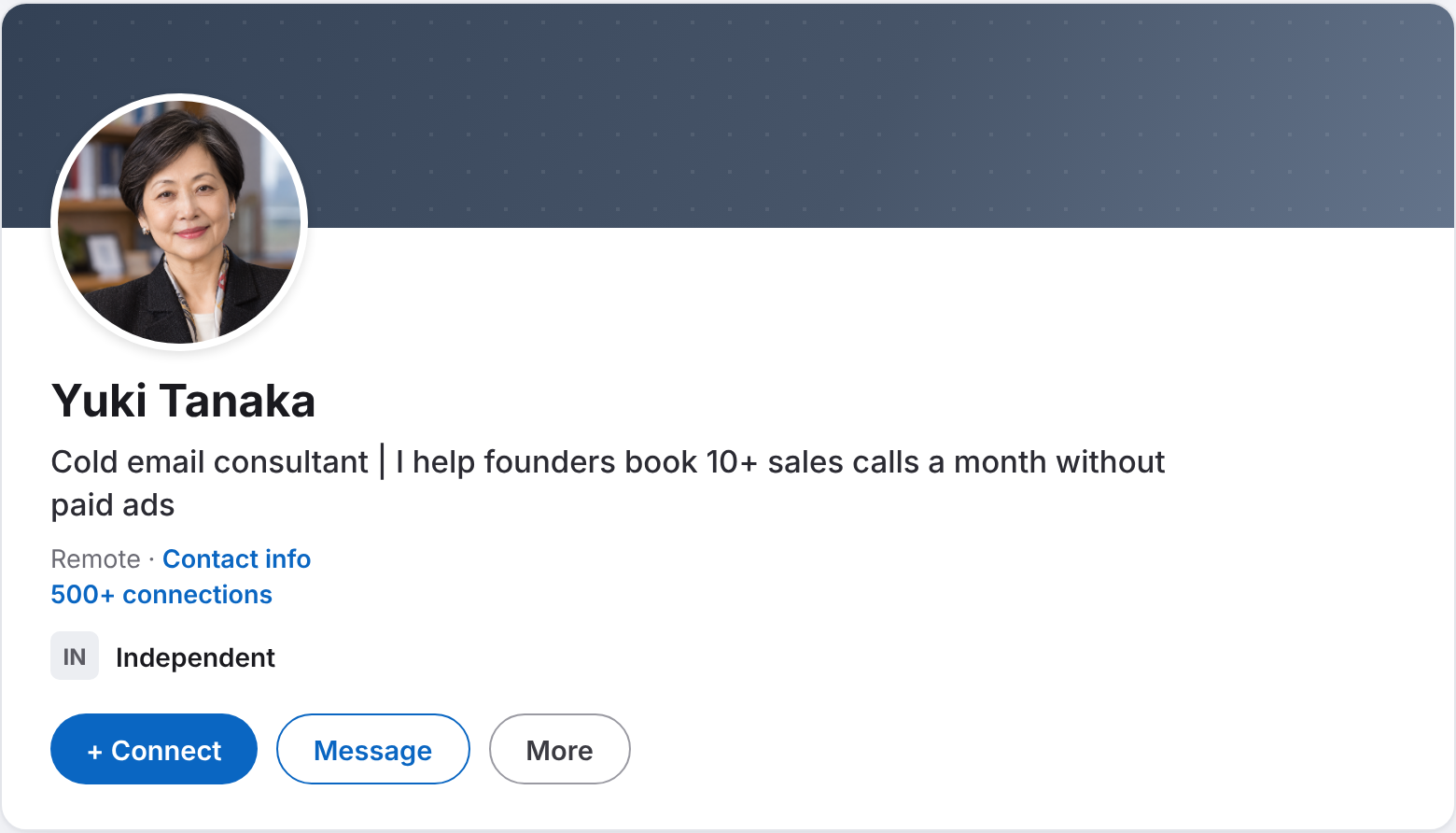
11. "Cold email consultant | I help founders book 10+ sales calls a month without paid ads"
Niche specialist
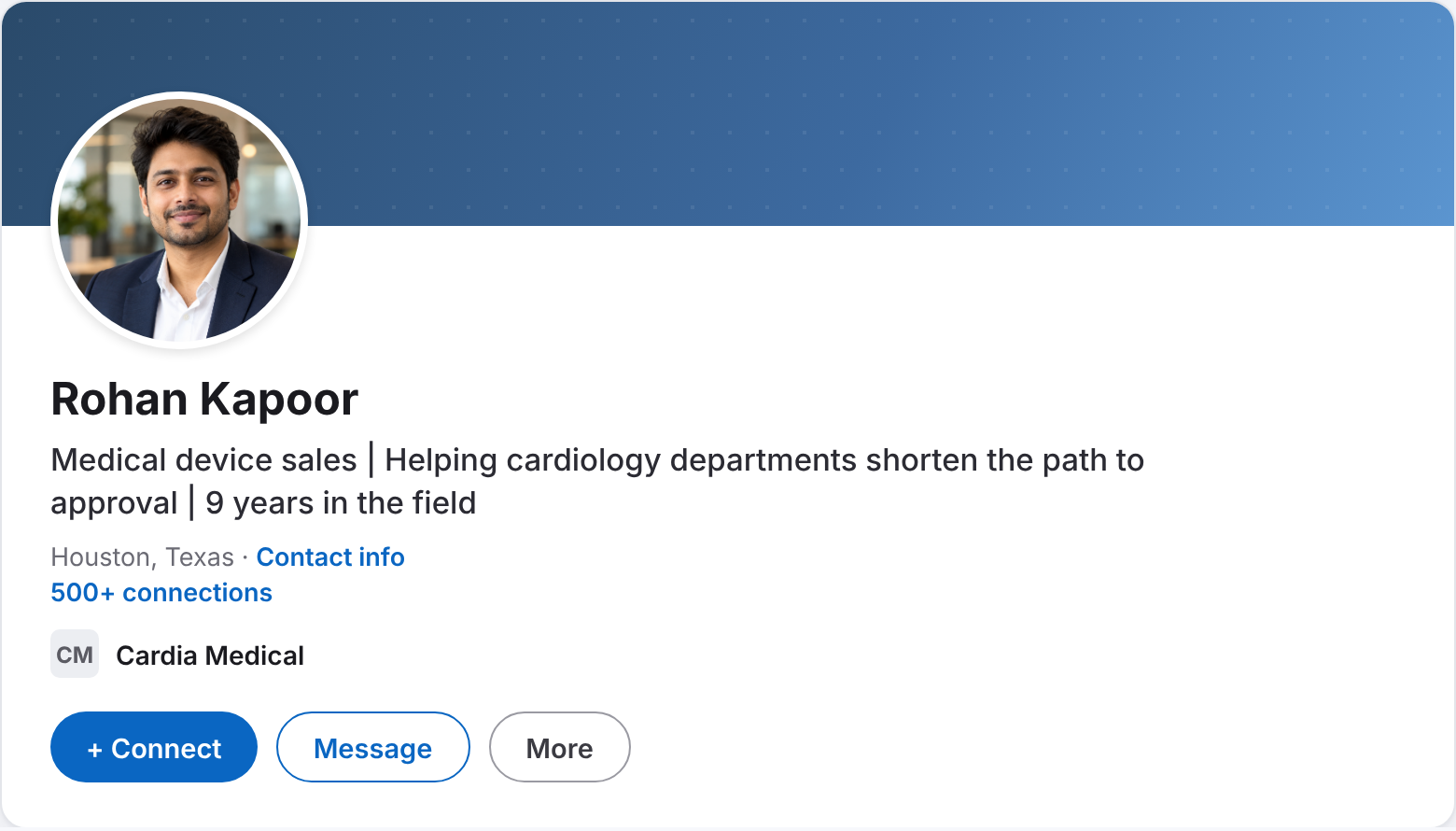
12. "Medical device sales | Helping cardiology departments shorten the path to approval | 9 years in the field"
What to Put in Your Headline When You Have No Big Number Yet
Most advice tells you to lead with a metric. New reps and career switchers rarely have "$4M closed" to show, and copying a number you did not earn will not survive a first call. You can write a strong headline with no personal metric at all.
Use one of these in place of a number:
- A sharp niche: "I sell scheduling software to dental clinics" beats "Sales professional," because specificity reads as competence.
- The buyer's outcome: name what your product is built to do, without implying you have personally delivered it yet. "Warehouse software for inventory and picking workflows" states relevance honestly, and "Helping warehouse teams cut picking errors" is fair too, as long as you are describing the product's purpose and not claiming a result you have not seen.
- A method or point of view: "I help founders book calls with cold email instead of cold calls" signals how you work.
- Relevant background: a past role your buyer respects. "Former nurse, now selling to hospital procurement teams" is proof of understanding rather than of quota.
The goal is credibility, and specificity gets you there faster than an unearned statistic.
12 LinkedIn Headlines That Are Less Effective for Buyer-Focused Outreach
These patterns repeat across thousands of sales profiles. None is banned, and a few can suit a recruiter or a personal brand. For buyer-focused outreach, though, each one leaves the prospect without the relevance they are looking for. The stronger alternative follows every example.
1. "Sales Guru | Closing Rockstar | Revenue Ninja." Buzzwords prove nothing. Stronger: say who you help and how.

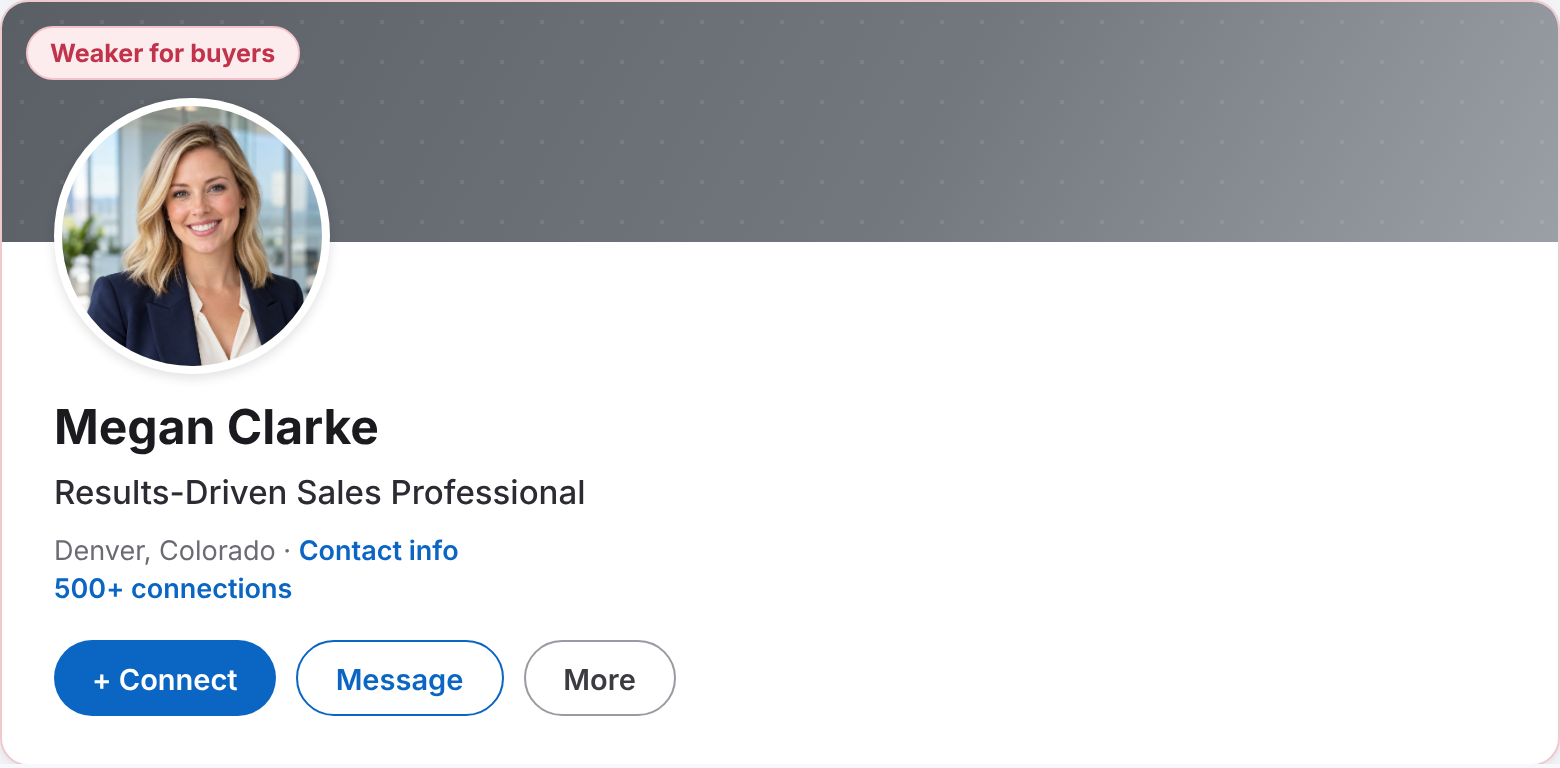
2. "Results-Driven Sales Professional." Vague and interchangeable with everyone else. Stronger: name the specific result.
3. "Account Executive at Veridian Systems." Uninformative rather than wrong: it is the LinkedIn default and tells a buyer your title and nothing about relevance. Stronger: add your buyer and the outcome you help them reach.
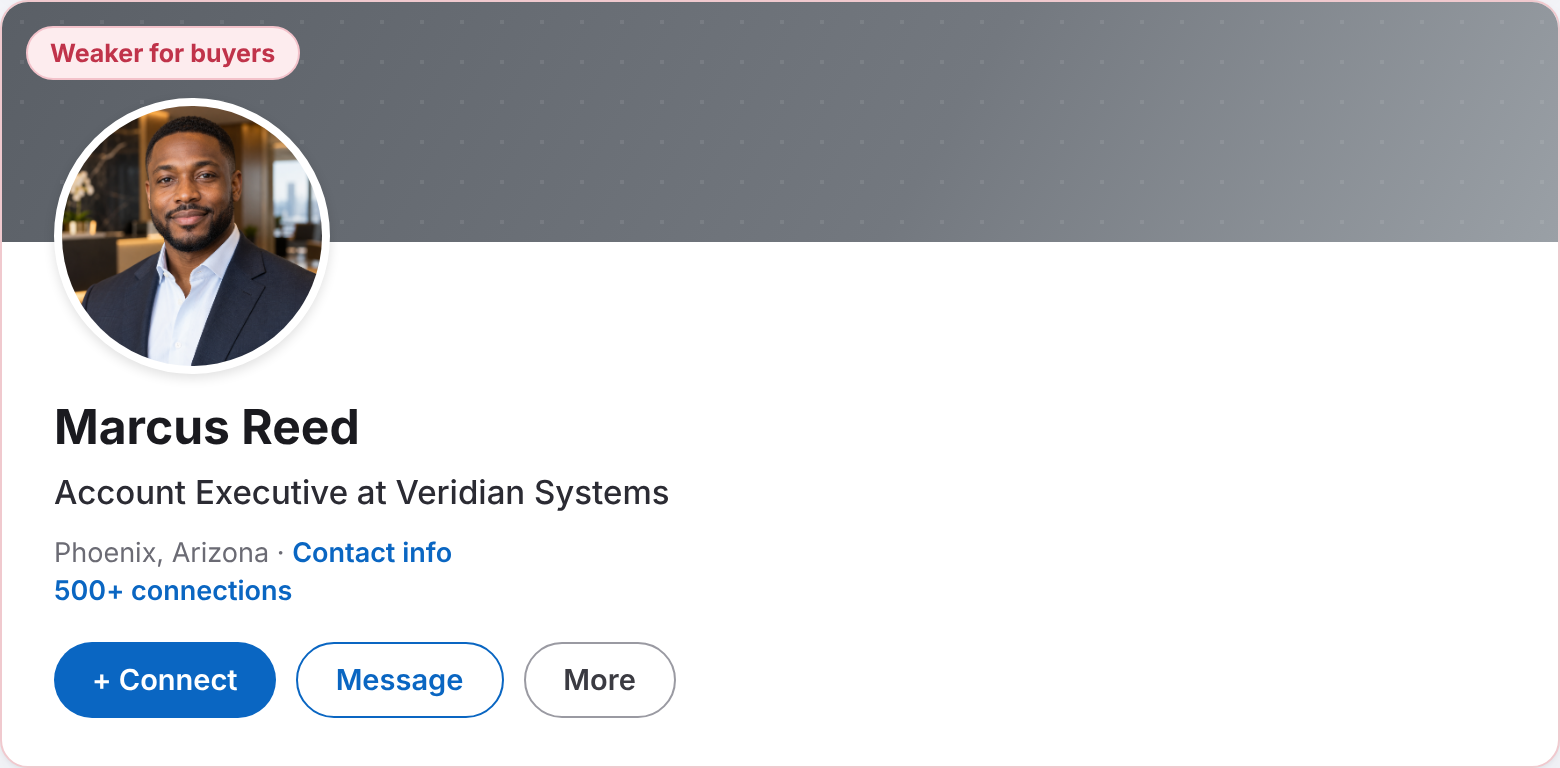
4. "Open to Work | Seeking New Opportunities." Being open to a role does not make you less credible; a job-seeking headline just does not tell a buyer why a conversation is worthwhile. Stronger: use LinkedIn's private "Open to Work" setting for recruiters and keep your public headline buyer-facing.

5. "Sales | SaaS | B2B | SDR | AE | Outbound | Pipeline | Revenue | Growth." Keyword stuffing reads as spam. Stronger: one role, one outcome, one proof.

6. "🚀💰 Crushing Quota 💪🔥 #Hustle #Grind." Emoji soup looks unserious to enterprise buyers. Stronger: remove the emojis and keep the substance.

7. "#1 Salesperson at Veridian Systems." Useful to a recruiter, less so to a buyer: it centers your ranking rather than their problem. Stronger: translate the ranking into a buyer benefit.

8. "Driving synergistic value through consultative solution-selling paradigms." Corporate word salad no buyer uses. Stronger: write it the way you would say it out loud.

9. "DM me to 10x your revenue now!!!" A pitch before any trust exists. Stronger: describe the problem you solve and let them come to you.

10. "Aspiring sales leader | Lifelong learner | Dog dad." Personal tags crowd out anything a buyer needs. Stronger: save the personality for your About section.

11. "Helping businesses grow." So broad it says nothing. Stronger: name the exact business and the exact growth.

12. "AE | 'Success is a journey, not a destination.'" A motivational quote spends your most valuable line on nothing. Stronger: spend it on your buyer.

Tips for LinkedIn Headlines That Support Revenue Growth
A few habits keep your headline earning its place over time:
- Match it to your current campaign. If this quarter you are emailing RevOps leaders, your headline should speak to RevOps leaders. When your target shifts, your headline shifts.
- Carry a single proof point. One believable claim lands harder than a stack of them.
- Lead with outcomes. Buyers search for the results they want, and rarely for the mechanism you use to deliver them.
- Revisit it every quarter. Your headline is not set once. Update it as your niche, your results, and your target buyer change.
ChatGPT and Claude Prompt for Generating Your LinkedIn Headline
Use this prompt in ChatGPT or Claude to generate options, then edit the best one by hand. The prompt forces specificity and bans the buzzwords that weaken most headlines.
You are a B2B sales copywriter. Write 5 LinkedIn headline options for me, each under 220 characters.
About me: - Role: [e.g. Account Executive] - Who I sell to: [e.g. RevOps leaders at B2B SaaS companies] - The outcome I help them reach: [e.g. shorter sales cycles] - My proof (pick what I have): [a metric, a niche, a method, or relevant background]
Rules: - Give me both a role-first version (Role | who I help + outcome | proof) and a buyer-first version (who I help + outcome | Role) for each option. - Front-load the most important words. - No buzzwords (Guru, Rockstar, Ninja, results-driven, passionate). - At most one proof point per headline, and only proof I actually gave you. - Never invent metrics, customer results, awards, experience, credentials, or guarantees. If I gave no proof, write a credible headline without one.
Return the 5 options as a numbered list, then tell me which one is strongest and why.
Treat the output as drafts. Pick the option closest to how you actually talk, then tighten it yourself.
How to Choose Between Your Headline Options
Once you have a few options, run each through six quick questions and keep the one that passes all of them:
| Test | Question to ask |
|---|---|
| Audience | Can the exact prospect you want recognize themselves in it? |
| Relevance | Is the product, problem, or outcome clear? |
| Credibility | Is every claim one you can support? |
| First impression | Does the opening still make sense when the rest is truncated? |
| Consistency | Does it match your actual role and the message you send in outreach? |
| Naturalness | Would you say it out loud to a prospect without wincing? |
If an option fails on credibility or consistency, drop it even when it reads well. A headline that overstates gets exposed on the first call.
How Your Headline Fits Your Outreach
A headline works best as one piece of a consistent outreach system rather than a standalone trick. When you send a cold email or a connection request, the prospect's next step is often to look you up. If your headline names the same buyer and outcome your message did, the two reinforce each other and the prospect sees one coherent person. If they clash, the prospect hesitates.
That is the real payoff of getting the headline right: it supports every other touch you make. The same thinking that sharpens a headline, naming the buyer and leading with their outcome, is what makes a cold email sequence land. Alore is built for that side of the work: sequencing cold email, personalizing at scale, and timing follow-ups so your outreach stays consistent from the first touch to the reply. Your headline sets the first impression; your sequence carries the conversation.
How to Tell Whether Your Headline Is Pulling Its Weight
You can test a headline instead of guessing. Hold your targeting, your sender identity, your connection message, and your timing as steady as you can, change only the headline for a set period, and watch what moves: connection-request acceptances, replies that turn into real conversations, and meetings booked. Many things besides your headline affect those numbers, so read the result as directional. The point is to decide from your own outreach rather than from anyone's rule of thumb, including this article's.
Frequently Asked Questions
How long can a LinkedIn headline be? Up to 220 characters. You do not need to fill all of it; one role, one outcome, and one proof point usually land better than a full 220.
How do I change my LinkedIn headline? Open your profile, click the pencil icon in your intro section, and edit the Headline field. Save, and it updates everywhere your name appears.
Is the headline the same as my job title? No. LinkedIn uses your current job title as the default headline, but you can replace it with anything up to 220 characters. For sales, a custom buyer-facing headline beats the default title.
What should my headline say if I have no sales experience yet? Lead with the buyer and the outcome your product delivers, plus any relevant background. Specificity about who you help reads as credibility, even before you have personal numbers to show.