

In B2B sales, account mapping means charting the people, roles, relationships, and decision steps behind a purchase at one target company. Start with the purchase you are trying to understand. List known people and missing roles; separate verified facts from guesses; ask the buyer how evaluation, approval, and review actually work; then give each gap an owner and next action. The result should tell your team whom to involve, why each person matters, and what to verify next.
Short Summary: Map one purchase with evidence states and next questions; a fictional buyer answer shows why the seller's tentative next target changes from Alex to Priya.
Knowing a contact's name and title is a start. It does not tell you whether that person owns the problem, can authorize a purchase, or knows who reviews the contract. If a deal stalls after a good first meeting, the missing information may be elsewhere in the buying path. An account map makes that gap visible before the seller treats silence as a request for more reminders.
What Is Account Mapping in B2B Sales?
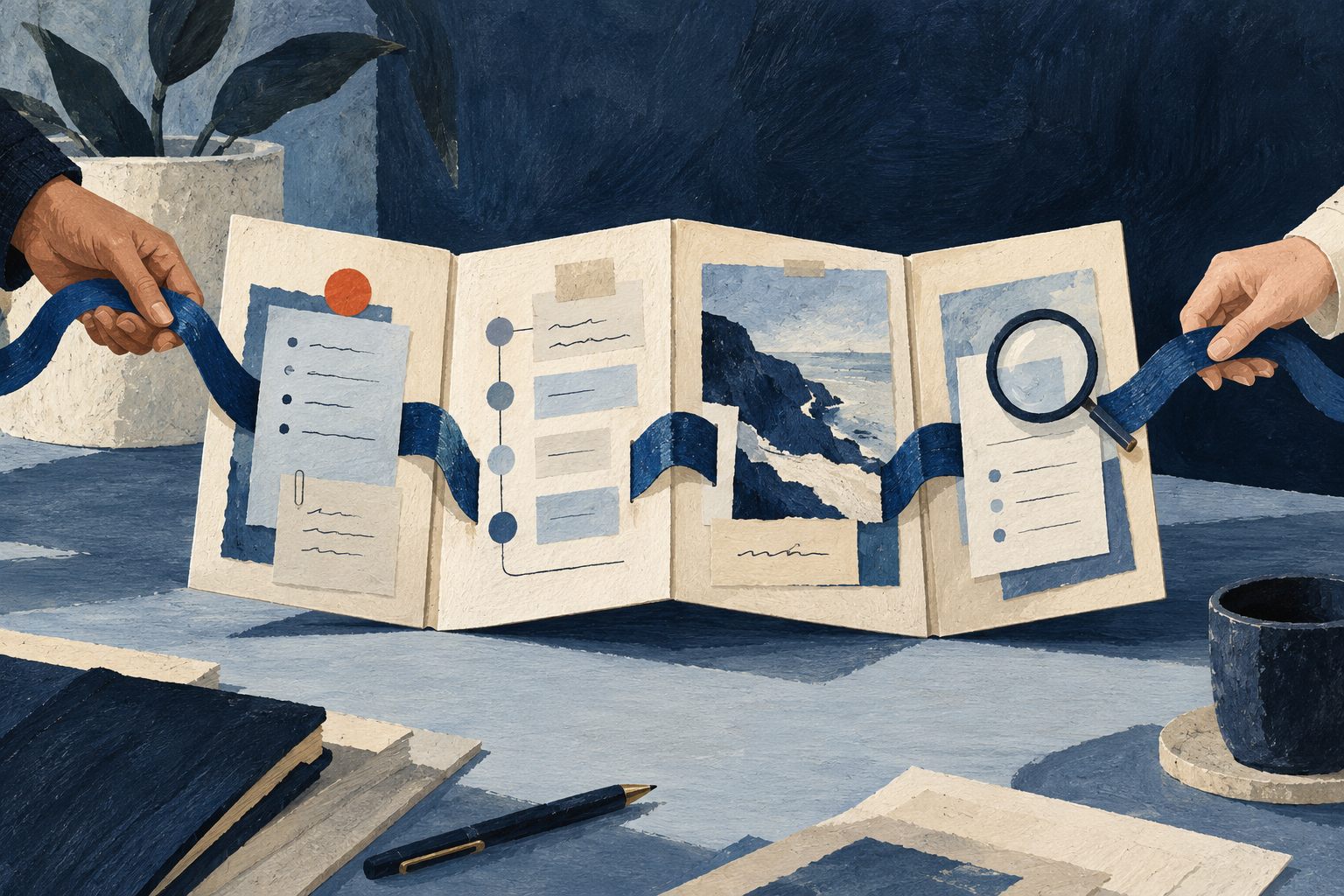
A sales account map is a working view of the people and decision relationships around a specific opportunity. It connects contact records to the question, “How would this company decide whether to buy this?” It can show who uses a workflow, who evaluates a change, who supports it, which review has to happen, and where the seller is still guessing. TechTarget's definition and Lucid's guide describe the stakeholder and relationship view. A simple document can record these decision roles and relationships.
An org chart and an account map answer different questions. The chart tells you who reports to whom. The map asks who can make this particular decision move or stop. The same VP can sponsor one purchase and stay peripheral to another. A manager can own evaluation without signing the contract. Verify each buying role for the defined purchase; a job title alone cannot establish it.
Stakeholder Maps Versus Partner Account Overlap
“Account mapping” also describes a separate partnership task: comparing your account list with a partner's to find shared customers or prospects. Crossbeam uses the term in that sense. A sales stakeholder map tracks people and the buying path inside one target account. If your job is partner-list matching, you need an overlap and data-sharing workflow instead.
When Is an Account Map Worth Building?
Map an account when the buying decision has more than one meaningful participant or an uncertain review path. A first conversation with a team manager may reveal the problem but leave budget, security, procurement, or executive sponsorship unresolved. A map helps the seller ask the next question rather than assuming the first contact speaks for everyone. It is also useful when an existing customer considers a new product or team: the people who approved the original purchase may not own the expansion.
The map can be small. For a straightforward low-risk purchase where one buyer has confirmed the decision path, a few CRM notes may be sufficient. For an opportunity involving multiple teams, a maintained shared map can help the next rep or specialist pick up prior discovery. Dock's sales-account-mapping guide emphasizes understanding the people involved and checking the map with the buyer; it is not a reason to build a diagram of everyone at the company.
Before researching people, write the decision at the top: “Fictional ExampleCo is evaluating an outbound sequencing platform for its US sales development team.” That boundary is narrower than “sell to ExampleCo.” It tells you whether a person belongs on the map and helps keep an attractive title in an unrelated department from becoming an outreach target.
How to Build an Account Map for One Purchase
The following five steps are a practical way to make the map actionable. They are a working method for this guide, not a universal sales formula.
1. Define the Decision and Account Boundary
Write the account, the specific change under consideration, the team affected, and the current stage. If the buyer is only exploring a problem, say so; do not label a budget approval as imminent. Note the seller's immediate goal, such as “learn whether the current manual follow-up process warrants a working session.” An account may have subsidiaries or distinct business units. Confirm which one would buy and use the solution before merging contacts from different units into one assumed committee.
Quick check: If you cannot state the purchase in a sentence, the purchase boundary is still too broad. Tighten it before collecting more names.
2. List Stakeholders and Empty Seats
Start with people your team already knows through real conversations and CRM history. Add publicly listed roles only when they plausibly belong to this purchase. For each person, capture their name, title, function, and how you know them. Add unnamed seats for important functions that may participate: “security reviewer: person unknown” records a possible gap without inventing a contact or assuming the review exists.
Useful role questions include: Who owns the current problem? Who would use the solution? Who evaluates technical and operational fit? Who can commit budget? Who reviews security, legal terms, or procurement? The answers may point to fewer people, combined roles, or participants your initial list missed. Ask the buyer to correct the map before treating your assumptions as their process.
3. Map Decision Dependencies
Draw a line only when you can say what it means. “Reports to” is different from “needs approval from.” “Introduced us to” is different from “will champion internally.” If a buyer says security reviews access before prospect data is connected, record that exact condition; “security reports to IT” may be irrelevant. Lucid's account-map walkthrough shows why relationship context matters alongside CRM contacts. The map should make the path through evaluation, review, and approval legible.
A text map can hold separate dependencies: “After workflow evaluation, a budget owner may consider spend” and “Before prospect data is connected, a technical reviewer may check access.” These are possible examples, not a known sequence or a universal approval path. Mark each unconfirmed dependency as a hypothesis and ask the buyer whether it applies. The map should show which step depends on which condition without inventing an order between independent reviews.
4. Separate Source Facts, Buyer Reports, and Hypotheses
Keep a person's title separate from their role in this purchase. A public profile or company page may support their title and department. It rarely establishes their decision role. Record the source and date for each material fact. Label the purchase-role status reported by another buyer, confirmed directly by that role owner, hypothesis, or unknown. A colleague's report can guide the next meeting while direct confirmation is pending. These labels are this guide's documentation convention, not an industry scoring standard.
Do not call someone a champion because they were friendly. Reserve that description for observed advocacy, such as voluntarily bringing a colleague into evaluation or explaining how they will help make the case. Similarly, “blocker” should describe an evidenced objection or required review, not a person who has not replied. When evidence conflicts, keep both observations and assign a question to resolve the conflict; do not silently choose the optimistic version.
5. Assign the Next Buyer Question and Action
Each unknown should lead to a question that helps the buyer navigate their own decision. “If a test would connect prospect data, who would review access before that connection?” is clearer than “Who is the decision-maker?” A question about criteria may be more useful than another name: “What would your team need to see before deciding whether a trial is worth running?”
Give the next action an owner and date. If the contact agrees to include RevOps, schedule a working discussion with RevOps; do not send the same generic pitch to five executives. If the buyer says there is no active project, record that stage and stop treating the map as a live deal plan. Let the buyer's actual process determine what goes on the map.
A Worked Account Mapping Example
The following company, people, conversation, and product evaluation are fictional. They show how to record uncertainty without passing it off as account intelligence or a customer result. Fictional ExampleCo, a US B2B software company, has a sales development team using several manual follow-up steps. A seller is exploring whether an outbound sequencing platform could help that team coordinate its work. No Alore deal, customer, or product capability is implied by the example.
Initial Map: What the Team Knows
The seller has spoken with Maya, an SDR manager. She says her team struggles to see which prospects have received a follow-up and which have replied. That conversation supports the problem statement and her role as a current workflow user. It does not show that Maya controls the budget or will advocate for a purchase.
In this fictional exercise, an invented ExampleCo company profile lists Priya as Director of Revenue Operations and Alex as VP of Sales. Their titles are source facts within the exercise only, recorded with the simulated profile and date. Priya may own process evaluation; Alex may sponsor or approve spend. Both purchase roles remain hypotheses. A technical or security reviewer is an empty seat: the need for review and the person's identity have not been confirmed.
The seller initially considers approaching Alex about budget because his VP title looks senior, but pauses because his purchase role is unverified. The map labels that approach as a hypothesis. Priya's possible evaluation role and any security review are also hypotheses or unknowns. The seller first asks Maya: “If you decided this was worth exploring, who would help assess the workflow, and which reviews would happen at which stage?” The seller owns that question at the next scheduled conversation. Contacting Priya, Alex and a guessed security contact in parallel would rely on unverified roles.
One Buyer Answer Changes the Route
In this illustrative conversation, Maya replies: “Priya owns sales process changes. She would want to see how the team handles replies and handoffs. Before connecting any prospect data, our security team reviews the access plan. Alex would consider budget after Priya recommends a trial.” This is a fictional teaching exchange, not an observed buyer quote.
Maya's answer redirects the seller's next move from a tentative budget conversation with Alex to requesting an introduction to Priya for workflow evaluation:
- Priya: Maya has reported Priya as the process owner. Next action: ask Maya for a working introduction, then verify the evaluation responsibility with Priya and prepare a workflow walkthrough about replies and handoffs. Her title comes from the fictional company profile; her reported role comes from Maya's answer.
- Security reviewer: Maya reports a required review before any prospect-data connection, but the person and requirements remain unknown. Next action: ask Priya for the review owner and criteria; do not assume a named employee or send a security claim without support. Maya has not said that this review must precede Priya's trial recommendation.
- Alex: Maya has described a later budget consideration, conditional on Priya's recommendation. His exact approval authority and timing still need confirmation. Next action: first understand Priya's evaluation criteria, then ask how the business case reaches Alex.
- Maya: Remains the known workflow contact. Her answer helped map the route; it did not automatically make her a champion or purchasing authority.
Maya reports two dependencies: Priya considers workflow fit and may recommend a trial before Alex considers budget; security reviews the access plan before any prospect-data connection. The order between the security review and Priya's recommendation is unknown. Priya, Alex and the reviewer have not directly confirmed their responsibilities. The security contact, review criteria, trial success criteria and exact budget authority are also open. The next conversation should test Priya's evaluation role and trial criteria, then identify the security review owner.

An Account Map Template You Can Copy
Use one record per person or missing role. A spreadsheet, CRM note, or shared document can hold these fields; New Breed's account-mapping overview also notes that dedicated software is not required. Keep the header and role records brief enough to update after a conversation.
Map header: Account and business unit; purchase being considered; team affected; current stage; map owner; last reviewed date.
For each person or empty seat, record:
- Identity and source fact: Name or “unknown,” title/function, source, and date seen. Do not treat a stale profile as current without checking.
- Decision contribution: User, evaluator, sponsor, approver, reviewer, or other role, with buyer-reported / directly confirmed / hypothesis / unknown status. Name the person who supplied a report; verify the role with its owner when it matters. One person may hold more than one role.
- Relationship or dependency: What this person needs from, reviews for, or can introduce another person to. Label unconfirmed arrows.
- Known priority or objection: Only what the person or a credible buyer has actually expressed, with source/date. Leave it blank when unknown.
- Next question and action: The specific gap to test; who on your team will ask or act, and when. Include a review date so the map does not fossilize.
Copy this blank record for each person or missing seat:
Person or missing role: [name or unknown]
Title/function and source/date: [ ]
Purchase role, status and reporter: [ ]
Decision dependency and evidence: [ ]
Priority or objection and source: [ ]
Next verification question, owner and occasion: [ ]
Immediate action, owner and due date: [ ]
Review date: [ ]
Filled record from the fictional example:
Person or missing role: Priya
Title/function and source/date: Director of Revenue Operations; simulated ExampleCo profile, 21 October 2026
Purchase role, status and reporter: Process owner, reported by Maya; verify directly with Priya
Decision dependency and evidence: Maya reports Priya would assess replies and handoffs. If Priya recommends a trial, Alex would then consider budget.
Separate condition: Maya reports security review before any prospect-data connection. Its order relative to Priya's recommendation is unknown.
Priority or objection and source: Unknown
Next verification question, owner and occasion: Seller asks Priya “What would a useful trial have to demonstrate?” at the first working session, if Maya makes the introduction; date to be set with Priya
Immediate action, owner and due date: Seller asks Maya for an introduction on 23 October 2026
Review date: 30 October 2026, or after the working session if it happens sooner
This is a fictional teaching record; the dates are invented for the example.
A map is usable when a colleague can read it and know which statements are facts, which are hypotheses, what decision is pending, and who will ask the next question. A beautifully connected chart without those answers is still incomplete.
Keep the Map Current Without a Research Project
Update the map after a substantive buyer conversation, a verified role change, or a new review requirement. Note who supplied the change and when. If Priya confirms that a no-data demonstration can proceed without access review, record that boundary while keeping Maya's reported security-review requirement for any later prospect-data connection. If Alex delegates budget review, revise the path and the meeting plan. Update the map as the purchase changes and early guesses are resolved.
Review the most consequential unknowns before the next planned interaction. Ask whether each record still helps with the current decision; archive irrelevant names rather than accumulating everyone in the company. If you have no buyer access yet, use public professional facts to frame questions; they do not reveal the company's private decision dynamics. If the opportunity closes or pauses, mark its status and preserve the last confirmed path for a later handoff, with a warning that roles may have changed.
From Account Map to Relevant Outreach
The map should change what you say. Maya described a follow-up visibility problem and reported what Priya would want to see. If Maya agrees to an introduction and to being cited, the seller can write: “Maya mentioned that her team has trouble seeing which prospects received a follow-up and which replied. She said you would want to see how replies and handoffs work if the team explores a trial. Would you be open to discussing that workflow?”
If the seller has a separate legitimate reason to contact Priya, Maya's conversation stays private. A question based on Priya's verified public role would be: “I saw that you lead Revenue Operations at ExampleCo. Does your team evaluate outbound follow-up workflows, and would a conversation about that be relevant?” This asks Priya to establish her own role and interest; it does not claim an active project.
The message should not claim that Priya approved a project or that Alex allocated budget. Give a security reviewer an access plan and factual answers tailored to the review. When you do not know the person's concern, ask a specific question before claiming a pain point.
Alore's cold email follow-up sequence guide gives examples of subsequent touches and when to stop. Alore's Drip Campaigner describes personalized sequences, follow-up reminders and campaign response analytics. Neither the product page nor this example establishes that Alore discovers or validates the buying group for you. Use public facts and clearly attributed buyer reports to frame questions while roles remain uncertain. As buyers clarify the path, update the map and tailor later messages to each person's reported or directly confirmed responsibilities. Start with one live purchase: record one known contact, one missing role, and the next question you will ask.