.png)

.svg)
.svg)
.svg)
Your budget review meeting ends with the same question every time. Growth is slow, spend is rising, and no one is sure whether the problem is execution or direction.
That doubt is why SaaS marketing agencies divide opinions so sharply. Some teams credit them for predictable pipeline and clarity. Others walk away with reports, traffic, and nothing that changed revenue.
The difference is rarely effort. It comes down to timing, expectations, and whether the agency understands how SaaS growth actually compounds over time.
What SaaS Marketing Agencies Are Actually Meant to Do?
A SaaS marketing agency exists to turn marketing activity into a system leadership can trust. The work connects positioning, channels, and conversion so growth is not dependent on spikes, luck, or constant reinvention.
When done right, this system supports monthly recurring revenue by improving how the right buyers discover you, evaluate you, and move forward with confidence.
What They Are Accountable For
At their best, SaaS marketing agencies operate as a growth function, not a delivery arm.
- Define the buyer and message so every page, asset, and campaign speaks to one clear ICP
- Build demand capture systems using search engine optimization, content, and paid loops tied to intent
- Remove conversion friction across pricing, demo, and comparison paths where organic traffic often stalls
- Establish reliable measurement that links activity to pipeline, not just visibility
- Coordinate with sales and product so marketing reflects how deals actually progress
Example
A SaaS company with steady traffic but flat demos usually needs intent alignment and page-level conversion fixes, not more publishing.
What They Are Not Responsible For
Budget waste often comes from assigning problems no agency can solve, even with a proven track record.
- Creating demand without market readiness when product positioning is unresolved
- Chasing volume metrics that inflate reach but dilute buyer quality
- Promising outcomes without inputs when data access, ownership, or timelines are unclear
- Running digital marketing in isolation without feedback from sales conversations and product usage
Example
If traffic grows but pipeline quality declines, the issue is misaligned acquisition, not execution speed.
Once this role is clear, the next step is assessing timing, whether your inputs support leverage, or whether gaps will turn spend into noise.
How to Decide If You Need a SaaS Marketing Agency Right Now?
The right time to hire is when your business growth problem is clear, but your execution system cannot keep up. A SaaS marketing agency creates leverage when inputs exist, data is accessible, and decisions can be made quickly.
This decision becomes simple once you separate urgency from readiness.
Signals You Are Ready to Hire
- You can state your ICP in one sentence and your team agrees on it
- Your funnel has a visible bottleneck such as activation, demo conversion, or expansion
- You have at least one working channel that can be scaled with better structure
- Your site and analytics are usable and conversion events are trackable
- Someone internally can own decisions and unblock approvals within days
Example
If organic traffic is steady, but demo requests fluctuate, you are ready for intent mapping and conversion work, not more volume.
Signals You Should Wait
- Positioning is unsettled and the team cannot agree on who the product is for
- The product experience is inconsistent so activation and retention data is unstable
- Attribution is unclear and you cannot track meaningful conversion events
- You want a partner to “handle marketing” without owning messaging or priorities internally
- Timelines are driven by pressure rather than a plan tied to the sales cycle
Example
If trials are rising but paid users are flat, activation and onboarding usually need fixing before scaling acquisition.
A Simple Decision Framework
If you answer “yes” to at least four, hiring is needed
- Do we know our ICP and problem clearly?
- Do we know which funnel stage is the bottleneck?
- Do we have reliable tracking for key actions?
- Can we ship changes weekly without long approvals?
- Do we have budget for at least one full cycle of learning?
If you answer “no” to three or more, fix inputs first
- Clarify positioning
- Stabilize activation and retention
- Clean up analytics and goals
Once readiness is clear, the next step is choosing a partner whose strengths match your bottleneck, not just their headline services.
Top SaaS Marketing Agencies Solving Pipeline and Conversion Breakdowns
Pipeline issues rarely come from weak effort. They surface when strategy, execution, and buyer intent drift out of sync. The agencies below are selected for how precisely they address that disconnect at different SaaS stages.
Each one is included for fit, not fame. Their value lies in how they translate marketing activity into measurable pipeline movement.
1. J6 Venture
J6 Venture is built for SaaS teams that have moved past experimentation but lack repeatability. Their work focuses on creating systems where content, SEO, and demand reinforce each other instead of operating in silos.
They are often brought in when growth feels inconsistent despite steady visibility, and leadership needs structure that compounds over time.
- Best Features
- Content-led SaaS SEO
- Structured growth systems tied to revenue
- Focus on buyer intent and pipeline conversion
- Price
- Mid-market retainers
- Aligned with growth stage and scope
- Who This Is Best For
- Growth-stage SaaS businesses
- Teams seeking predictable customer acquisition
- Companies focused on organic and content-driven sustainable growth
2. Directive Consulting

Directive Consulting works with SaaS companies where scale has increased complexity. Their strength lies in controlling how marketing contributes to revenue across long sales cycles and multiple stakeholders.
They are typically chosen by enterprise teams that need disciplined attribution, predictable pipeline targets, and alignment between paid and organic execution.
- Best Features
- Data-driven lead generation
- Enterprise SaaS marketing expertise
- Integrated paid and organic campaigns
- Price
- Enterprise-focused retainers
- Flexible packages based on pipeline goals
- Who This Is Best For
- Enterprise SaaS companies
- Teams seeking full-funnel marketing accountability
- Organizations with long sales cycles
3. Kalungi
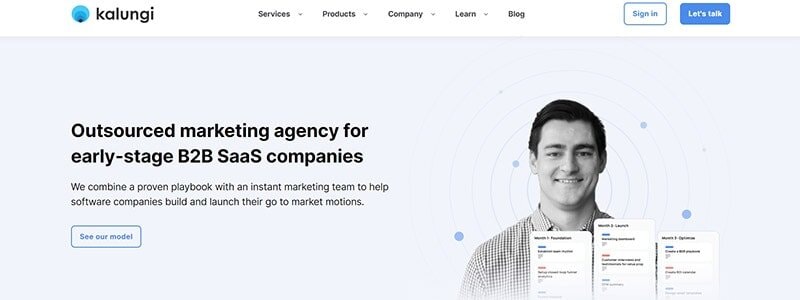
Kalungi functions as an embedded growth layer for SaaS companies that need strategy and execution to move together. Their model suits teams that want direction without fragmenting work across multiple vendors.
They are commonly engaged during expansion phases, when leadership needs clarity across messaging, channels, and performance measurement at once.
- Best Features
- Integrated SaaS marketing strategy
- Conversion-focused content production
- Analytics-driven performance measurement
- Price
- Mid-to-high market retainers
- Scalable based on engagement level
- Who This Is Best For
- Growth-stage SaaS companies
- Teams wanting strategy and execution in one partner
- SaaS businesses aiming to scale efficiently
4. Ten Speed
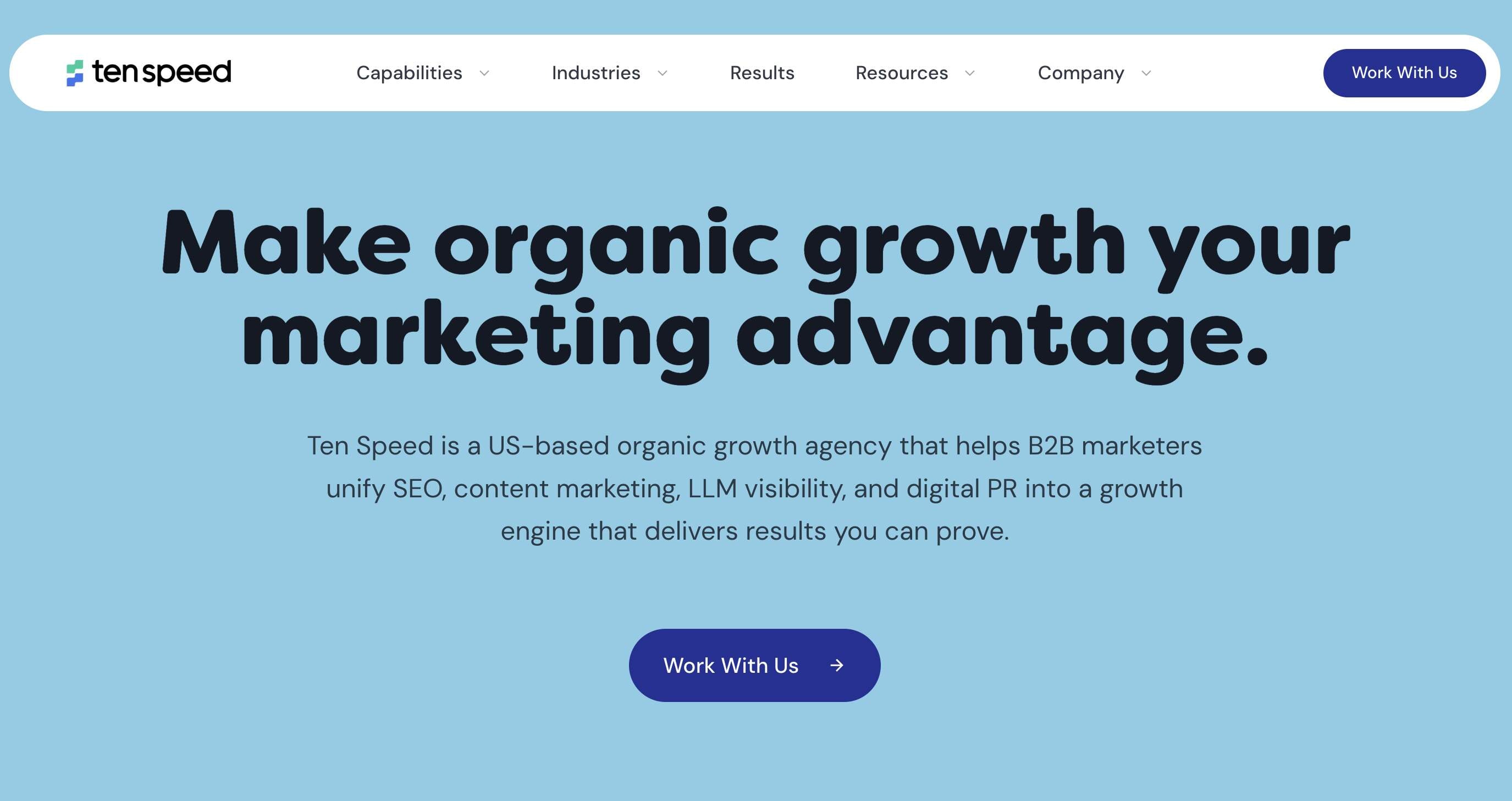
Ten Speed approaches content as a commercial asset, not a branding exercise. Their focus is on turning organic visibility into qualified demand by aligning content directly with buyer intent.
They are a strong fit when traffic exists but conversion stalls because content does not support how buyers actually evaluate solutions.
- Best Features
- Content marketing aligned with SaaS SEO
- Structured content calendars
- Conversion-optimized content for pipelines
- Price
- Mid-market retainers
- Flexible for content-heavy programs
- Who This Is Best For
- SaaS companies seeking organic growth
- Teams that want predictable lead generation
- Organizations prioritizing thought leadership
5. Growth Marketing Pro

Growth Marketing Pro centers its work on diagnosing where conversion breaks down across inbound channels. Their approach prioritizes efficiency and clarity over expansion into unnecessary tactics.
- Best Features
- Inbound marketing and demand generation
- Paid media optimization
- Pipeline-focused growth strategy
- Price
- Mid-to-high retainers depending on scope
- Designed for measurable ROI
- Who This Is Best For
- SaaS brands seeking performance-oriented results
- Teams that want measurable pipeline growth
- Organizations with multiple channels to manage
6. Refine Labs
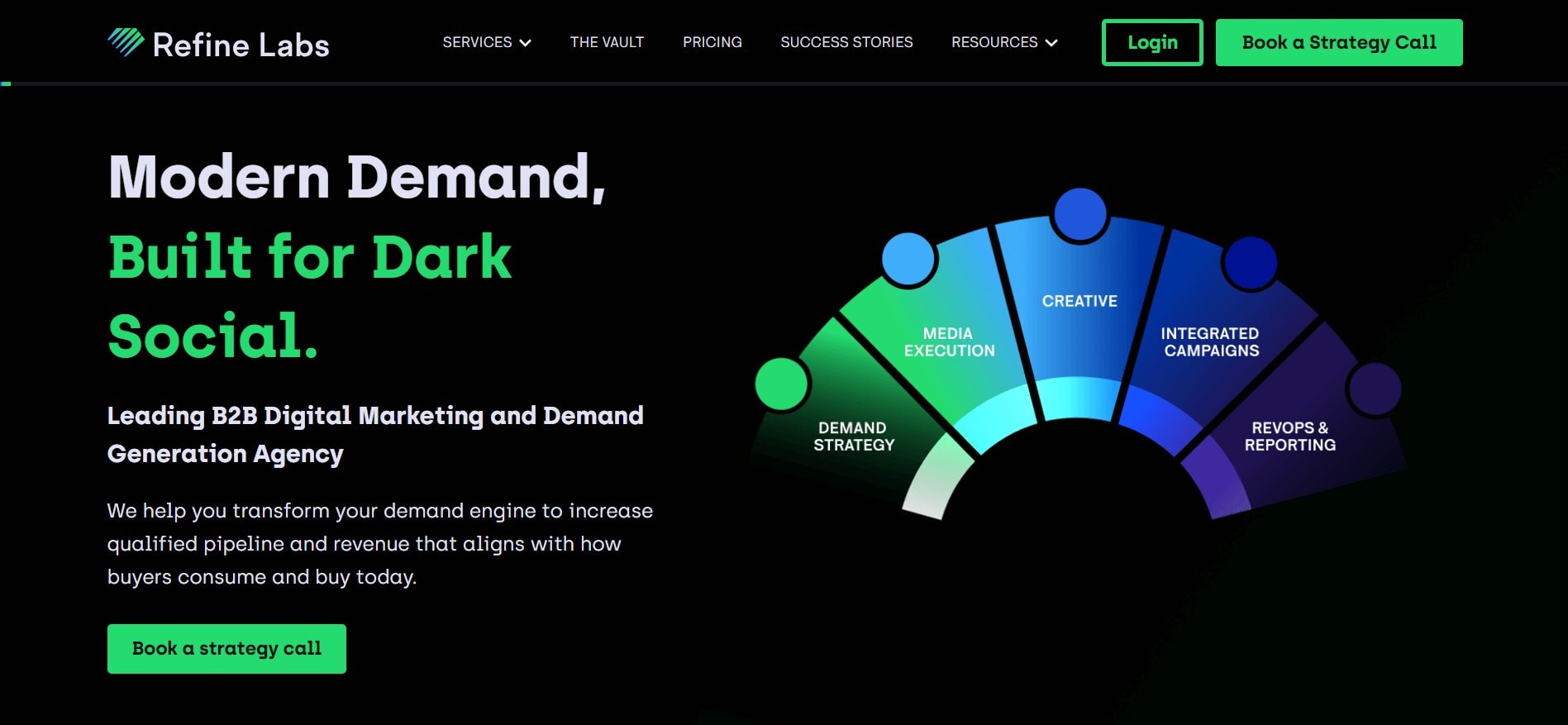
Refine Labs focuses on demand creation rather than short-term lead capture. Their work emphasizes consistency in positioning, lifecycle alignment, and long-term revenue contribution.
They are often selected by teams that want growth without eroding brand trust, especially in competitive or crowded SaaS categories.
- Best Features
- Revenue engine optimization
- Demand generation and lifecycle marketing
- Data-driven growth strategies
- Price
- Mid-market retainers
- Packages aligned with SaaS growth stage
- Who This Is Best For
- Growth-stage SaaS companies
- Teams focused on pipeline and retention
- Companies balancing content and paid growth
7. Single Grain
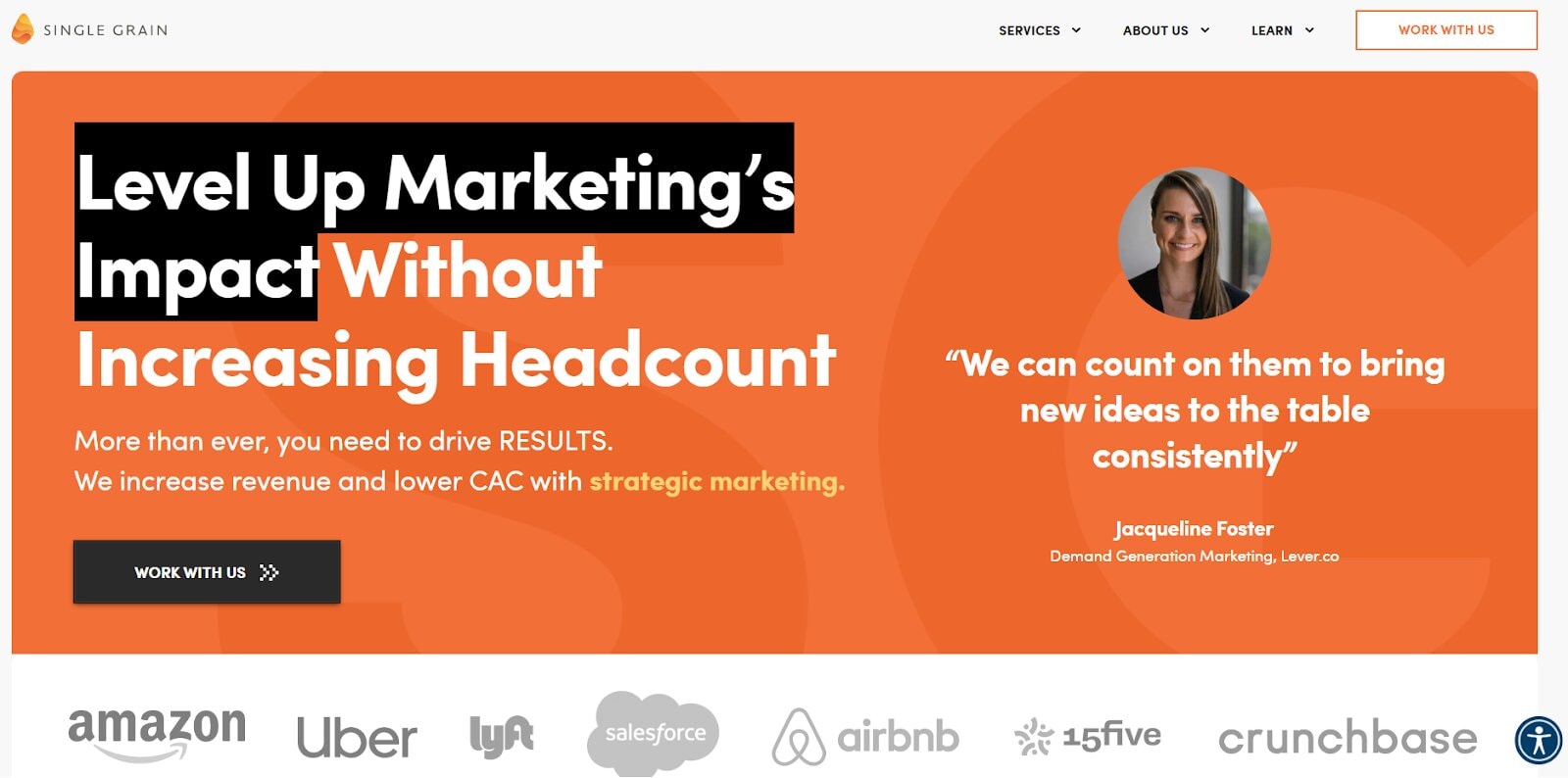
Single Grain supports SaaS companies that rely heavily on paid acquisition and need tighter performance control. Their work prioritizes testing discipline, spend efficiency, and conversion clarity.
They are commonly brought in when budgets are significant, results are uneven, and leadership needs cleaner signals on ROI.
- Best Features
- Paid advertising and media optimization
- Content production for pipeline conversion
- Conversion rate optimization
- Price
- Flexible retainers
- Scales with campaign spend and objectives
- Who This Is Best For
- SaaS businesses targeting rapid growth
- Teams looking for paid performance and content synergy
- Companies wanting measurable marketing ROI
8. KlientBoost
KlientBoost is designed for speed and feedback. Their strength lies in paid media execution paired with aggressive conversion testing to improve acquisition outcomes quickly.
They are a good fit when SaaS teams want rapid insight into what messaging and funnels convert before scaling further.
- Best Features
- Paid media and PPC campaigns
- Conversion-focused landing pages
- Testing and optimization for better ROI
- Price
- Mid-market retainers
- Adjustable depending on ad spend
- Who This Is Best For
- SaaS companies focused on paid acquisition
- Teams needing fast, measurable growth
- Businesses optimizing conversion paths
9. SimpleTiger

SimpleTiger treats SEO as a predictable acquisition system rather than a content volume play. Their approach focuses on intent alignment, technical clarity, and long-term inbound stability.
They are often chosen when SaaS companies want organic growth to behave reliably instead of fluctuating with every algorithm change.
- Best Features
- SaaS SEO and technical SEO
- Content optimization for search intent
- Structured growth programs for organic leads
- Price
- Mid-market retainers
- Packages scale with content and SEO needs
- Who This Is Best For
- SaaS businesses aiming for long-term organic growth
- Teams seeking predictable pipeline from SEO
- Companies with strong content needs
10. Ironpaper
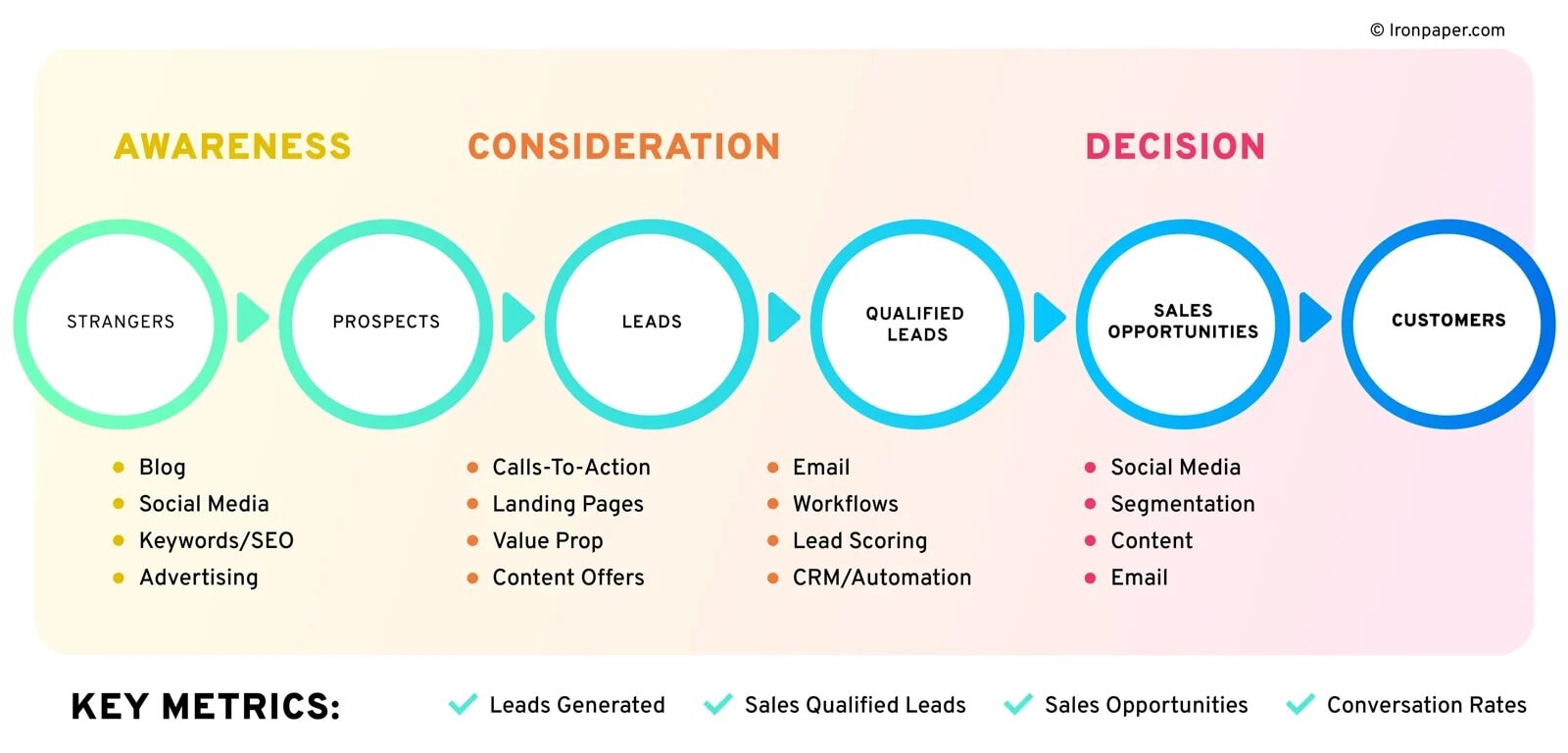
Ironpaper works with B2B SaaS companies selling to informed, cautious buyers. Their strength lies in connecting inbound interest to structured demand generation and sales enablement.
They are typically engaged when teams need better alignment between marketing education and sales execution across complex buying journeys.
- Best Features
- Content-driven demand generation
- Pipeline-focused inbound marketing
- Analytics-driven campaign management
- Price
- Mid-to-high retainers
- Custom packages based on growth stage
- Who This Is Best For
- B2B SaaS companies
- Teams focused on pipeline creation and conversion
- Companies that need strategy plus execution
Selecting the right agency is not about popularity or size. It is about fit, expertise, and the ability to connect strategy with measurable growth. Each of these agencies solves real SaaS challenges, whether it is scaling content, optimizing conversions, or building a predictable pipeline.
Understanding lead generation for creative agencies aligns with your business stage makes every marketing effort more effective and lasting.
Steps to Choose the Best SaaS Marketing Agency for Your Business
Selecting the right saas marketing agency requires clarity on priorities, not vendor promises. Evaluating a seo agency focused approach, understanding growth marketing agency capabilities, and mapping them to your operating model reduces risk.
Decision quality improves when evaluation follows a structured path.
1. Define Your SaaS Business Goals and Growth Stage
Clarify what you want to achieve this year, the stage of your company, and the types of campaigns that fit your growth model. Goals guide every decision and filter agencies that match your priorities.
How to apply it
- Write one primary outcome, pipeline, retention, expansion, or new-market entry.
- Define the time horizon, quarter, half-year, or year.
- Decide what “good” looks like in numbers, not adjectives.
2. Identify the Primary Customer Acquisition Bottleneck
Pinpoint where leads slow, conversion drops, or pipeline stalls. Recognizing the bottleneck ensures you hire an agency equipped to fix the right problem.
How to apply it
- Name the exact stage, awareness, intent, activation, conversion, expansion.
- Pull 90 days of funnel data and spot the first big drop, paying attention to your lead cost.
- Ask for a fix plan that starts with the bottleneck, not the channel.
Example
If trials are high but upgrades stall, the bottleneck is activation, not traffic.
3. Evaluate SaaS SEO and Content Marketing Capabilities
Check technical seo, keyword strategy, content production, and how content drives pipeline. Look for evidence that the agency can move paying customers, not just traffic.
How to apply it
- Ask how they connect content to deal stages, not blog calendars.
- Check if they can improve conversion paths with web design and web development when needed.
- Confirm their key services include intent mapping and internal linking, not only publishing.
4. Assess Experience With Similar SaaS Companies and Markets
Review case studies or client histories. Agencies familiar with your niche or growth stage understand long sales cycles and complex buyers better than generalists.
How to apply it
- Ask for one case study closest to your ACV and sales cycle.
- Look for the “why” behind decisions, not only outcomes.
- Prioritize teams with deep SaaS expertise in your motion, PLG, sales-led, or hybrid.
5. Review Link Building Quality and Authority Standards
Look for white-hat link building and digital PR. These strengthen domain authority without risking search penalties or brand reputation.
How to apply it
- Ask what pages they build links to and why those pages matter.
- Request examples of placements and the criteria for relevance.
- Confirm the plan supports product pages, not only content hubs.
6. Check Alignment With Your Marketing Strategy and GTM Motion
Ensure the agency’s approach complements your marketing strategy and go-to-market plan. Misalignment waste marketing resources and slows results.
How to apply it
- Ask how they translate GTM into channel priorities.
- Make sure messaging stays consistent across pages and campaigns.
- Check if they can support lifecycle, not just acquisition.
7. Validate Reporting, Attribution, and Performance Tracking
Ask how they measure results. Agencies should tie marketing activity to predictable revenue growth and customer acquisition rather than just vanity metrics.
How to apply it
- Ask what they report weekly, monthly, quarterly, and why.
- Check if attribution includes assisted conversions and sales cycle lag.
- Make sure reporting reduces vanity metrics, not decorates them.
8. Understand Team Structure and Execution Ownership
Know who handles strategy, content, paid campaigns, and reporting. Clear ownership ensures accountability and smooth coordination with your internal team.
How to apply it
- Confirm one owner for prioritization and tradeoffs.
- Ask who writes, who reviews, who ships, who measures.
- If paid is involved, ask how they run performance marketing alongside organic work.
9. Compare Engagement Models, Budgets, and Timelines
Review retainers, project-based pricing, and timeline expectations. The right fit balances investment with expected outcomes.
How to apply it
- Ask what changes at different budget tiers.
- Confirm what is included vs add-ons.
- If you need paid execution, clarify whether they are a performance marketing agency or only strategy support.
10. Run a Short Pilot or Proof-Based Evaluation
A small-scale pilot helps test alignment, execution quality, and ROI before committing to long-term contracts.
How to apply it
- Pick one outcome, one funnel stage, and one channel cluster.
- Set success criteria before work starts.
- Review decision quality, not just deliverables.
A strong selection process does one thing well, it makes tradeoffs visible before you commit. The next section should show what success looks like once the partnership starts operating in real time.
Example
A growth-stage SaaS company ran a 90-day pilot with a content marketing agency. Within the first month, SEO traffic improved, demo requests rose, and paid campaigns showed measurable ROI, proving the fit before a full engagement.
Following these structured steps ensures you hire the right saas marketing agency for your growth stage and priorities. This method sets the stage for measuring success and ROI effectively in the next section.
What Changes to Expect in the First 90 Days of a Strong SaaS Marketing Partnership
A strong partnership does not start with more campaigns. It starts with clearer structure, cleaner priorities, and tighter links between marketing activity and revenue reality. In the first 90 days, the biggest shift is that your team stops guessing.
Work becomes sequenced, owned, and measurable across channels, not scattered across disconnected tasks.
Days 1–30: Clarity, Ownership, and a Working Baseline
The first month is about building control. The right partner sets a baseline using data analytics, then defines what matters, who owns it, and what changes first.
What changes you should expect
- Baseline that leadership can trust, covering funnel stages, attribution gaps, and vanity metrics that mislead decisions
- Messaging and ICP alignment, so content creation and demand generation support the same buyer narrative
- Tracking cleanup, including customer acquisition cost inputs and conversion rate optimization events
- SEO and site hygiene priorities, especially technical SEO fixes that block crawlability and conversion paths
- A channel map with roles, defining how social media marketing, email marketing, and paid media support one growth strategy
Example
A B2B SaaS team sees steady traffic but inconsistent demos. In the first month, tracking is rebuilt, key pages are re-mapped by intent, and reporting shifts from visits to qualified actions.
Days 31–60: Fewer Projects, Stronger Execution
Once priorities are clear, execution gets tighter. Instead of running ten experiments at once, the partnership focuses on the few moves that change outcomes.
What changes you should expect
- Strategic content marketing tied to pipeline, not just awareness, with a content strategy that mirrors long sales cycles
- Demand generation that supports sales, including sales enablement assets that match how deals actually progress
- Conversion optimization on money paths, such as pricing, comparison, and demo flows
- Link building and digital PR planned around authority goals, not random placements
- Systems for marketing automation, so lead nurturing is consistent even when the saas marketing team is busy
Days 61–90: Early Compounding and Predictable Patterns
By month three, you should see fewer surprises. Performance becomes interpretable because actions connect to outcomes and the feedback loop is reliable.
What changes you should expect
- Higher quality acquisition signals, where organic growth improves and paid advertising waste drops
- Cleaner attribution discussions, because marketing efforts map to business outcomes, not activity volume
- More consistent pipeline contribution, especially for saas marketing services that depend on repeatable intent capture
- Stronger cross-channel consistency, where social media management, content marketing, and paid media reinforce the same positioning
- A partner model that holds, with an agency partner acting like an extension of your team, not a vendor
Example
An enterprise pipeline team sees leads improve after pricing page testing and intent-aligned content updates. The change is not dramatic, but week-to-week performance becomes steadier and forecasts become easier to defend.
A strong 90-day cycle does not prove everything, it proves whether the partnership can run the growth system with discipline, which is exactly what the next section will measure.
FAQs
1. How Do Growth Stage SaaS Companies Decide Whether to Hire Specialists or a Full-Service Agency?
They assess internal bandwidth, complexity of marketing needs, and growth goals. SaaS companies aiming to scale efficiently often choose specialists for focused gaps like SEO or paid media, while full-service agencies manage strategy, content, demand generation, and execution end-to-end.
The decision depends on scale, internal expertise, and impact on customer retention.
2. What Should SaaS Brands Look for in Long-Term Marketing Partnerships Beyond Short-Term Results?
Consistency in strategy, proven execution, alignment with growth stage, and the ability to measure ROI across channels. Strong partners rely on data driven strategies to improve pipeline quality, support customer retention, and adapt as the SaaS business scales.
3. How Do Enterprise SaaS Companies Manage Risk When Working With External Marketing Agencies?
They define clear KPIs, track ROI metrics like CAC and MRR, and test performance through pilot projects before long-term commitments. A data driven approach, combined with frequent reporting and cross-team integration, reduces execution risk and keeps outcomes measurable.
4. When Does a SaaS Company Need a Dedicated Content Marketing Agency Instead of Internal Writers?
When internal teams cannot consistently produce high-quality content tied to buyer intent, pipeline goals, and customer retention. Agencies bring structured planning, SEO alignment, and scalable distribution that internal resources often struggle to maintain.
5. How Long Does It Typically Take to See Meaningful Impact After Hiring a SaaS Marketing Agency?
Timelines vary by channel and growth stage, but most SaaS companies see measurable pipeline movement or campaign ROI within 3–6 months. Longer-term outcomes, including predictable growth and improved customer retention, typically emerge over 6–12 months with consistent execution.
6. How Do SaaS Teams Know Which Key Services Actually Move the Needle?
SaaS teams judge impact by tracing outcomes, not deliverables. In the saas industry, services only matter when they shorten sales cycles, improve pipeline quality, or support predictable revenue.
What saas marketing agencies offer becomes meaningful when b2b saas marketing efforts show clear movement in conversions, retention, or deal velocity tied to business objectives.
Conclusion
Choosing whether to hire comes down to discipline, not belief. Clarify the problem you are solving, confirm the inputs you can support, and commit to a full learning cycle before expecting results.
When those conditions are in place, SaaS marketing agencies become a lever for focus and execution rather than a line item to justify.
The next move is simple and practical. Name your bottleneck, set one measurable outcome, and evaluate partners only on their ability to move that outcome with clarity and accountability.