.png)

.svg)
.svg)
.svg)
Every click your SaaS website earns holds potential revenue, yet most of it slips away unnoticed. Traffic floods in, but without precise execution, converting visitors into paying customers remains a challenge for ambitious SaaS businesses.
These 10 B2B SaaS marketing agencies specialize in transforming that flow into measurable growth, blending targeted campaigns, strategic content, and optimized funnels.
Each approach ensures visitors move seamlessly toward becoming loyal users, unlocking predictable revenue.
What Are B2B SaaS Marketing Agencies and What Do They Do?
B2B SaaS marketing agencies provide saas marketing services and digital marketing solutions tailored to SaaS companies aiming for predictable growth.
The right SaaS marketing agency combines specialized marketing expertise and growth marketing agency tactics to boost brand visibility and revenue. Understanding these capabilities lays the groundwork for examining the differences between SEO agencies and growth-focused teams.
How They Drive Growth
- Optimize demand generation to convert leads into paying users
- Manage organic traffic through content, SEO, and social campaigns
- Implement targeted marketing strategies aligned with SaaS business goals
- Use data-driven insights to refine campaigns and maximize revenue outcomes
What Sets the Right SaaS Marketing Agency Apart — including their mastery of on-page SEO for lead generation.
- Deep understanding of the SaaS industry landscape and buyer journeys
- Ability to execute demand generation strategies that scale predictably
- Integrated approach across channels for consistent organic traffic growth
- Evidence-backed campaigns with a proven track record in generating revenue
Example: A B2B SaaS startup aiming to grow trial users might work with an agency to structure content marketing campaigns that drive organic traffic while simultaneously implementing a demand generation strategy targeting high-value leads.
Understanding how these agencies operate and the value they bring lays the groundwork to examine the differences between SEO-focused teams and broader growth marketing agencies in the next section.
SEO Agencies vs Growth-Focused Marketing Agencies: What's the Difference
SEO agencies and growth marketing agencies bring complementary expertise. While SEO strategy, technical SEO, and deep SaaS expertise focus on organic growth and content strategy, growth-focused teams drive strategic content marketing and conversion rate optimization.
Comparing these approaches helps define which agency model aligns with your SaaS expertise and measurable performance goals.
Understanding these distinctions clarifies which agency type aligns with your needs, and sets the stage to explore common failures SaaS businesses face with the wrong marketing agency.
Common Failures SaaS Businesses Face With the Wrong Marketing Agency
Misaligned marketing strategies, crowded markets, and long sales cycles often disrupt business goals for SaaS teams. When SaaS and tech companies work with agencies lacking the right approach, saas marketing services can fail, and software companies may see stalled predictable growth.
Recognizing these pitfalls provides insight into the detailed challenges that follow in each execution area.
1. Misaligned Marketing Strategies With SaaS Business Models
SaaS teams and software companies struggle when marketing strategies ignore business goals and crowded markets.
Misalignment slows predictable growth and reduces revenue efficiency. Selecting the right SaaS marketing agency with deep SaaS expertise ensures campaigns are targeted and measurable.
Example: A startup trying to reach mid-market customers may fail if the agency focuses on enterprise messaging, wasting both effort and budget.
2. Content Marketing Focused on Traffic Instead of Revenue Outcomes
Content marketing SEO, blog writing, digital PR, and strategic content marketing may drive traffic without improving customer acquisition. Agencies must prioritize content strategy that produces revenue outcomes, ensuring SaaS brands achieve predictable growth.
Example: Publishing frequent blog posts without clear call-to-action or gated offers can increase organic traffic but not convert visitors into paying users.
3. Paid Advertising Spend Without Clear Attribution
Paid media, media campaigns, and paid advertising without accurate attribution can waste SaaS marketing efforts. Monitoring revenue efficiency and accelerating revenue is essential, especially when leveraging a growth marketing agency or specialized marketing agency.
Example: Running LinkedIn ads without tracking which campaigns generate qualified leads can obscure the true return on investment.
4. Weak Search Engine Optimization for High-Intent SaaS Keywords
Technical SEO, seo agency focused, and organic search practices are essential for driving organic traffic. SaaS companies aiming to boost online visibility need integrated SEO strategies paired with content marketing to maintain predictable growth and measurable revenue outcomes.
5. Inbound Marketing That Generates Unqualified Leads
Inbound marketing, marketing automation, social media marketing, social media management, and lifecycle marketing must align with SaaS teams’ goals. Mismanaged campaigns create unqualified leads, slowing predictable growth and reducing revenue efficiency.
Example: A lead magnet targeting too broad an audience can increase signups but fail to deliver qualified prospects for sales.
6. Link Building That Fails to Build SaaS Brand Authority
Digital PR and content marketing SEO help strengthen brand visibility and authority. Without strategic link building, SaaS brands risk losing organic growth opportunities, reducing predictable revenue and limiting the impact of a right SaaS marketing agency.
7. Poor Collaboration Between Marketing Agencies and Sales Teams
In house marketing team, in house team, marketing partner, agency partner, and marketing team alignment is essential. Lack of collaboration slows predictable growth, impedes revenue outcomes, and weakens overall SaaS marketing execution.
Example: A sales team unaware of the content calendar cannot follow up effectively on inbound leads.
8. Lack of Transparency in Reporting and Performance Metrics
Vanity metrics, data driven insights, data driven approach, predictable growth engine, and revenue efficiency are key to measuring success. Agencies without transparency fail to accelerate revenue or deliver predictable growth outcomes.
Example: Reporting only on clicks or impressions without pipeline attribution masks the real business impact of campaigns.
Understanding these failures prepares SaaS companies to evaluate top B2B SaaS marketing agencies and identify partners that deliver real revenue outcomes and measurable growth.
Top B2B SaaS Marketing Agencies Trusted by High-Growth SaaS Companies
High-growth SaaS companies rely on marketing agencies with notable clients and proven success in revenue growth. These B2B SaaS marketing agencies combine saas expertise and content strategy with integrated approaches that deliver measurable outcomes.
Seeing which agencies earn trust clarifies why each plays a unique role in shaping predictable growth for SaaS businesses.
1. J6 Ventures
J6 Ventures works closely with B2B SaaS teams that need growth tied directly to revenue, not activity. Its approach blends demand generation strategy, organic traffic growth, and conversion-focused execution to support predictable revenue outcomes across the funnel.
- Best Features
- Demand generation strategy tied directly to revenue outcomes
- Strong focus on organic traffic and conversion rate optimization
- Integrated SEO, content, and paid media execution
- Price
- Custom pricing based on scope and growth stage
- Best For
- B2B SaaS companies aiming for predictable revenue growth
Website: J6 Ventures
2. Directive Consulting
Directive Consulting is built for SaaS companies operating in competitive markets with long sales cycles. The agency focuses on high-intent acquisition and measurable pipeline impact, offering clarity between marketing spend and revenue growth.
- Best Features
- SEO agency focused on high-intent SaaS keywords
- Paid media and demand generation for pipeline growth
- Clear attribution aligned with revenue efficiency
- Price
- High-end retainers
- Best For
- SaaS brands with long sales cycles and high ACV deals
Website: Directive Consulting
3. Kalungi
Kalungi positions itself as an extension of the in-house marketing team for SaaS businesses. Its strength lies in building marketing foundations, aligning strategy with execution, and supporting SaaS companies aiming to scale without fragmented efforts.
- Best Features
- Full-stack SaaS marketing services
- Strong positioning and go-to-market execution
- Acts as an extension of the in-house marketing team
- Price
- Retainer-based, mid to high range
- Best For
- Early to mid-stage SaaS companies building marketing foundations
Website: Kalungi
4. Refine Labs
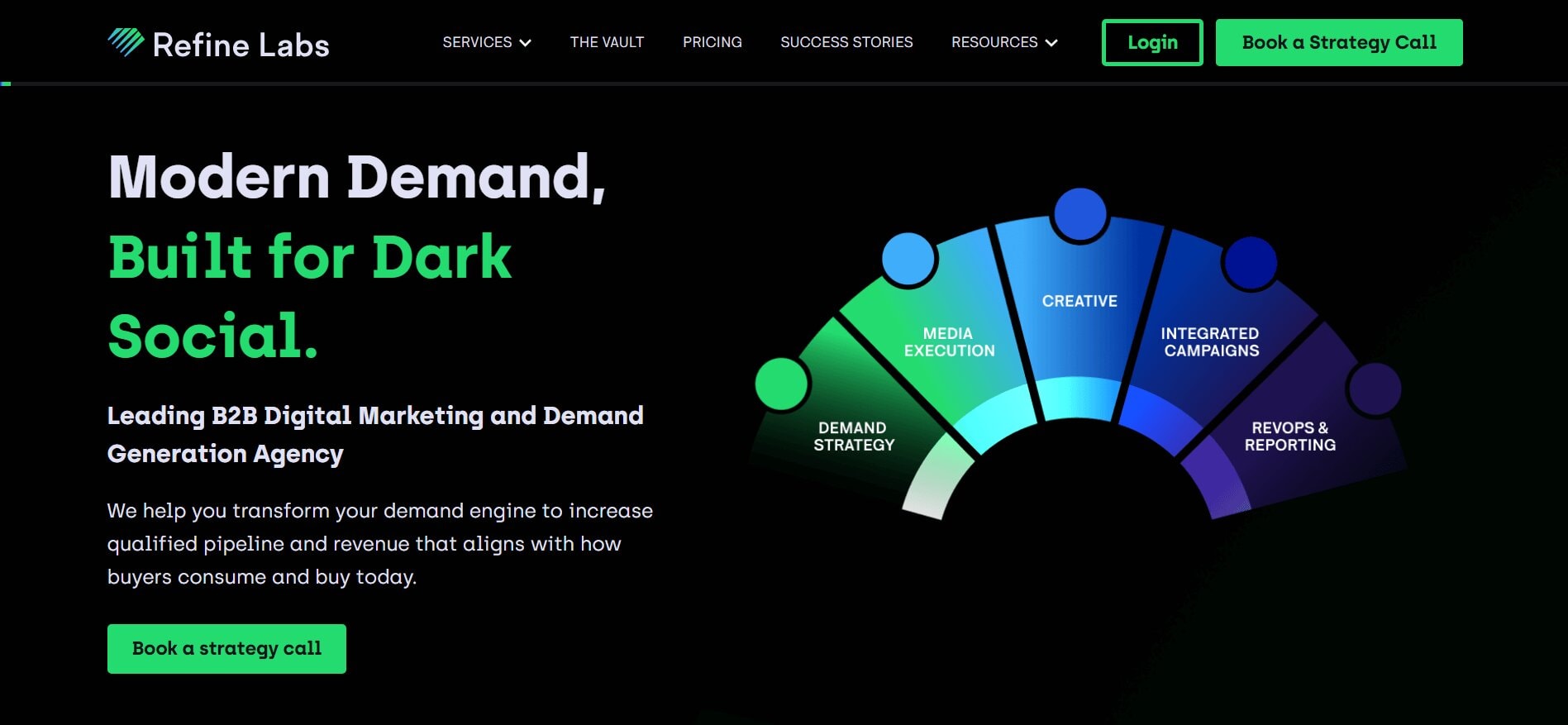
Refine Labs is known for challenging traditional demand models within the SaaS industry. The agency emphasizes buyer-led demand generation, paid media experimentation, and lifecycle marketing to modernize customer acquisition.
- Best Features
- Buyer-led demand generation strategy
- Paid media experimentation and lifecycle marketing
- Modern approach to SaaS customer acquisition
- Price
- Premium pricing
- Best For
- High-growth SaaS companies moving beyond MQL-heavy models
Website: Refine Labs
5. Single Grain
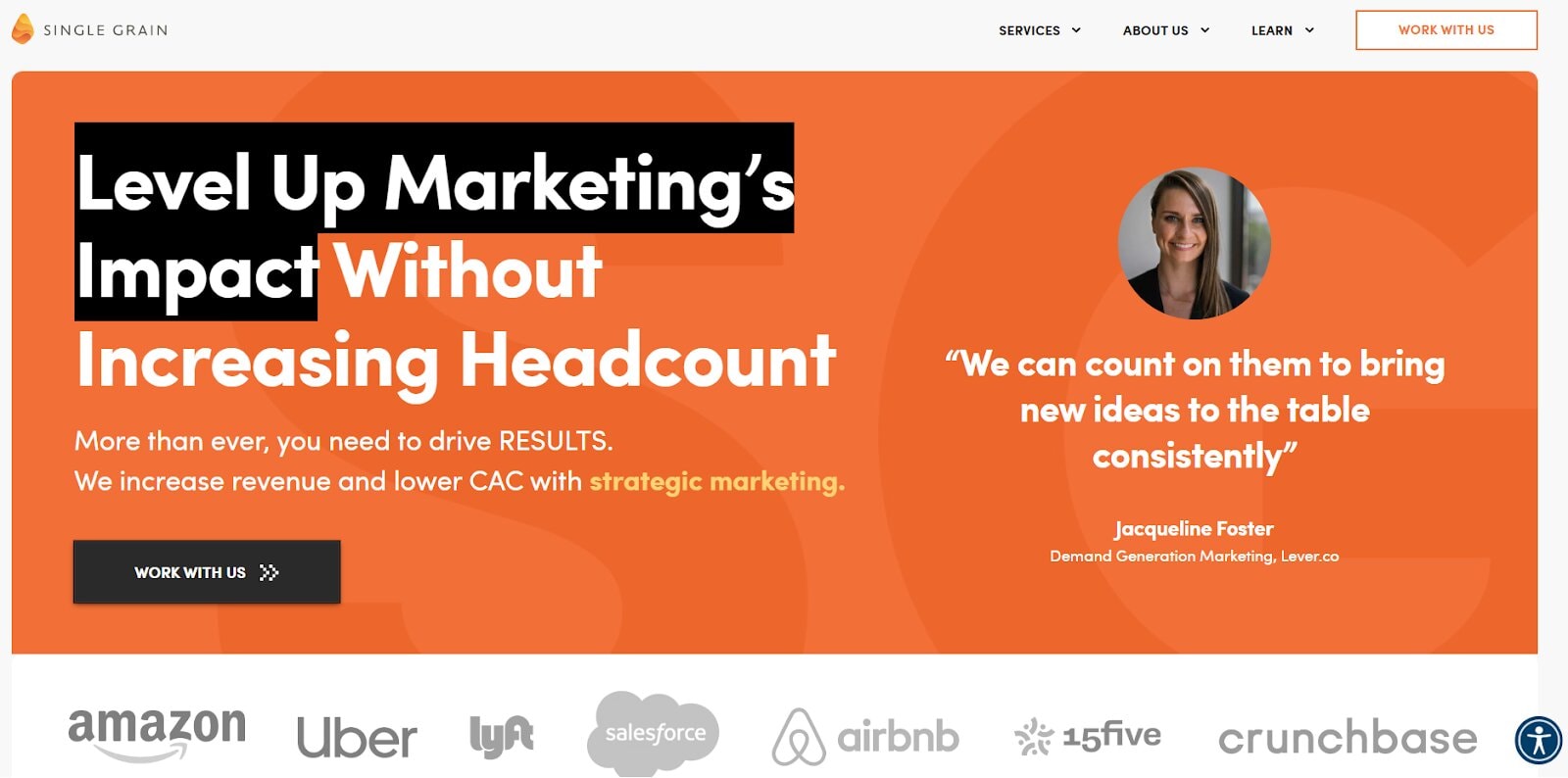
Single Grain offers flexible digital marketing support across content, paid acquisition, and conversion optimization. Its experience with SaaS and tech companies suits teams testing multiple channels while maintaining focus on revenue outcomes.
- Best Features
- Broad digital marketing across content and paid channels
- Conversion-focused campaign optimization
- Experience with SaaS and tech companies
- Price
- Project-based and retainer options
- Best For
- SaaS teams needing flexible, multi-channel execution
Website: Single Grain
6. Ironpaper
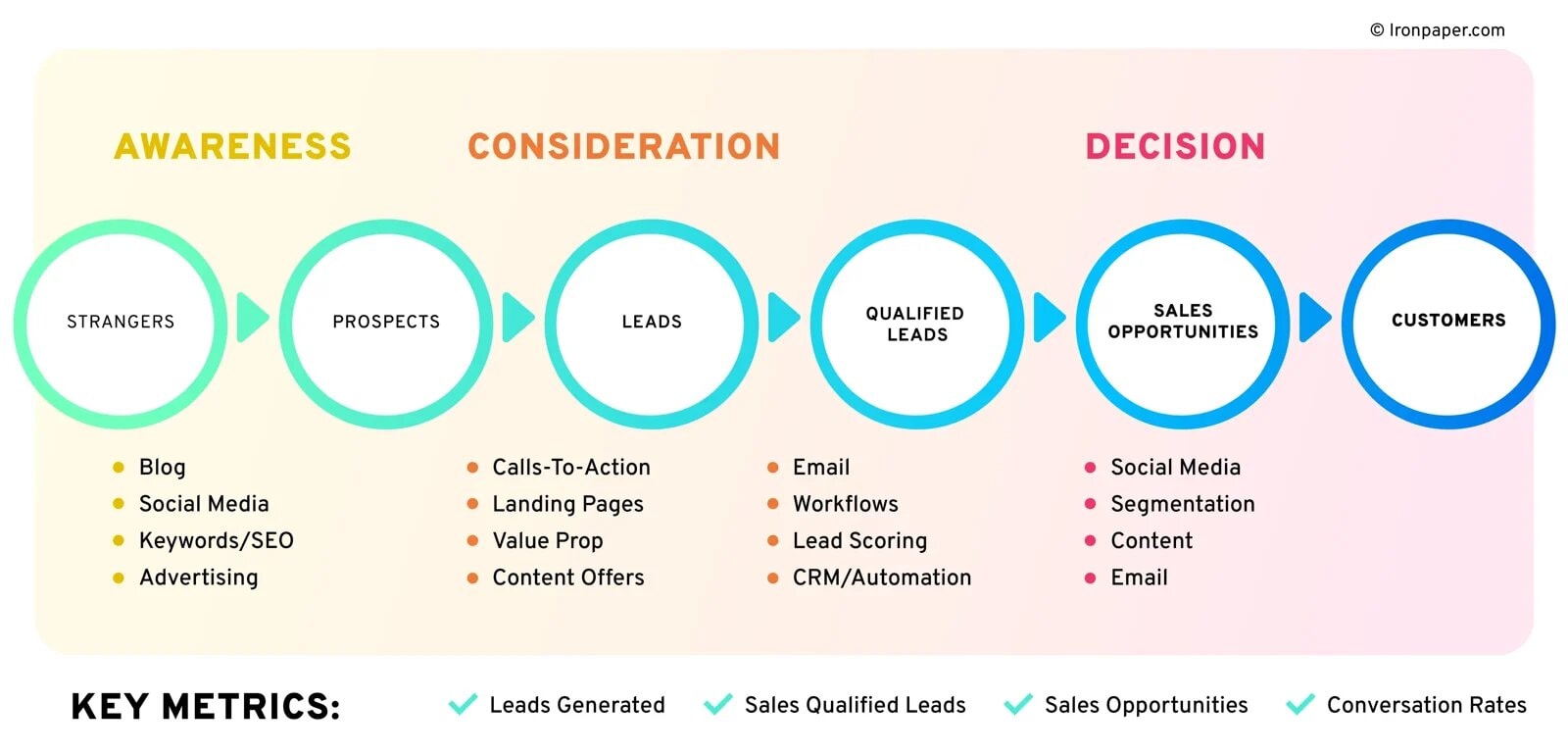
Ironpaper specializes in enterprise-focused SaaS marketing where buying decisions involve multiple stakeholders. The agency connects inbound marketing, content strategy, and sales enablement for consistent revenue efficiency.
- Best Features
- Enterprise SaaS content and inbound marketing
- Strong sales enablement alignment
- Deep experience with complex buying committees
- Price
- High-end retainers
- Best For
- Enterprise SaaS and regulated industries
Website: Ironpaper
7. Tuff
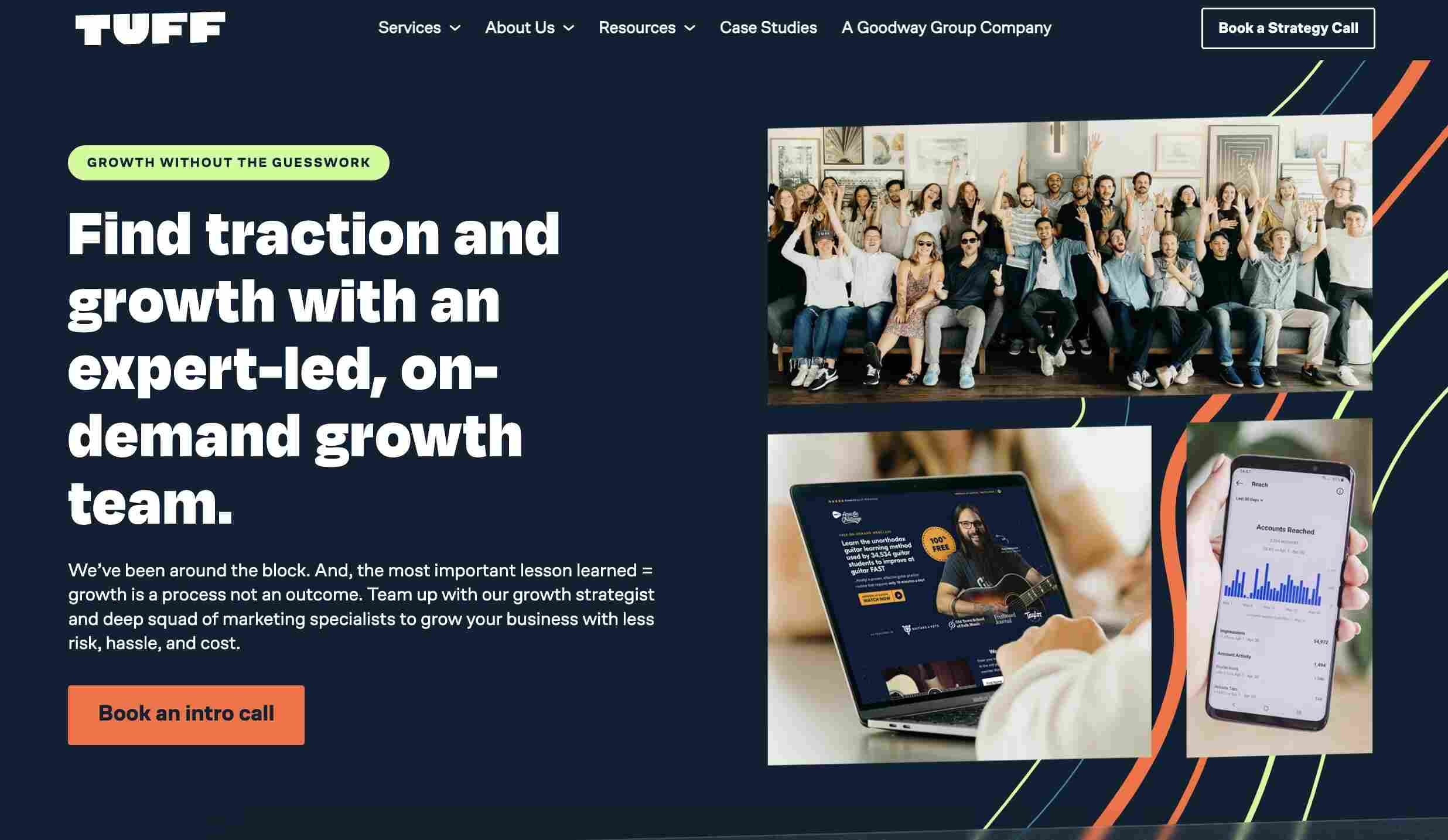
Tuff operates as a growth marketing partner for SaaS teams that value structured experimentation. Its process-driven approach helps identify scalable channels while keeping customer acquisition goals clear.
- Best Features
- Experiment-driven growth marketing
- Paid media testing tied to customer acquisition
- Clear performance reporting and learning cycles
- Price
- Mid to high range retainers
- Best For
- SaaS teams validating scalable growth channels
Website: Tuff
8. SimpleTiger
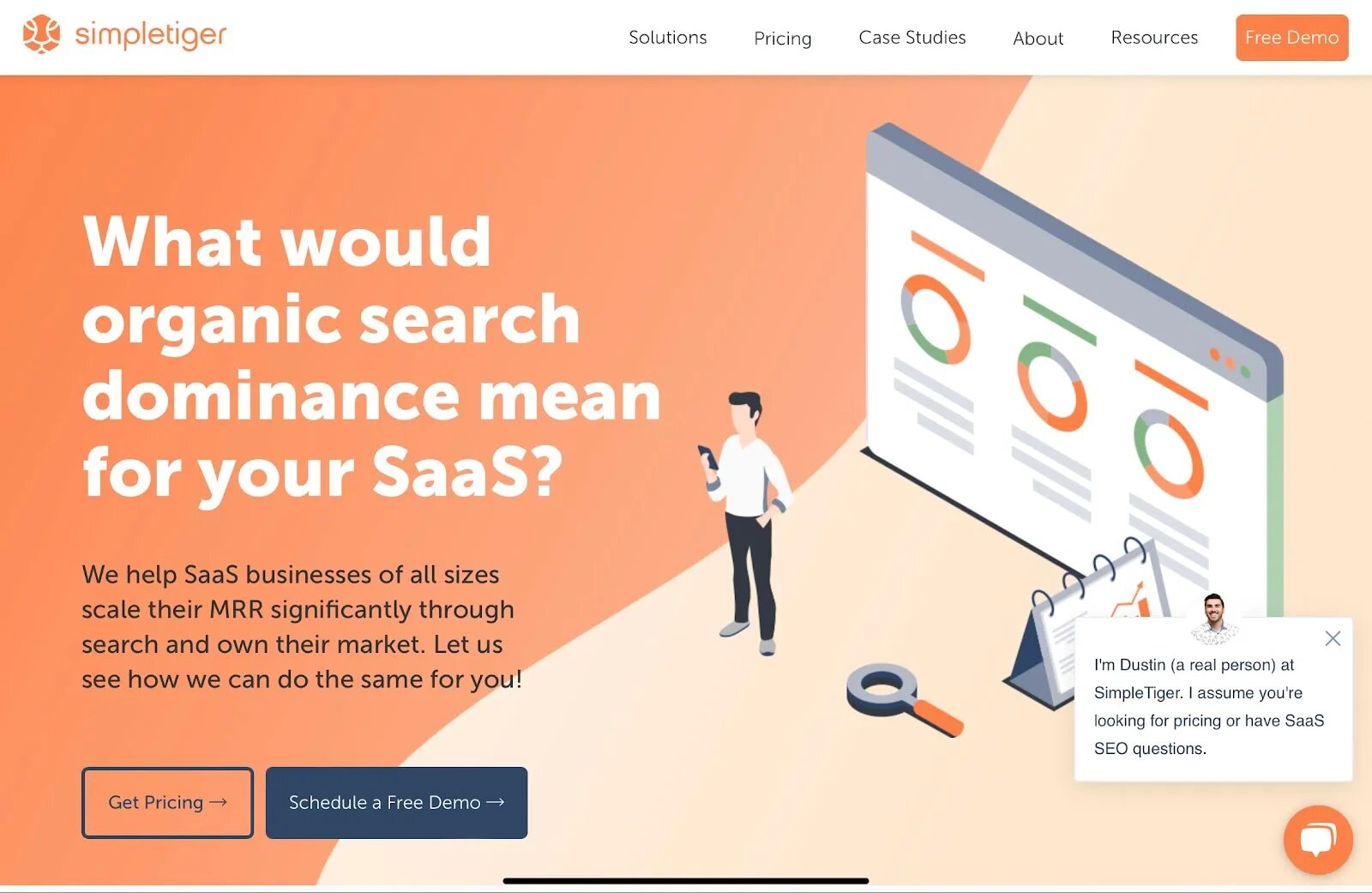
SimpleTiger is an SEO agency focused exclusively on SaaS growth. The team emphasizes technical SEO, content marketing SEO, and link building to strengthen organic search visibility.
- Best Features
- Technical SEO and content marketing SEO
- SaaS-focused link building
- SEO strategy designed for organic search growth
- Price
- SEO-focused retainers
- Best For
- SaaS companies prioritizing organic growth
Website: SimpleTiger
9. Grow and Convert

Grow and Convert centers its work around strategic content marketing that directly supports demand generation. The agency prioritizes content that attracts qualified buyers and converts organic traffic into pipeline.
- Best Features
- Strategic content marketing for demand generation
- BOFU-focused content that supports sales
- Strong emphasis on revenue-linked content strategy
- Price
- Premium content retainers
- Best For
- B2B SaaS companies converting organic traffic into pipeline
Website: Grow and Convert
10. New North
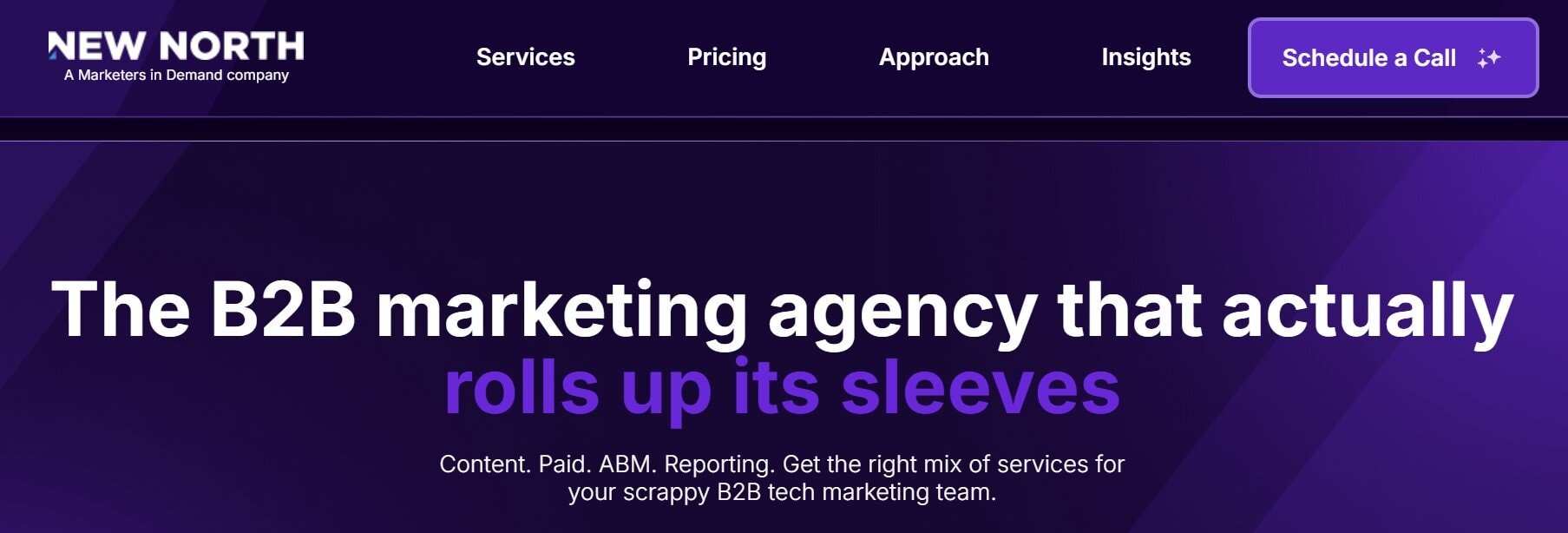
New North supports SaaS brands navigating competitive and crowded markets. Its integrated marketing approach balances content, SEO, and demand generation to help teams move from early traction to predictable growth.
- Best Features
- Integrated marketing across SEO, content, and demand generation
- Focus on SaaS growth and revenue efficiency
- Clear positioning in competitive markets
- Price
- Mid-range retainers
- Best For
- SaaS companies scaling beyond early traction
Website: New North
Now lets look at the steps to choose agency that suits your business.
Steps to Choose the Right B2B SaaS Marketing Agency
Online visibility, brand visibility, integrated marketing, marketing efforts, and predictable growth are all influenced by selecting the right SaaS marketing agency. A structured approach ensures that your SaaS business aligns with agency capabilities and maximizes revenue outcomes.
Laying this foundation prepares the next section on common mistakes SaaS teams should avoid.
1. Define Your SaaS Growth Stage and Priority
What To Clarify
- Pin down the stage, early traction, scaling, or enterprise expansion
- Choose one priority, organic traffic growth, demand generation, or revenue efficiency
- Align expectations to the reality of your sales cycle and resources
Example: A Series A team chasing pipeline this quarter needs a different partner than a PLG product chasing activation at scale.
2. Match the Agency to Your SaaS Business Model
What To Check
- Selling motion, PLG, sales-led, or hybrid
- ICP and deal complexity, especially in crowded markets
- Fit with your in house team and current marketing efforts
Example: If sales handles most conversion, the agency must support sales enablement and qualified lead flow, not just traffic.
3. Decide Which Channels Matter Most
What To Choose First
- Search engine optimization for compounding organic search growth
- Paid media for faster customer acquisition and controlled testing
- Lifecycle marketing for retention, expansion, and predictable revenue growth
What To Avoid
- Spreading budgets across every channel without a demand generation strategy
- Treating social media marketing as a substitute for positioning or funnel clarity
4. Check Proven Experience With Similar SaaS Companies
What To Verify
- Proven track record with B2B SaaS companies in your SaaS industry
- Evidence of outcomes, not just activity, reporting should show revenue growth impact
- Familiarity with SaaS and tech companies, including your buyer type
Example: Ask for one case study that matches your sales cycle length and pricing model, even if it is anonymized.
5. Evaluate How Marketing Strategies Connect to Revenue Outcomes
What To Demand
- Clear mapping from marketing strategies to revenue outcomes
- Attribution that connects campaigns to pipeline and closed revenue
- Reporting that favors data driven insights over vanity metrics
What To Watch
- Metrics that look impressive but do not influence revenue efficiency
6. Assess Depth in Search Engine Optimization and Link Building
What To Inspect
- Technical SEO capability and a practical SEO strategy
- Content marketing SEO approach that targets high-intent pages
- Link building plan supported by digital PR, not random placements
Example: A strong partner can explain which pages should rank first, and why those pages influence pipeline.
7. Review How the Agency Collaborates With Sales Teams
What To Confirm
- How the agency partner communicates with sales and the marketing team
- Whether the marketing partner supports lead quality feedback loops
- How handoffs work between the in house marketing team and the agency
What To Avoid
- Siloed reporting that ignores sales outcomes and buyer objections
8. Understand the Execution Model and Team Seniority
What To Learn
- Who owns strategy vs execution, and how much is outsourced
- How senior the team is across content, SEO agencies work, and paid campaigns
- Whether the specialized marketing agency can scale output without losing quality
Example: If one senior strategist runs everything, ask who actually writes, builds, and optimizes week to week.
9. Compare Reporting Transparency and Communication Cadence
What To Set Early
- Weekly or biweekly reporting, with consistent definitions of success
- A dashboard that reflects a predictable growth engine, not scattered metrics
- Clarity on decisions, what changed, what worked, and what did not
What To Avoid
- Reporting that hides performance behind inflated activity counts
10. Validate Fit Through a Pilot or Short Engagement
What To Structure
- A short scope tied to customer acquisition, organic traffic, or paid media testing
- Clear success criteria tied to revenue outcomes
- A review point that confirms fit, process, and reporting quality
Example: A pilot focused on one funnel segment—such as testing email marketing services—often reveals more than a full retainer kickoff.
The best choice becomes obvious when an agency proves it can improve online visibility while keeping revenue outcomes measurable and repeatable.
Mistakes to Avoid When Working With SaaS Marketing Agencies
SaaS teams, saas and tech companies, software companies, business goals, and crowded markets highlight areas where poor agency choice can hurt growth. Avoiding these mistakes protects marketing efforts and accelerates revenue while reinforcing brand authority.
Understanding these common pitfalls makes it clear which metrics matter most for assessing agency performance.
1. Hiring for Output Instead of Fit
Many SaaS teams choose agencies based on deliverables rather than alignment with business goals. This creates activity without direction, especially in crowded markets where positioning matters.
- What It Looks Like
- Choosing agencies for volume of work, not SaaS relevance
- Applying generic playbooks across different software companies
- Why It Hurts
- Marketing efforts drift from revenue priorities
- Growth becomes inconsistent across channels
2. Letting Strategy Stay Abstract
Marketing strategies lose impact when they are not connected to daily decisions. SaaS teams need systems, not presentations, to maintain focus and momentum.
- What It Looks Like
- Strategy decks without execution ownership
- Frequent resets instead of compounding progress
- How To Correct It
- Tie strategy to weekly priorities and monthly reviews
3. Expecting the Agency to Work Without Context
Agencies perform best when they understand product nuance, pricing logic, and buyer objections. Without this context, execution lacks relevance.
- What It Looks Like
- Limited access to sales insights and customer feedback
- Late-stage feedback instead of early alignment
- What Works Better
4. Overloading Channels Too Early
Running too many channels at once spreads attention thin. Focus creates leverage, especially in the early phases of SaaS growth.
- What It Looks Like
- Simultaneous paid, content, SEO, and social efforts
- Channel hopping based on short-term noise
- How To Keep Focus
- Commit to one primary growth lever before expanding
5. Ignoring In-House Constraints
Agency plans fail when they ignore internal capacity. Alignment between the in-house marketing team and the agency keeps execution realistic.
- What It Looks Like
- Unclear ownership between SaaS teams and agencies
- Friction between marketing and sales
- What To Set Early
- Clear decision owner and shared lead definitions
6. Reviewing Results Without Business Context
Performance only makes sense when viewed through timelines and sales cycles. Context turns numbers into insight.
- What It Looks Like
- Isolated metric reviews without trend analysis
- Mixing short-term and long-term expectations
- What To Do Instead
- Evaluate progress against business goals and cycle length
When these mistakes are addressed early, evaluating agency performance becomes clearer, which naturally shifts attention toward the metrics that actually indicate growth.
Metrics That Matter: How to Measure Agency Performance for SaaS
Organic growth, organic search, and conversion rate optimization define how to measure a SaaS marketing agency’s performance. Tracking these metrics ensures marketing strategies are driving measurable revenue and efficient pipeline outcomes.
Establishing this measurement framework sets the stage to explore emerging trends and evolving strategies in B2B SaaS marketing agencies.
What to Measure First
The clearest metrics tie marketing activity to pipeline movement and customer acquisition. When measurement is consistent, performance reviews become decisions, not debates.
- Organic Growth
- Track qualified signups and demo requests from organic traffic
- Compare month over month changes, not single spikes
- Organic Search
- Monitor high intent page visibility and click share
- Validate whether rankings translate into sales conversations
- Conversion Rate Optimization
- Measure conversion rate changes on landing pages and product pages
- Tie improvements to lead quality, not just form fills
Example: A blog post that ranks well but drives low intent traffic looks successful, until conversion rate optimization shows it produces few qualified leads.
How to Judge Quality, Not Just Volume
Strong agencies do not hide behind surface performance. They show where growth comes from and why it converts.
- Revenue-Linked Indicators
- Lead to opportunity conversion trends
- Pipeline influenced by organic search and paid channels
- Efficiency Indicators
- Cost per qualified lead and customer acquisition movement
- Time to first meaningful conversion from organic traffic
How to Spot Reporting That Actually Helps
Good reporting improves strategy. It explains what changed, what worked, and what should happen next.
- What to Expect
- Clear definitions for each metric and goal
- A small set of KPIs tied to business outcomes
- What to Avoid
- Dashboards filled with activity metrics that do not guide action
When these metrics are tracked with consistency, it becomes easier to see which agencies are adapting to new buyer behavior and which are repeating old playbooks, which is exactly what the next section examines.
What’s Next in SaaS Marketing Agencies: Trends to Watch
Growth marketing agency models, specialized marketing agencies, best SaaS marketing agencies, SaaS expertise, predictable revenue growth, content strategy, web design, and web development represent the future of SaaS marketing.
Staying aware of these trends helps SaaS companies position themselves strategically, laying the path for evaluating agency capabilities and service innovations in the competitive SaaS landscape.
1. Strategy and Execution Are Merging Into One Team
A growth marketing agency is now expected to own both planning and delivery. The best SaaS marketing agencies build a content strategy, ship landing pages, and adjust campaigns without waiting for handoffs. Web design and web development are treated as growth levers, not support work.
- What this looks like
- Faster testing cycles for messaging and offers
- Stronger alignment between content and conversion paths
2. Specialized Agencies Are Winning With Clear Positioning
Specialized marketing agencies are narrowing their focus, then going deep on results. SaaS expertise becomes the differentiator, especially when buyer behavior shifts and teams need clarity. This trend rewards agencies that know the SaaS motion, not just the channel tactics.
- Signals to look for
- Repeatable playbooks tied to predictable revenue growth
- Strong proof of outcomes in specific SaaS categories
3. Content Is Getting More Conversion-Driven
Content strategy is shifting away from volume and toward intent. Agencies are building fewer assets, but each one is designed to influence pipeline. This is where content connects tightly with web design, since structure and clarity decide whether traffic becomes revenue.
- What improves
- Better page journeys from first click to conversion
- Clearer differentiation in competitive categories
Example: A comparison page with sharp positioning can outperform ten generic blog posts, because it meets buyer intent at decision time.
4. Websites Are Becoming Revenue Systems, Not Brand Brochures
Web development work is moving closer to growth teams. Agencies are expected to improve speed, clarity, and conversion flow as part of the engagement. In SaaS marketing, the website is the sales environment, not a static asset.
- What this includes
- Better information architecture and navigation clarity
- Faster iteration on landing pages and product messaging
These trends make agency selection less about services and more about capability, which becomes easier to judge when the next step is tying trends back to real evaluation criteria.
FAQs
1. How Do B2B SaaS Companies Determine the Right Marketing Budget for the Year?
B2B SaaS companies base budgets on growth stage, revenue targets, and sales cycle length. Early-stage teams invest more in demand generation and validation, while scaling companies allocate budget toward predictable revenue channels with proven ROI.
2. Can Small SaaS Startups Benefit From Enterprise-Level Marketing Strategies?
Yes, but only selectively. Small SaaS startups benefit from enterprise-level thinking around positioning, messaging clarity, and measurement, not from enterprise-sized channel spend or complex tooling.
3. What Role Does a Content Marketing Agency Play in Niche SaaS Markets?
A content marketing agency helps niche SaaS companies translate complex problems into clear buying signals. The focus is on high-intent content that educates a narrow audience and supports demand generation, not broad traffic growth.
4. How Do SaaS Businesses Integrate Customer Feedback Into Marketing Campaigns?
SaaS businesses use customer feedback from sales calls, onboarding, support tickets, and churn analysis to refine messaging. This input shapes content, landing pages, and campaigns around real objections and decision triggers.
5. Are There Tools That Help Track Multi-Channel SaaS Marketing Effectiveness?
Yes. SaaS teams commonly use attribution tools, CRM platforms, and analytics dashboards to track how organic search, paid media, and content contribute to pipeline and revenue across channels.
Conclusion
Choosing the right partner is a strategic decision that shapes how growth compounds over time. The strongest teams move forward by aligning priorities, setting clear measurement standards, and selecting agencies that connect execution directly to revenue outcomes.
Progress comes from consistency, not experimentation without direction.
When evaluated with clarity, b2b saas marketing agencies become long-term growth partners rather than short-term vendors. The next step is simple and deliberate: apply these criteria, ask sharper questions, and commit to a partnership built on focus, accountability, and measurable impact.


.png)