.png)

.svg)
.svg)
.svg)
Ninety days after launch, the excitement fades and hard questions begin. Pipeline looks active, traffic is steady, yet revenue feels unstable and decisions start getting second-guessed.
That drop rarely comes from effort. It happens when a go to market strategy looks structured on paper but does not match how the business actually earns revenue or how buyers truly move through the decision process.
When alignment slips between model, messaging, and sales motion, momentum weakens quietly. Understanding where that drift begins is what separates a short-lived push from durable growth.
The 90 Day Stress Test That Exposes Weak Execution

The first 90 days of a go to market process reveal whether your strategy fits the target market it was built for. Early activity may look promising, but only structured evaluation confirms whether you are building toward revenue growth and market share.
A successful gtm strategy holds under real buying pressure. It converts potential customers into committed buyers, aligns sales enablement with real objections, and translates market research into repeatable action.
This stress test focuses on three phases that expose structural strength or weakness.
Days 1 to 30, Validate Market Signals
The first month tests whether your assumptions match market behavior. This phase depends on disciplined market analysis and direct customer insights, not optimism.
What to Evaluate
- Are target customers responding to the value proposition without heavy explanation
- Do early conversations confirm pain points identified during conducting market research
- Does the target market understand the offer quickly
- Are distribution channels attracting the right segment
Example
A company enters a new market after strong internal analysis. Demo requests increase, but decision makers rarely attend calls. The signal shows interest from influencers, not buyers. The target market definition needs refinement.
When early signals are clear, the strategy gains direction. When they are inconsistent, assumptions require adjustment before scaling.
Days 31 to 60, Strengthen the Revenue System
The second month tests operational discipline. This is where the go to market process must convert intent into predictable movement across the buyer’s journey.
What to Evaluate
- Do sales and marketing teams share definitions for qualified leads
- Is the sales process consistent across the sales team
- Are conversion rates stable across marketing channels
- Is sales enablement supporting objections surfaced in real calls
Label, Operational Markers
- Shared success metrics tied to business objectives
- Clear handoffs between marketing and sales
- Objection tracking linked to competitive analysis
Example
Pipeline volume increases, yet win rates differ sharply across segments. Further review shows messaging highlights features, while buyers ask about outcomes. Alignment between positioning and customer insights corrects the drift.
When systems mature in this phase, revenue growth becomes measurable rather than hopeful.
Days 61 to 90, Test Durability and Expansion
The final month measures whether the strategy supports a stable customer base. Retention patterns and expansion behavior reveal whether product market fit is durable.
What to Evaluate
- Is customer satisfaction consistent after onboarding
- Does the strategy attract target customers with long term value
- Is competitive pricing supporting perceived value without eroding margin
- Are strategic partnerships improving quality acquisition
Example
Two distribution channels generate equal revenue. One produces higher renewal rates and stronger expansion. Market analysis confirms that channel attracts customers aligned with the core value proposition. Investment shifts accordingly.
At this stage, the focus shifts from activity to durability. The strategy either proves repeatable or exposes structural gaps.
How to Apply the Stress Test with Precision
A structured review prevents reactive changes.
Run disciplined market research
- Compare performance across customer segments
- Use call notes to refine customer insights
- Adjust targeting based on verified market data
Sharpen competitive positioning
- Identify patterns in competitive analysis
- Reinforce competitive advantage in marketing messaging
- Monitor whether competitors gain market share in core segments
Align teams around execution
- Connect key performance indicators to business objectives
- Equip the sales team with updated proof assets
- Refine the marketing plan to match actual conversion behavior
The stress test reveals whether execution matches intent and whether the strategy supports durable revenue growth.
Once those signals are clear, the next step is structuring decisions around the business model itself, because alignment at that level determines how every channel, message, and sales motion performs.
Steps to Design a Go To Market Strategy Aligned With Your Business Model

Designing a go to market plan starts with aligning the gtm strategy to the business model, whether serving an existing product or entering a new market. Clear product market fit, realistic assumptions, and consistency between strategy and execution matter here.
The steps ahead focus on aligning decisions to how the business actually operates.
1. B2B SaaS Subscription Business Model
This model earns revenue through recurring contracts, not one-time transactions. Growth depends on reducing churn, increasing customer lifetime value, and expanding accounts over time.
Every decision in the go to market strategy must protect monthly recurring revenue and strengthen long-term retention within the existing customer base.
Strategy Focus
- Prioritize retention before aggressive customer acquisition
- Design onboarding around renewal milestones
- Use sales enablement to support expansion conversations
- Track revenue growth through net revenue retention, not just new deals
Best for: Businesses with predictable subscription revenue and defined target customers.
2. B2C Direct-to-Consumer Business Model
This model competes on speed and clarity. Buyers make quick decisions with minimal interaction. The go to market strategy must simplify the value proposition, reduce checkout friction, and optimize distribution channels so marketing costs stay efficient.
Strategy Focus
- Optimize fast discovery across marketing channels (increase sales volume)
- Use competitive pricing to support impulse and repeat purchases
- Simplify the buyer’s journey to reduce abandonment
- Scale marketing efforts only after conversion rates stabilize
Best for: Brands selling directly to a broad target market with shorter decision cycles.
3. Enterprise Sales Business Model
Enterprise revenue is driven by fewer, larger deals that require structured selling. Long sales cycles and multiple stakeholders shape execution. The strategy must support disciplined qualification and align closely with business objectives.
Strategy Focus
- Build a structured sales process with defined stages
- Align pricing strategy with procurement realities
- Equip a dedicated sales team with competitive analysis insights
- Focus on strategic partnerships that expand deal access
Best for: High-ticket solutions serving complex organizations.
4. Marketplace Business Model
Marketplace growth depends on balancing supply and demand across customer segments. Trust and liquidity determine sustainability. The go to market process must sequence acquisition carefully.
Strategy Focus
- Acquire supply and demand in coordinated phases
- Use pricing strategy to encourage early participation
- Protect trust signals across distribution channels
- Monitor market share shifts to maintain liquidity
Best for: Platforms serving multiple sides within an existing market.
5. Product-Led Growth Business Model
In product-led growth, the product drives customer acquisition. Users experience value before interacting with sales. Execution depends on real usage signals and customer insights.
Strategy Focus
- Remove friction from first product interaction
- Let activation metrics guide expansion
- Trigger sales involvement based on behavior
- Use conducting market research to refine onboarding
Best for: Software products with strong self-serve potential.
6. Freemium Business Model
Freemium models attract a wide audience, then convert high-intent segments. Conversion depends on perceived value timing within the customer journey.
Strategy Focus
- Define clear upgrade moments tied to usage limits
- Protect customer satisfaction in the free tier
- Align pricing strategy with demonstrated value
- Segment buyer personas based on usage intensity
Best for: Products with scalable infrastructure and tiered value delivery.
7. Usage-Based or Consumption-Based Business Model
Revenue scales with customer activity. Predictability depends on accurate market analysis and deep understanding of usage behavior.
Strategy Focus
- Tie pricing strategy to measurable value metrics
- Monitor customer analysis data for expansion triggers
- Align sales strategy to high-usage accounts
- Forecast revenue growth using real consumption patterns
Best for: Platforms where customer activity directly reflects value received.
8. Ecommerce and Retail Business Model
This model relies on transaction efficiency and strong visibility. Conversion speed and competitive pricing influence market share.
Strategy Focus
- Align marketing strategy with inventory and fulfillment
- Optimize marketing channels for conversion clarity
- Control marketing costs through performance tracking
- Use customer feedback to refine customer experience
Best for: Transaction-focused brands operating in competitive markets.
9. Services and Consulting Business Model
Services depend on credibility and trust. Buyers evaluate expertise before commitment. Success requires strong positioning and careful target customer qualification.
Strategy Focus
- Sell outcomes tied to business objectives
- Define a narrow target audience for authority
- Use sales strategy to qualify fit early
- Support reputation through content marketing and social media marketing
Best for: Expertise-driven businesses with relationship-led sales.
10. Hybrid Business Model
Hybrid models combine multiple revenue streams and sales channels. Clarity becomes the primary risk. Without structure, messaging drifts.
Strategy Focus
- Separate go to market process for each segment
- Assign ownership across sales channels
- Align marketing and sales teams around shared success metrics
- Use comprehensive plan reviews to maintain clarity
Best for: Companies operating across subscription, transactional, and service lines.
Comparison of GTM Business Models at a Glance
When the business model defines how value is created and captured, the next step is identifying the signals that reveal whether that alignment holds under real execution.
Key Methods to Measure Go To Market Strategy Success Across Teams
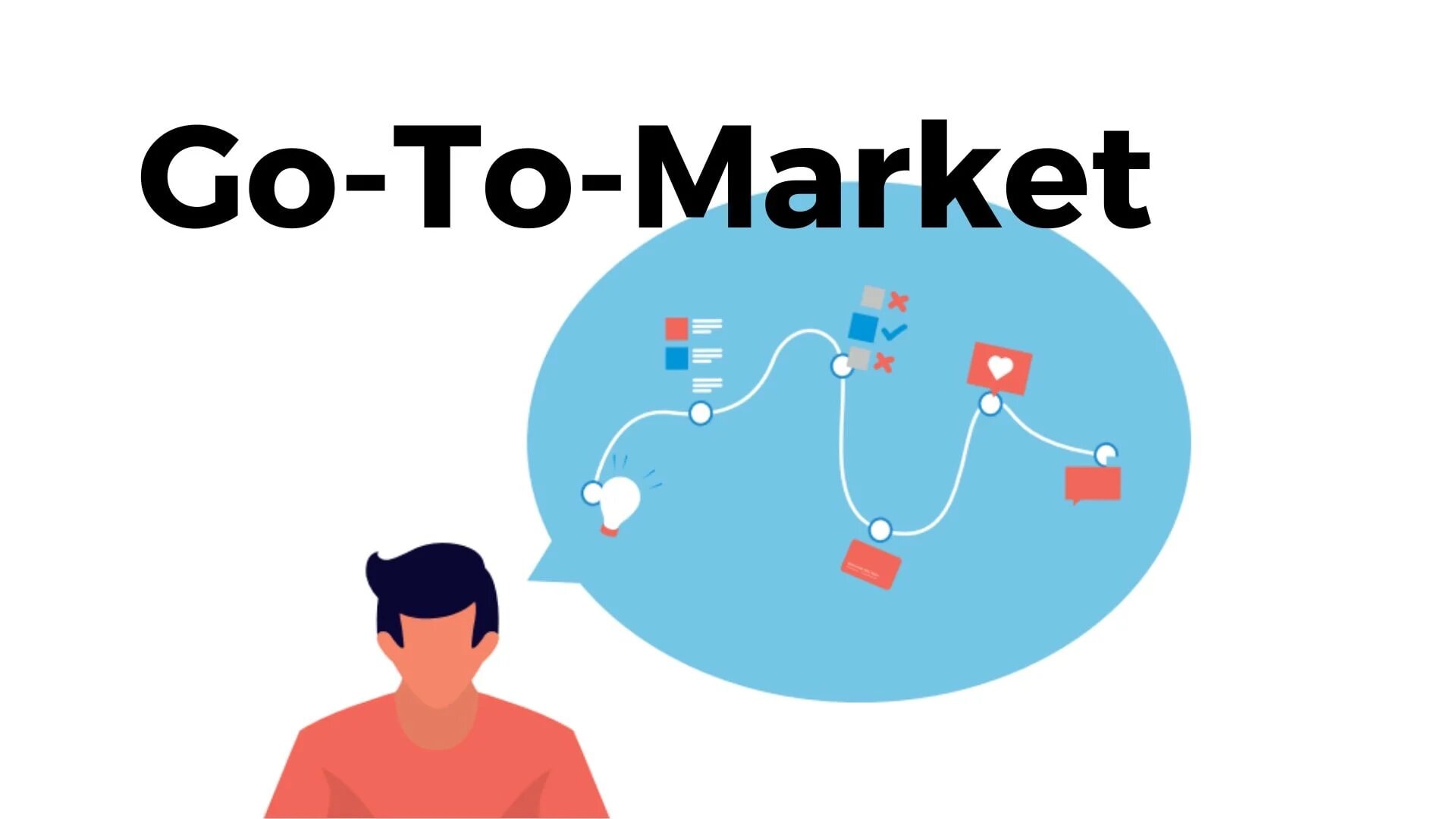
A strong go to market strategy is not judged by activity. It is judged by alignment between customer acquisition, revenue quality, and long-term durability. These key performance indicators reveal whether execution supports business objectives and sustained revenue growth.
These metrics fall into three layers: acquisition efficiency, revenue quality, and durability.
1. Customer Acquisition Cost by Channel
Customer acquisition cost measures how much you spend to convert prospective customers into paying users across marketing and sales channels. It connects marketing efforts directly to economic reality.
What It Reveals
- Whether a marketing channel supports scalable customer acquisition
- Whether pricing strategy can sustain acquisition without eroding margin
- Whether marketing costs align with long-term customer lifetime value
If CAC rises without improved revenue growth, the market strategy needs refinement.
2. Conversion Rates Across the Buyer’s Journey
Conversion rates show how potential customers move from awareness to decision. This metric evaluates friction across the buyer’s journey and the clarity of your value proposition.
What It Reveals
- Where the target audience loses intent
- Whether marketing messaging addresses real pain points
- Whether the sales process aligns with customer insights
Low conversion often signals weak market research or poor alignment between marketing and sales teams.
3. Revenue Contribution by Distribution Channels
Revenue contribution measures which distribution channels generate meaningful economic impact, not just traffic or leads.
What It Reveals
- Which channels strengthen competitive advantage
- Which channels support long-term market share growth
- Whether strategic partnerships improve revenue quality
Strong revenue concentration in one channel may indicate vulnerability inside an existing market.
4. Sales Cycle Length and Deal Velocity
Sales cycle length measures how quickly target customers convert. Deal velocity reflects how efficiently the sales team moves opportunities through defined stages.
What It Reveals
- Whether the sales strategy fits deal complexity
- Whether a dedicated sales team is supported by effective sales enablement
- Whether conducting market research has clarified decision triggers
Long cycles without higher win rates suggest misalignment in the go to market process.
5. Win Rate by Buyer Personas and Customer Segments
Win rate by buyer personas evaluates which customer segments convert consistently. It refines your understanding of the ideal customers within your target market.
What It Reveals
- Which personas align with product market fit
- Which segments consume effort without predictable outcomes
- Whether your go to market plan matches real market demand
This metric strengthens customer analysis and sharpens focus inside a new market.
6. Customer Lifetime Value to CAC Ratio
The customer lifetime value to CAC ratio measures whether growth is economically sustainable. It connects acquisition spending to long-term profitability.
What It Reveals
- Whether revenue growth is durable
- Whether pricing strategy supports expansion
- Whether the customer base delivers predictable monthly recurring revenue
A healthy ratio signals a solid gtm strategy built on structural strength.
7. Retention, Expansion, and Churn Metrics
Retention and expansion show whether customers stay because of value delivered. Churn reveals gaps in customer experience or weak product market fit.
What It Reveals
- Whether customer satisfaction drives loyalty
- Whether expansion supports market share growth
- Whether the existing product meets expectations
Example
A company lowers customer acquisition cost through search engine optimization and social media marketing. New users increase, yet retention declines. Market analysis shows the target audience attracted by low pricing differs from ideal customers.
The adjustment shifts focus toward segments that support customer lifetime value and revenue stability.
Measurement replaces assumptions with verified signals. Once these success metrics are visible across marketing and sales teams, the next step is deciding how to respond when the strategy does not perform as expected.
Early Signs Your GTM Strategy Is Not Working
A go to market plan proves itself in execution, not intention. The first signals appear during a product launch, inside sales conversations, and across the buyer’s journey. When momentum feels uneven, the pattern usually reflects alignment gaps, not effort.
These early signs show where a strong gtm strategy needs structural correction.
1. Attention Increases, Conversions Do Not
Marketing efforts raise brand visibility. Traffic improves through search engine optimization and social media marketing yet customer acquisition remains flat.
What This Reveals
- The value proposition does not clearly address core pain points
- Marketing messaging attracts a broad target audience, not ideal customers
- Buyer personas are defined without deep customer analysis
- Competitive pricing generates curiosity without commitment
Example
A company enters a new market and drives strong reach during product launch week. Prospective customers download guides, but few move forward. Customer insights show decision makers require clearer proof of outcomes.
Attention without conversion signals positioning drift.
2. Sales Activity Expands, Revenue Growth Slows
The dedicated sales team increases outreach. The sales force fills the pipeline. Yet revenue growth remains inconsistent.
What This Reveals
- The sales process lacks disciplined qualification
- Common sales strategies are applied across incompatible customer segments
- Sales enablement materials do not reflect current market data
- The go to market process prioritizes volume over fit
In enterprise settings or a field sales model, unclear deal stages often delay progress and weaken predictability.
Activity must convert into measurable movement.
3. Customer Acquisition Rises, Lifetime Value Stalls
New accounts increase, but customer lifetime value does not improve. Marketing costs climb without strengthening the customer base.
What This Reveals
- Product market fit remains partial
- Conducting market research focused on entry, not retention
- The existing product does not fully support customer experience
- Competitive analysis underestimated evolving market demand
A successful product launch creates momentum. A durable business model sustains it.
4. Retention Varies Across Customer Segments
Early adoption appears strong, yet expansion patterns differ sharply. Customer satisfaction fluctuates between segments.
What This Reveals
- Customer segments were grouped too broadly
- Strategic partnerships introduce misaligned buyers
- The go to market plan overlooked onboarding milestones
- Business objectives are not tied to retention success metrics
Example
A company sees rapid growth in market share after launch. Within ninety days, churn rises among smaller accounts. Customer feedback highlights unclear onboarding value. Refining early milestones stabilizes monthly recurring revenue.
Retention exposes structural truth.
5. Channels Compete Instead of Coordinate
Sales channels and marketing channels operate independently. The marketing strategy includes awareness tactics, while the sales team focuses on closing short-term deals.
What This Reveals
- The comprehensive plan lacks unified business objectives
- Distribution channels are optimized separately from the sales process
- Customer insights are not shared across teams
- Market share gains do not align with long-term positioning
Alignment across marketing and sales teams protects momentum.
Early signals do not predict failure. They clarify where correction strengthens performance. Once these patterns are visible, the next step is measuring them through defined key performance indicators that guide disciplined improvement.
Tips to Turn Your GTM Strategy Into a Repeatable Growth System
A repeatable system depends on coordination between sales and marketing teams, supported by a clear marketing plan, consistent and focused marketing efforts. Strong collaboration helps raise brand awareness without chaos.
What “Repeatable” Looks Like in Practice
Repeatable growth means outcomes can be explained, measured, and improved without changing the entire playbook each cycle.
- One shared view of the target audience and target customers
- One source of truth for positioning and marketing messaging
- One operating rhythm for decisions across marketing and sales teams
How to Build a System Teams Can Run Every Month
A system works when it replaces handoffs with shared rules.
- Build a marketing plan that maps efforts to stages, not channels
- Define what marketing efforts must produce, leads, pipeline, or revenue
- Use content marketing to earn trust before asking for a call
- Use search engine optimization to capture intent that already exists
- Use social media marketing to test angles and objections quickly
- Assign ownership so the marketing team and sales team never compete for credit
How to Keep Sales and Marketing in Sync
Coordination improves when both teams use the same signals and language. To unify buyer context across revenue systems and translate signals into repeatable plays, many teams implement an AI GTM context and intelligence layer that connects data foundations, guides execution, and documents assumptions.
- Shared definitions for qualified leads and sales-ready accounts
- Shared feedback loops based on customer feedback and call notes
- Shared reviews that connect metrics to decisions, not dashboards
Example
A team uses one weekly meeting to review channel performance and objections. Marketing adjusts content marketing and search engine optimization based on what sales hears. Sales updates messaging based on what converts.
When the system is this clear, the final layer becomes easier, answering the specific questions people still have after applying a go to market strategy in real teams.
FAQs
1. How Does Competitive Pricing Influence Long-Term GTM Success?
Competitive pricing shapes perception before value is proven. In crowded markets, buyers compare alternatives quickly. Pricing must reflect positioning, not just affordability. When aligned with your value proposition, it strengthens trust and protects margin while supporting revenue growth.
2. When Should a Field Sales Model Be Part of Your Strategy?
A field sales model makes sense when deal size justifies in-person relationship building. Enterprise contracts, complex approvals, and regulated industries often benefit from this approach. It requires structured sales enablement, clear qualification rules, and strong coordination across the sales force.
3. How Often Should You Revisit Your Go To Market Plan?
A go to market plan should be reviewed at defined intervals, typically quarterly or after major shifts in market demand. Structured reviews help ensure alignment between customer insights, distribution channels, and evolving buyer behavior without reacting impulsively to short-term fluctuations.
4. How Can a GTM Strategy Strengthen Competitive Advantage Over Time?
A durable strategy builds competitive advantage through consistent positioning, clear differentiation, and disciplined execution. Over time, alignment between messaging, product experience, and customer expectations compounds trust and protects market share.
5. How Do You Expand Your Customer Base Without Diluting Focus?
Expanding the customer base requires disciplined segmentation. Growth should prioritize adjacent customer segments that share similar pain points and value perception. Expansion works best when supported by market research and reinforced by consistent marketing messaging.
Conclusion
A go to market strategy lasts when it reflects how the business model creates value and how customers actually decide to buy. Execution strengthens when assumptions are tested early, metrics guide decisions, and teams operate with shared clarity.
Review your alignment, confirm your signals, and refine your system before scaling further. Durability comes from disciplined adjustments, not louder launches.