.png)

.svg)
.svg)
.svg)
Your product can be perfect, but a single misstep on a product launch can cost thousands in lost momentum and missed customers.
Teams often overlook timing, customer feedback, or coordinated execution, turning months of work into wasted opportunity.
Understanding where most launches fail and how to align every step with your market, your team, and your audience ensures your product gains traction and impact from day one.
Where Most Product Launches Go Wrong?

Most launches lose momentum before customers ever notice. The issue is rarely effort, it is how decisions stack up across research, positioning, execution, and measurement inside the product launch process.
A successful product launch depends on clarity early, consistency during launch week, and discipline after the official launch. When any of these slip, traction fades fast.
1. Unclear Target Audience When Launching a New Product
A launch weakens when teams speak to a broad target market instead of one defined group with urgency.
What Breaks
- Messaging tries to appeal to multiple target customers at once.
- Market research is skipped or treated as a checkbox.
- The customer journey is assumed instead of mapped.
Why It Matters
Without a clear audience, marketing campaigns attract attention without intent, and sales conversations stall before value is understood.
Example
A productivity tool markets to “remote teams,” but existing customers are mostly agencies with billable workflows. The launch misses that leverage point.
2. Weak Product Positioning
Positioning fails when value sounds familiar. Buyers struggle to see why this product exists now.
Example
“AI for teams” blends into noise. “One workspace that replaces weekly status meetings” creates contrast and recall.
3. Treating the Launch as an Announcement
Announcements aim to generate buzz. A successful launch relies on structure and sequencing.
Where Teams Drift
- Marketing collateral is created before messaging is validated.
- Press releases go out before buyers recognize the value.
- The launch date becomes the finish line instead of the starting point.
Example
A startup plans a full scale launch on social media, but skips soft launch testing. Feedback arrives after assets are locked.
4. No Clear Problem–Solution Fit
Features alone do not move adoption. Buyers commit when the problem feels personal and unresolved.
5. Overreliance on Hype Instead of Strategy
Hype can create attention. It cannot replace a clear product launch strategy.
What Strategy Anchors
- A focused go to market narrative.
- A marketing plan tied to buyer intent.
- A clear product launch plan with ownership and timing.
Example
Paid ads spike website traffic, but adoption stays flat because the message never changes after launch day.
6. Poor Alignment Between Product, Marketing, and Sales
Misalignment shows up when teams operate in parallel instead of as a coordinated effort.
Where Gaps Appear
- Sales collateral promises outcomes the product team did not plan for.
- Marketing materials describe benefits support teams cannot reinforce.
- The customer support department is unprepared for onboarding questions.
Example
Marketing sells speed, sales sells customization, and support fields confusion. Alignment keeps every team on the same page.
7. Choosing Channels Without Buyer Intent
Channels should follow behavior, not trends.
Strong Channel Logic
- Search where buyers show intent.
- Communities where questions already surface.
- Partnerships that shorten trust cycles in a sales conversation.
Weak Channel Logic
- Posting everywhere to feel active.
- Scaling paid ads before organic signals convert.
8. Measuring Vanity Metrics Instead of Real Adoption
Surface numbers hide weak outcomes. A successful launch is measured by use, not noise.
Example
Social media mentions rise, but early users never reach first value. The signal was visible, but ignored.
Understanding where launches break creates clarity. The next step is building a product launch strategy that removes these risks before execution begins.
Steps to Build a Product Launch Strategy That Sets You Up to Win
A successful product launch strategy starts with decisions that reduce uncertainty, not tasks that create activity. When the product team agrees on what the market is ready for, and why buyers should care now, execution becomes easier to coordinate and easier to repeat.
These steps turn launch planning into a clear product launch process that product development, marketing, and sales teams can run without confusion.
1. Define the Market Moment Before Defining the Product
Timing is a strategy lever. It shapes who pays attention, what they compare you to, and how fast they decide.
What to Clarify
- Conduct market research on what buyers are actively switching from, and what triggered the switch.
- Identify the market event, trend, or constraint that makes your offer feel timely.
- Define the simplest promise your product can own in this moment.
Example
A finance app launches “expense tracking.” It blends in. It reframes to “real-time tax-ready categorization,” then timing matches a seasonal need.
2. Set One Primary Launch Objective That Guides Every Decision
One objective creates focus. Multiple objectives create compromise.
What to Lock
- Choose one outcome that defines the launch, adoption, trials, revenue, or expansion.
- Tie the objective to how you will measure success, not how you will market it.
- Decide what you will not optimize for during launch week.
Why This Works
A single objective keeps the entire organization aligned when trade-offs appear.
3. Map the Buyer Journey You Want the Launch to Trigger
A launch should move people through a path, not into a pile of content.
What to Map
- The first touchpoint that earns attention.
- The proof that removes doubt.
- The moment value becomes obvious, and the action that follows.
Example
For a B2B tool, the journey can be demo request, proof case, trial, team rollout. For a consumer app, it can be install, first win, habit loop.
4. Build a Clear Go-To-Market Narrative Around Value, Not Features
Your go to market story should feel repeatable. If it changes per channel, the message is not ready.
What to Build
- A one-sentence value statement that stays consistent.
- Three proof points that show credibility, not claims.
- A short list of key features framed as outcomes.
Make It Usable
- Create assets that turn the narrative into clear launch materials, landing pages, and sales collateral.
- Keep language consistent across marketing materials and the sales team.
5. Design a Launch Timeline With Decision Gates, Not Just Dates
A timeline is useful when it forces decisions before commitments.
What Decision Gates Prevent
- Finalizing launch materials before messaging is tested.
- Scaling paid ads before conversion signals are stable.
- Locking a launch date before readiness is clear.
What to Include
- A checkpoint for message validation.
- A checkpoint for onboarding readiness.
- A checkpoint for launch channel readiness.
6. Prepare Internal Teams With a Single Source of Truth
When teams work from separate docs, launches drift.
What to Align
- One shared briefing that keeps everyone on the same page.
- A clear role map for the product manager, marketing lead, and sales lead.
- A readiness checklist for support and onboarding.
Readiness That Matters
- The customer support department needs answers for setup friction, pricing confusion, and early bugs.
- In app, messaging needs to match the promise customers saw before they signed up.
7. Plan Launch Distribution as a Sequence, Not a One-Day Push
Distribution works best when it builds trust in stages.
A Practical Sequence
- Pre launch education that frames the problem.
- A soft launch to early adopters for valuable feedback.
- A wider release to new customers once onboarding is smooth.
- A full scale launch when proof, messaging, and conversion are consistent.
Example
A SaaS team runs a soft launch to existing customers first, then uses the feedback to tighten onboarding, then expands to broader demand.
8. Lock Success Criteria and Review Cycles Before You Launch
Teams move faster when review cycles are designed upfront.
What to Lock
- Key performance indicators that track activation, retention, and revenue contribution.
- A schedule for daily checks during launch week, then weekly checks after.
- A clear post launch evaluation plan with owners and deadlines.
Keep It Repeatable
- Document what worked, what surprised you, and what should change next time.
- Treat post launch activities as continuous improvement, not cleanup.
Product Launch: What to Focus on at Each Stage
The steps above show the sequence. This table helps you see where focus matters most at each stage of a product launch.
These steps define the structure, but results depend on where that structure shows up. The next focus is choosing product launch channels that align with real buyer intent.
Choosing Product Launch Channels That Match Buyer Intent

Buyer intent shows up in patterns, what people search, who they trust, and how much proof they need before they act. The right channels do not create demand from scratch, they surface demand that already exists and move it toward a decision.
Channel selection also shapes your product’s success after launch. It decides whether you learn fast, collect feedback early, and protect customer satisfaction while scale increases.
1. Email Marketing
Email works when you already have attention, and you want to turn it into action.
Best Use
- Activate the existing user base with early access, upgrades, or new use cases.
- Segment by intent, not by vanity lists.
- Drive one clear action per message.
Example
A B2B tool invites active users to a new workflow, then tracks adoption by cohort instead of total clicks.
2. Organic Search
Search is intent made visible. It rewards clarity, not volume.
Best Use
- Build pages around the problems buyers already describe.
- Publish content that answers decision questions, not just awareness topics.
- Use comparison and use-case pages to meet mid and bottom funnel intent.
What Search Enables
- Stable discovery that compounds after launch.
- Clear signals on what people want, based on queries and behavior.
3. Sales Outreach
Outreach works when the sales team targets accounts with a clear reason to care now.
Best Use
- Use triggers, hiring, funding, tool changes, compliance shifts.
- Lead with the cost of delay, then the simplest proof.
- Keep the message consistent with the launch narrative.
Example
A security product targets teams migrating to cloud services, and ties outreach to a deadline-driven risk.
4. Product Hunt and Launch Platforms
These platforms reward clarity, story, and fast iteration.
Best Use
- Validate positioning with real reactions in public.
- Collect feedback from early adopters who enjoy trying new tools.
- Use comments as a roadmap input, not just social proof.
How to Protect Customer Satisfaction
- Set expectations clearly on what is stable, and what is still evolving.
- Route feedback to product development teams quickly, with owners.
5. Niche Communities
Communities convert when they already contain the question your product answers.
Best Use
- Join spaces where target users ask for recommendations.
- Share a specific solution, not a generic pitch.
- Offer templates, workflows, or examples people can apply.
Example
A project management tool shares a sprint planning template in a founder community, then earns demos from people who used it.
6. Paid Search and High-Intent Ads
Paid works best when you already know what message converts, and want controlled scale.
Best Use
- Target problem keywords and comparison terms with clear intent.
- Send traffic to one page built for one job.
- Use paid to validate, then to scale.
What to Watch
- Conversion quality, not just volume.
- The link between spend and customer satisfaction.
7. Partnerships and Integrations
Partnerships speed up trust. Integrations reduce friction and increase adoption.
Best Use
- Partner with platforms your buyers already use.
- Create joint workflows that make switching feel easier.
- Use integration data to collect feedback and improve onboarding.
Example
A CRM add-on integrates with Slack and email. The workflow reduces setup time, and improves activation without extra support load.
When channels match buyer intent, execution becomes simpler and learning becomes faster. The next step is using a product launch timeline to manage what happens after you go live, so momentum stays steady and measurable.
Product Launch Timeline: What Happens After You Go Live
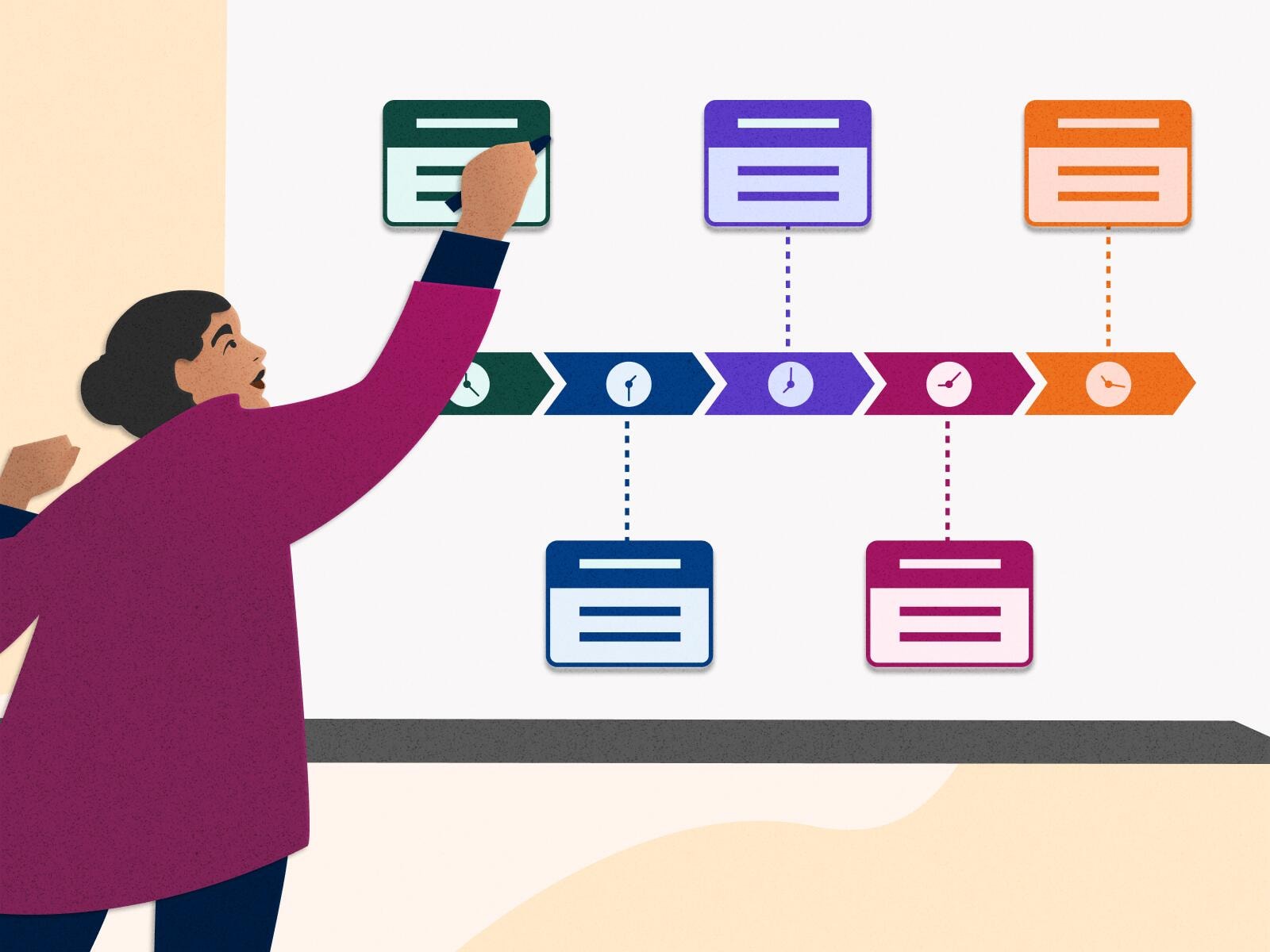
A launch moment is a handoff, not a finish line. The hours after you go live decide whether attention becomes usage, and whether usage becomes habit. A clear timeline keeps teams calm, fast, and aligned, even when volume spikes.
Goal
- Turn first interest into first value.
- Collect feedback that reveals friction early.
- Protect customer satisfaction while adoption grows.
Launch Day: The First 24 Hours
This window is about removing blockers, not adding new ideas.
What to Do
- Same Page: keep one live status doc for updates, owners, and decisions.
- Launch Materials: verify every link, promise, and CTA matches what users see in-product.
- In App Messaging: guide users to one first action that delivers value quickly.
- Customer Support Department: staff onboarding, billing, login, and setup pain points.
- Collect Feedback: capture objections, confusion, and drop-off moments in real time.
Example
A product sees high signups, but users stall at step two. The team updates onboarding copy within hours, and activation improves the same day.
Days 2–7: The First Week
This is where momentum becomes repeatable, or disappears. Your job is to tighten the path to value and keep the message consistent.
What to Do
- Post Launch Activities: run daily checks on drop-offs, support volume, and onboarding friction.
- Product Manager: prioritize fixes by impact on activation and retention.
- Valuable Feedback: separate blockers from feature requests, then solve blockers first.
- Product Development Teams: ship small improvements quickly, and document what changed.
- Measure Success: track activation, repeat use, and conversion quality, not just traffic.
Example
An app gets strong attention, but reviews repeat one specific issue. A mid-week fix stabilizes ratings before scale accelerates.
Weeks 2–4: Stabilize and Improve
By now you have enough signal to refine the system. This is where a launch becomes a playbook.
What to Do
- Post Launch Evaluation: review what worked, what broke, and what should repeat next time.
- Key Performance Indicators: confirm which KPIs predict retention and expansion.
- Market Research: reassess which segment is adopting fastest, and adjust targeting if needed.
- Continuous Improvement: update your product launch checklist based on real user behavior.
- Existing User Base: re-engage users who did not adopt, and remove friction holding them back.
Example
A feature launches broadly, but adoption spikes in one industry. The team tightens messaging for that segment, and conversions improve without extra spend.
A timeline like this protects focus after launch and builds learning into execution. The next section breaks down how top brands use controlled rhythm, proof, and iteration to make launches feel predictable instead of performative.
Top Brand Launch Approaches You Can Learn From
Top brands like Apple, Tesla, and Nike excel because they experiment with soft launches, product roadmaps, and innovative product concepts.
Learning a few tactics from these companies demonstrates how careful planning and strategic execution combine for remarkable outcomes. Observing these approaches helps teams understand how high-performing launches translate strategy into tangible, repeatable results.
1. Apple: Build Anticipation Through Secrecy And Teasers
Apple’s launches focus attention by controlling information flow and timing.
What They Do Well:
- Use a tightly planned product roadmap to pace announcements.
- Coordinate the product team and marketing team around a single reveal moment.
- Engage early adopters and existing customers through controlled previews.
2. Tesla: Use Limited Releases To Create Urgency And Hype
Tesla treats availability as a demand signal rather than a constraint.
What They Do Well:
- Roll out products in limited phases to create scarcity.
- Track pre launch signals like reservations and website traffic.
- Enable the sales team to convert inbound interest quickly.
3. Nike: Integrate Influencer Marketing With Story-Driven Campaigns
Nike anchors launches in narrative, not specifications. For a different approach to communication strategies, explore the 10 key advantages of email for effective communication.
What They Do Well:
- Align influencer marketing with product marketing storytelling.
- Highlight core features through athlete and creator voices.
- Reinforce visibility through social media mentions during launch week.
4. Google: Beta Launches To Gather Feedback And Refine Messaging
Google treats launch as a learning phase before scale.
What They Do Well:
- Use early adopters to gather customer feedback at scale.
- Update the product launch checklist based on real usage.
- Refine messaging through pre launch testing within the development process.
5. Amazon: Coordinate Multi-Channel Promotions For Maximum Reach
Amazon prioritizes synchronized execution across platforms.
What They Do Well:
- Activate distribution channels, paid ads, and social media channels together.
- Align marketing campaigns across the product team and marketing team.
- Engage both new customers and potential customers simultaneously.
6. Coca-Cola: Leverage Experiential Marketing To Create Buzz
Coca-Cola extends launches beyond screens into lived experiences.
What They Do Well:
- Use experiential marketing to create hype and emotional recall.
- Apply a comprehensive plan supported by a product launch template.
- Reach the target audience, early users, and existing customer base consistently.
These approaches show that strong launches rely on discipline, not theatrics. The real signal of success appears next, in how performance is measured once attention fades.
Measuring Product Launch Success Beyond Surface Metrics
A launch can look busy and still underperform. Real performance shows up in what users do after the first click, and what revenue quality looks like after the first week. The metrics below help teams measure success with signals tied to behavior, retention, and growth.
How to Read These Metrics
- Start with adoption and activation, then move to retention and revenue.
- Use trends and cohorts, not one-time totals.
- Pair numbers with feedback so the story stays honest.
1. Product Adoption Rate
Adoption rate shows whether the market accepted the offer, not whether people noticed it.
What to Track
- Adoption by segment, channel, and use case.
- Adoption within the existing user base vs new customers.
- Adoption velocity across launch week.
Example
Two channels drive equal signups, but one produces twice the activated users. Adoption should be credited to the channel that creates usage.
2. Activation and First-Value Metrics
Activation measures how quickly users reach the first moment where value feels real.
What to Define
- The single action that indicates first value.
- The time it takes to reach that action.
- The top drop-off step that blocks it.
What to Improve
- Remove steps that add friction.
- Use in app messaging to guide users to the first win.
3. Customer Retention After Launch
Retention reveals whether the product solves a problem worth returning for.
What to Track
- Day 7 and Day 30 retention by cohort.
- Retention differences across target customers and industries.
- Retention impact after quick fixes and onboarding changes.
Example
A product improves onboarding and activation rises, but retention stays flat. The issue is value depth, not setup.
4. Revenue Contribution From the Launch
Revenue is not just how much came in, it is how clean the revenue is.
What to Track
- Revenue from new customers vs expansions from existing customers.
- Conversion from trial to paid.
- Refund rates and churn in early cohorts.
What This Signals
Revenue quality often predicts product’s success better than raw volume.
5. Sales Cycle and Time-to-Close Impact
If the launch narrative is clear, deals move faster. Confusion adds time.
What to Track
- Time to close for launched offers vs previous periods.
- Stages where deals slow down.
- Objections the sales team hears repeatedly.
What to Adjust
- Tighten positioning and proof points.
- Update sales collateral to match real objections.
6. Customer Feedback and Usage Signals
Feedback explains why metrics move. Usage signals show where the product earns trust.
What to Capture
- Patterns from support tickets and onboarding calls.
- Repeated blockers that harm customer satisfaction.
- What users describe as the most valuable feedback, not the loudest request.
Example
Users ask for more features, but usage data shows one core workflow drives retention. The roadmap should protect that workflow first.
7. Expansion, Upsell, and Cross-Sell Signals
Expansion signals product value that deepens over time, not just value at signup.
What to Track
- Seats added, usage spread, and feature adoption across accounts.
- Cross-sell attachment rates from launch cohorts.
- Expansion timing, how soon accounts grow after activation.
What This Reveals
Expansion is often the cleanest proof that a successful launch created lasting demand.
When these signals are measured together, teams can see what is working, what is fragile, and what needs correction. The next step is knowing how to recover and optimize when a launch falls short, without losing trust or momentum.
How to Recover and Optimize When a Product Launch Falls Short?
A weak launch result is still usable signal. Recovery works when teams treat the first outcome as data, then tighten the system that drives adoption. The goal is not to relaunch louder, it is to relaunch smarter.
1. Diagnose the Bottleneck Before You Touch the Strategy
Most launches do not fail everywhere. They fail at one step in the journey.
What to Check First
- Where drop-offs spike, landing page, signup, onboarding, activation.
- Which segment is converting, and which segment is bouncing.
- Whether the promise matches what users experience.
Example
Traffic looks healthy, but activation is low. The bottleneck is not demand, it is first value.
2. Tighten the Promise, Then Rebuild the Page Around It
When conversion is weak, the first fix is often positioning, not pricing.
What to Adjust
- One sentence that states the outcome clearly.
- Proof that feels specific, numbers, workflow impact, or time saved.
- A tighter list of core features tied to the outcome.
What to Update
- Marketing materials: align headlines, emails, ads, and landing pages to the same promise.
- Marketing collateral: revise decks and one-pagers so they match the new narrative.
3. Use Support and Sales Signals as Your Fastest Research Loop
Your best insight often sits in conversations, not dashboards.
What to Pull From the Front Line
- The top three objections the sales team hears repeatedly.
- The top three friction points the customer support department handles daily.
- Questions that show confusion about setup, pricing, or expected results.
Turn Signal Into Action
- Update onboarding steps and FAQs.
- Add clarifying in app messaging at the exact friction point.
4. Run a Targeted Post Launch Evaluation, Then Choose a Single Fix
Evaluation becomes useful when it ends in a decision.
What a Clean Review Includes
- Key performance indicators: activation, retention, and conversion quality by cohort.
- A list of the highest-impact blockers found through collect feedback loops.
- One prioritized change that can be shipped fast.
Example
A team sees strong retention among agencies, weak retention among ecommerce brands. They tighten targeting, then stop chasing the wrong audience.
5. Re-Launch in Phases Instead of Going Full Scale Again
Smart relaunches feel controlled. They rebuild proof before they rebuild volume.
A Practical Recovery Sequence
- A soft launch to a smaller segment that already shows intent.
- A short cycle to gather feedback and validate onboarding changes.
- A broader push once activation and customer satisfaction stabilize.
- A full scale launch only after conversion holds across channels.
6. Treat Recovery as Continuous Improvement, Not a One-Time Patch
Launches improve when learning is recorded and reused.
What to Systemize
- Update your product launch checklist with what you learned.
- Store messaging, assets, and objections in a shared hub so teams stay on the same page.
- Document what changed, why it changed, and what impact it had.
A launch can start quietly and still become strong when the process is refined with discipline. The next section pulls these lessons into a product launch framework teams can apply to every future launch.
A Product Launch Framework Teams Can Reuse for Future Launches
A repeatable launch framework makes outcomes predictable. It reduces last-minute decisions, keeps teams on the same page, and turns every launch into learning you can reuse. The goal is a system that works for new products, new features, and new markets without resetting from scratch.
What This Framework Protects
- Clarity on who the launch is for and why it matters now.
- Coordination across the product team, marketing, sales, and support.
- A clean loop for feedback, iteration, and continuous improvement.
1. Market Clarity
Strong launches begin with truth, not assumptions.
What to Lock
- Target market: one primary segment, one secondary segment to test.
- Conduct market research: switching triggers, competitor alternatives, and urgency drivers.
- Target customers: the job-to-be-done, and the moment they decide to act.
Example
A workflow tool wins faster when it targets agencies managing client approvals, not general teams managing tasks.
2. Narrative and Value
A narrative works when every team can repeat it without improvising.
What to Build
- A one-sentence promise tied to an outcome.
- A short proof stack, data, credibility, or workflow impact.
- Core features framed as benefits, not a catalog.
Make It Executable
- Create assets: landing page copy, email sequence, demo script, and support macros.
- Launch materials: one central folder with final versions, not drafts scattered across chats.
3. Readiness and Ownership
A framework fails when ownership is unclear.
What to Assign
- Product manager: decision owner for scope, trade-offs, and release readiness.
- Product development teams: owners for critical fixes and post-launch iteration.
- Customer support department: owners for onboarding readiness and issue routing.
- One shared doc that keeps the entire organization aligned during launch week.
What to Prepare
- In app messaging: first action guidance, upgrade prompts, and release notes that match the promise.
- A simple escalation path for launch day issues.
4. Distribution and Phasing
Distribution is most reliable when it is staged.
A Repeatable Sequence
- Pre launch education that frames the problem and builds intent.
- Soft launch to early adopters and the existing user base.
- A public push through the best-fit distribution channels.
- A full scale launch only when activation and retention signals hold.
Example
A SaaS feature ships to power users first, then expands once support load stays stable and usage patterns look healthy.
5. Measurement and Learning Loops
A framework becomes reusable when measurement is designed upfront.
What to Measure
- Activation and adoption by cohort.
- Revenue contribution, retention, and expansion.
- Customer satisfaction signals from support and product usage.
What to Systemize
- Post launch evaluation: what worked, what surprised you, and what you will repeat.
- A simple playbook update that captures decisions, not just outcomes.
- A product launch template that includes the checklist, messaging, and KPI dashboard.
This framework turns launch work into repeatable execution. From here, the final step is using it as a living checklist, so every launch leaves behind assets, insight, and a sharper process for the next release.
FAQs
1. How Does Post Launch Evaluation Help Improve the Next Release?
Post launch evaluation turns outcomes into usable insight. It helps teams identify which assumptions held, which broke, and what should change before the next iteration. When documented properly, this review prevents repeated mistakes and sharpens future execution.
2. Why Is Coordinated Effort Harder to Maintain After Launch?
After launch, attention fragments across fixes, feedback, and new priorities. Without shared ownership and clear follow-through, teams drift into parallel work. Sustaining coordinated effort requires clear decision ownership and a single feedback loop that keeps everyone aligned.
3. What Should Teams Focus on During the Post Launch Phase?
The post launch phase should prioritize stability, learning, and refinement. Teams benefit most when they monitor adoption patterns, onboarding friction, and early usage signals instead of shifting immediately to new feature work.
4. How Does Continuous Improvement Prevent Future Launch Failures?
Continuous improvement ensures that learnings compound instead of resetting. When teams refine messaging, onboarding, and targeting based on real behavior, each launch becomes more predictable and less reactive over time.
5. When Should You Create Assets Relative to the Launch Date?
Create assets only after messaging and positioning are validated. Locking assets too early increases rework and misalignment. Tying asset creation closer to the launch date ensures accuracy, relevance, and consistency across channels.
Conclusion
A product launch works best when it is treated as a system, not a moment. The teams that get consistent results are the ones that make deliberate choices early, execute with discipline, and stay curious after release instead of rushing ahead.
That approach creates learning, alignment, and momentum that compound over time.
As you plan your next product launch, focus on building clarity into every decision, from who you are serving to how you measure progress. When execution is thoughtful and learning is continuous, success stops feeling uncertain and starts feeling repeatable.