.png)

.svg)
.svg)
.svg)
The first time someone asks why an email campaign failed, theory stops helping. You are expected to explain the numbers, the choices, and what should change next.
That is where learning separates into two paths. One teaches tools and checklists. The other builds judgment you can defend in real campaigns and real roles.
These 10 email marketing course options are chosen for one reason only. They help you build skills that hold up when performance, accountability, and careers are on the line.
Platforms Offering Free And Paid Email Marketing Courses
Email marketing platforms vary widely in how they deliver a marketing course, course content, and access to hands on experience. Some focus on learning email marketing at a conceptual level, while others emphasize applied practice.
This section establishes how platforms differ in structure and depth so readers can evaluate learning environments before choosing one.
Free Courses
1. HubSpot Academy
HubSpot Academy focuses on practical learning email marketing through real-world business scenarios. Its courses balance fundamentals with applied thinking, making concepts easier to retain and use.
- Best feature: Scenario-based lessons tied to real campaign decisions
- Who it suits most: Beginners and small business owners building a solid foundation
- Website: HubSpot Academy
2. Google Digital Garage
Google Digital Garage introduces email marketing as part of a broader marketing course framework. The content is structured, accessible, and designed to build confidence through clear explanations.
- Best feature: Clear fundamentals with global certification recognition
- Who it suits most: Absolute beginners and career explorers
- Website: Google Digital Garage
3. Mailchimp Academy
Mailchimp Academy teaches email marketing inside an actual campaign environment. Learners see how concepts translate directly into execution using a live platform.
- Best feature: Tool-based learning tied to real email workflows
- Who it suits most: Learners who want hands on experience quickly
- Website: Mailchimp Academy
4. Salesforce Trailhead

Salesforce Trailhead frames email marketing through customer journeys and CRM logic. It connects messaging decisions to long-term relationship building.
- Best feature: Interactive modules with applied business context
- Who it suits most: Professionals interested in enterprise or CRM-driven marketing
- Website: Salesforce Trailhead
5. Coursera (Free Access Courses)
Coursera offers university-backed content that explains email marketing concepts with academic clarity. Many courses allow free access to learning material without certification.
- Best feature: Structured learning from recognized institutions
- Who it suits most: Learners who prefer theory-backed explanations
- Website: Coursera
Paid Courses
1. Udemy

Udemy provides flexible, instructor-led courses covering everything from basics to advanced execution. Course quality varies, but strong instructors focus on real campaign skills.
- Best feature: Wide range of specialized topics and price flexibility
- Who it suits most: Learners seeking specific skills at their own pace
- Website: Udemy
2. Coursera (Paid Certificates)
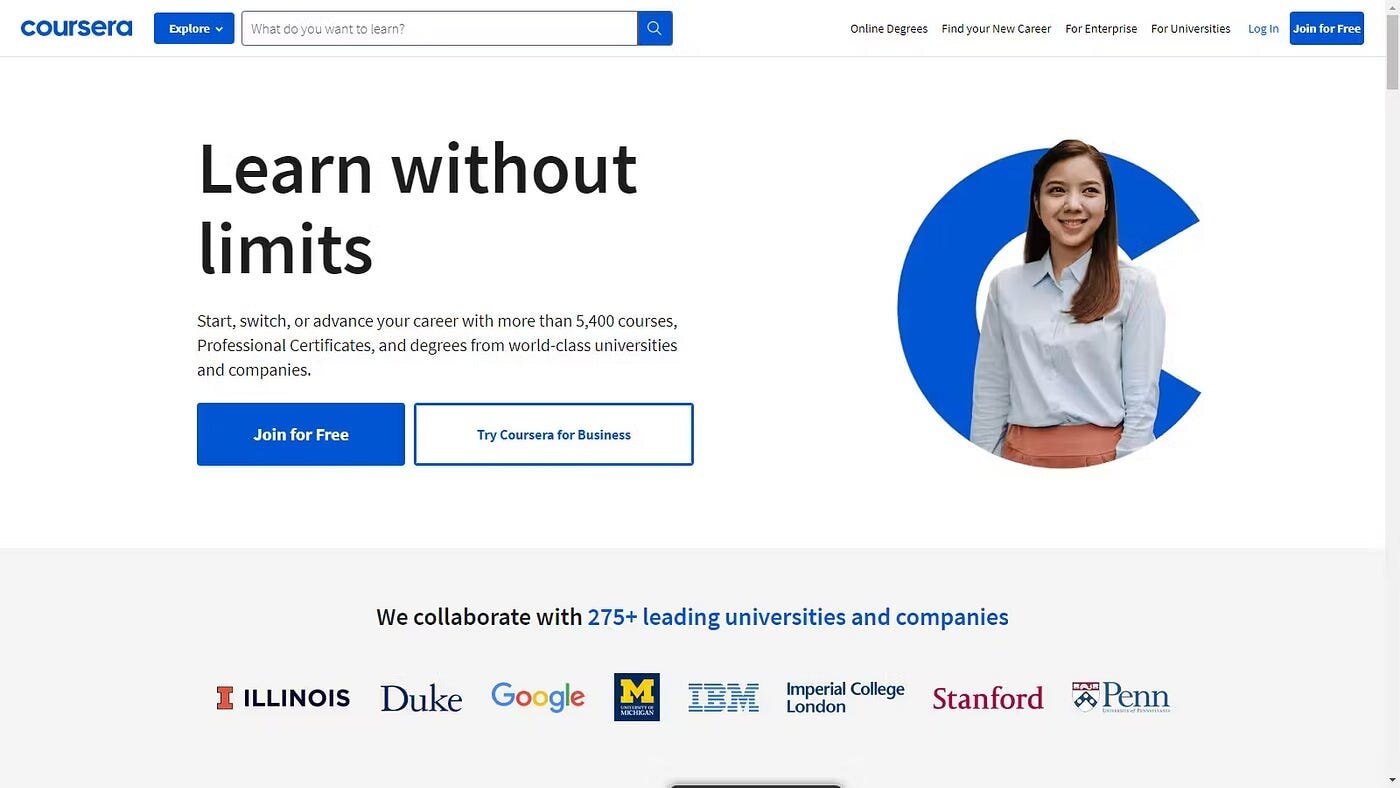
Paid Coursera programs go deeper into strategy, analytics, and structured assessment. Certification adds professional credibility to the learning.
- Best feature: Depth combined with recognized certification
- Who it suits most: Career switchers and professionals building credentials
- Website: Coursera
3. LinkedIn Learning
LinkedIn Learning focuses on practical business skills with short, focused lessons. Courses often align closely with workplace expectations.
- Best feature: Role-aligned, business-focused course structure
- Who it suits most: Working professionals and managers
- Website: LinkedIn Learning
4. CXL
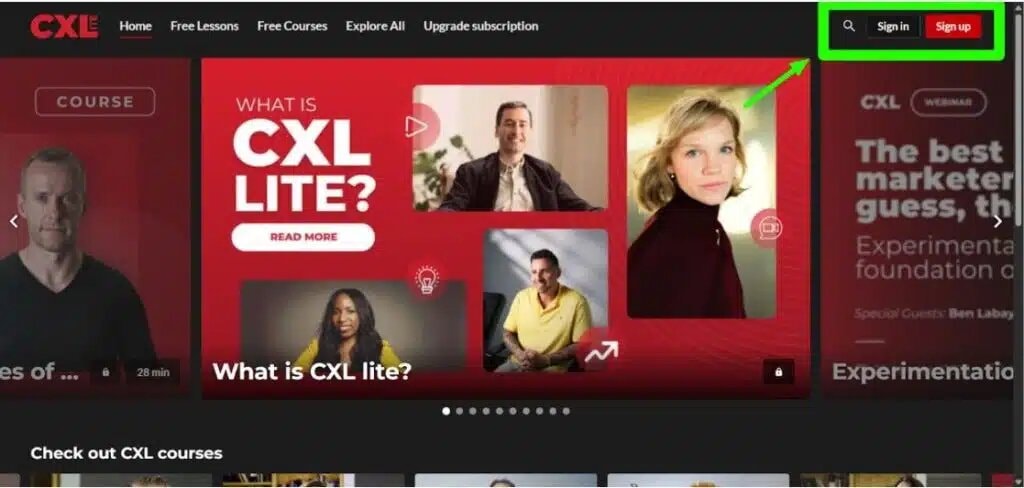
CXL delivers advanced, research-backed training focused on performance and optimization. Content assumes prior knowledge and pushes strategic thinking.
- Best feature: Deep focus on conversion and experimentation
- Who it suits most: Experienced marketers aiming for email marketing mastery
- Website: CXL
5. Skillshare

Skillshare emphasizes creative execution and experimentation through short, project-driven lessons.
- Best feature: Hands-on, project-based learning format
- Who it suits most: Creators and marketers who learn by doing
- Website: Skillshare
Email Marketing Courses: A Side-by-Side Comparison
The value of a platform is not defined by whether it is free or paid, it is defined by how well it turns course content into usable judgment and hands on experience. When structure, depth, and learning style align, progress becomes predictable rather than accidental.
With those differences clear, the next step is understanding why free email marketing courses are often misunderstood, and how expectations shape the learning experience from the start.
Why Free Email Marketing Courses Are Often Misjudged by Beginners
Free email marketing courses are often misunderstood because beginners misjudge what is typically covered, how much knowledge is required, and where to place focus early on. Many expect full mastery rather than foundational clarity.
What Beginners Usually Expect
Beginners often treat a free course like a shortcut to results. They expect to finish a few lessons and immediately produce strong campaigns, without realizing that skill builds through repetition and decision-making.
What Free Courses Usually Deliver
- Structured basics, terms, concepts, and a clean overview of the system
- Guided exposure, examples that show how campaigns are built and measured
- Early competence, enough clarity to understand what good looks like
- Direction, a clearer sense of what to learn next and why it matters
Example
A learner completes a free certification, then struggles to write a persuasive email. The course taught the framework, but confidence grows only after drafting, testing, and revising real messages.
Once expectations are set, comparing free and paid courses becomes a practical decision about depth, support, and the kind of learning environment you need.
Free vs Paid Email Marketing Courses: What Actually Changes
Free and paid email marketing courses differ in practices, strategies, and how deeply they approach optimization. While both aim to optimize understanding, they serve different learning stages and outcomes.
Understanding these differences helps learners align course choice with their current skill level and goals. Free courses build a foundation, while paid programs push mastery and applied experience. With clarity on these distinctions, the next step is exploring the key benefits of free email marketing courses.
Key Benefits of Free Email Marketing Courses
Free email marketing courses help learners understand email marketing fundamentals while offering exposure to effective email campaigns and clear marketing goals. They build skills and early success without risk, improving email communications and confidence. If you are interested in bulk email, you can learn how to send 5000 emails for free using various mailing tools and strategies.
1. Understanding Core Email Marketing Fundamentals
This covers the essential building blocks of email marketing, including how campaigns are structured and why timing, messaging, and audience targeting matter. Learners develop a solid foundation to plan and evaluate their first campaigns effectively.
2. Exposure To Real Email Marketing Campaign Examples
Seeing practical examples helps translate theory into action. Learners understand what effective emails look like, how copy and design affect engagement, and which practices drive measurable results.
3. Learning Basic Email Marketing Strategy Concepts
Courses introduce planning, segmentation, and audience targeting to create campaigns that reach the right people with the right message. This prepares learners to make informed strategic decisions in real-world settings.
4. Familiarity With Common Email Marketing Terminology
Learners gain fluency with industry terms, metrics, and platform features. Knowing terminology improves communication, reporting, and comprehension when using tools or collaborating with teams.
5. Low-Risk Entry Into Digital Marketing Skills
Free courses let learners experiment without financial risk, helping them explore strategies, test ideas, and build confidence. This approach encourages learning through practice rather than fear of mistakes.
6. Confidence To Progress Toward Advanced Courses
By practicing and applying fundamentals, learners gain assurance in their ability to execute campaigns. This confidence makes the transition to paid or advanced courses smoother and more productive.
7. Certification Or Proof Of Completion For Beginners
Completion badges or certificates provide recognition for effort and demonstrate early competence. They also serve as tangible proof of learning for portfolios or career development.
Example
Completing HubSpot’s free email marketing certification allows a beginner to draft a campaign using segmentation, copywriting, and testing concepts learned in the lessons, building tangible skills ready for application.
By understanding these benefits, learners can select a free course that matches their starting point and gain confidence to tackle more advanced content later.
Steps To Choose The Right Email Marketing Course For Your Goals
Choosing the right course depends on aligning email campaigns, marketing strategy, and campaign management with real needs.
1. Decide What Kind of Email Responsibility You Want to Handle
Email marketing roles differ sharply. Some focus on newsletters. Others manage lifecycle automation, promotions, or retention flows.
Choose a course based on whether you want to send informational emails, manage revenue-driving campaigns, or own customer journeys end to end.
2. Measure How Close You Are to Sending Your Own Campaigns
Email readiness depends on proximity to execution. If you have never scheduled an email or selected a recipient list, you need grounding. If you have sent emails but struggled with results, you need diagnostic skill.
Courses should match how close you already are to pressing “send.”
3. Choose Whether You Need Inbox Fundamentals or Campaign Judgment
Some courses explain how inboxes work. Others teach how to make trade-offs inside campaigns, such as timing versus frequency or personalization versus scale.
Inbox fundamentals help you avoid mistakes. Campaign judgment helps you improve performance.
4. Check If the Course Teaches Email-Specific Decision Logic
Strong email courses explain why subject lines fail, why audiences disengage, and why timing changes outcomes. Weak ones stop at templates and tools.
Look for programs that explain how inbox behavior shapes copy, cadence, and structure.
5. Examine How the Course Handles Segmentation and List Use
Segmentation is the backbone of effective email marketing. A career-ready course should teach how to choose who receives an email, not just how to design it.
If segmentation is treated as optional or advanced, the course is likely shallow.
6. Evaluate How Automation Is Taught and Controlled
Email automation is not just setup. It involves restraint, logic, and timing. Courses should teach when automation improves relevance and when it damages trust.
Avoid programs that treat automation as a volume tool rather than a relationship system.
7. Review How the Course Explains Metrics and Performance
Email metrics are often misunderstood. A strong course teaches what open rates, clicks, and conversions actually signal, and what they do not.
If performance is shown without explanation, the learning will not transfer to real campaigns.
8. Understand What the Certificate Signals in Email-Specific Terms
Some certificates prove familiarity with tools. Others prove understanding of email systems and decisions.
Check whether assessment includes campaign planning, segmentation logic, or performance analysis, not just completion.
9. Match Course Depth to the Type of Email Outcomes You’ll Own
Owning a weekly newsletter requires different depth than managing revenue emails or retention sequences.
Choose a course that matches the consequences of the emails you expect to manage after learning.
10. Prefer Courses That Push You to Send, Test, and Adjust Quickly
Email skill is built inside live or simulated inbox conditions. Courses that delay sending or testing slow learning.
The best programs push early application so feedback arrives while concepts are still fresh.
Example
A beginner choosing HubSpot Academy learns how inbox rules, segmentation, and campaign intent interact, then applies those principles immediately through guided email scenarios.
These steps separate email marketing learning from general digital marketing. With course selection clarified, the next focus is identifying the specific skills that signal readiness to handle real email responsibility..
What Skills You Should Have After Completing an Email Marketing Course
Finishing an email marketing course should leave you with usable skills, not just familiarity with terms. You should be able to plan, write, send, and improve emails that communicate directly to a wide audience while still feeling relevant enough to engage.
1. Campaign Planning Skills
A career-ready learner can connect direct marketing goals to campaign structure, then choose the right message and timing without guesswork.
You should be able to:
- Define the campaign objective, awareness, nurture, retention, or sales, and align it with marketing goals.
- Build a simple campaign plan that explains audience, offer, timing, and next action.
- Create campaigns that support customer relationships instead of short-term spikes.
Example
You plan a three-email launch sequence with a teaser, a product narrative, and a final reminder, each email serving a clear role.
2. Copywriting Skills That Drive Action
Completing a course should improve how you write, not how many templates you collect. This includes crafting compelling subject lines and focused email copy.
You should be able to:
- Write subject lines that set clear expectations and invite opens.
- Write email body with one main idea, clean flow, and a single action.
- Use effective communication principles that make messages easy to scan and understand.
Example
You test two subject line variations and select the stronger option based on past email open rates for that segment.
3. Segmentation and List Management Skills
Email effectiveness depends on who receives the message. A career-ready marketer understands how to segment and protect list quality.
You should be able to:
- Segment audiences based on behavior, interest, or stage.
- Use opt in forms correctly to grow lists with intent.
- Maintain list hygiene to support higher engagement over time.
Example
You send a reactivation email only to subscribers who have not engaged in 60 days instead of emailing your full list.
4. Automation Skills for Practical Workflows
Email automation supports consistency and relevance when used with restraint. A job-ready learner can build simple systems that scale without damaging trust.
You should be able to:
- Build a welcome sequence that introduces value and sets expectations.
- Use triggers and delays that reflect subscriber behavior.
- Align automation with the customer journey instead of fixed schedules.
Example
A welcome sequence adapts based on whether a subscriber clicks educational content or product links.
5. Deliverability and Sender Reputation Skills
Professional email marketing includes protecting inbox access. A course should prepare you to maintain a positive sender reputation through responsible practices.
You should be able to:
- Send to engaged segments to protect deliverability.
- Understand how frequency and list quality affect inbox placement.
- Adjust sending behavior based on engagement signals.
Example
You pause promotional sends to inactive users, stabilizing email performance and improving conversion rates.
6. Measurement and Optimization Skills
Skill shows in how results are interpreted and improved. You should be able to explain what changed and why.
You should be able to:
- Track email open rates, click through rates, and conversion rates.
- Diagnose whether issues stem from subject lines, audience choice, or message clarity.
- Improve impactful campaigns through small, deliberate tests.
Example
When clicks hold steady but sales drop, you review landing page alignment rather than rewriting the email.
7. Professional Communication and Campaign Management Skills
Email marketing rarely works in isolation. Course completion should improve how you explain decisions and coordinate work.
You should be able to:
- Explain campaign choices clearly to teammates or clients.
- Present results with context, not just numbers.
- Manage campaign management responsibilities alongside other channels without losing focus.
Example
In a review meeting, you explain why frequency was reduced for one segment to protect engagement.
These skills mark the point where learning turns into capability, and the next section examines the common mistakes that prevent capable learners from translating knowledge into consistent execution.
Common Mistakes Beginners Make When Learning Email Marketing
Beginners often stumble by optimizing emails without context, misunderstanding email subscribers, or losing focus on potential customers. These missteps weaken learning outcomes before campaigns even begin.
This section identifies behavior-level mistakes that slow progress and explains why correcting them early changes how effectively knowledge turns into execution.
1. Assuming An Email Marketing Course Will Instantly Deliver Results
Many beginners expect immediate mastery, but campaigns require judgment, practice, and iterative testing. Understanding that skill growth takes time builds patience and sets realistic expectations.
2. Consuming Course Content Without Applying It Practically
Reading or watching lessons alone does not develop ability. Applying lessons in exercises, drafts, or mock campaigns solidifies learning and reinforces skill retention.
3. Treating Email Marketing As A Side Skill Instead Of A System
Email marketing is interconnected with strategy, audience, and messaging. Treating it as an isolated task limits effectiveness and prevents understanding broader campaign impacts.
4. Overlooking Audience Context While Learning Concepts
Ignoring audience behavior or needs leads to generic campaigns. Beginners must consider segmentation, preferences, and engagement patterns to create meaningful communication.
5. Misinterpreting Metrics Without Understanding Their Purpose
Open rates, click through rates, and conversions are meaningless without context. Misreading them can misguide decisions and slow improvement.
6. Ignoring Feedback Loops During The Learning Phase
Without review and iteration, mistakes repeat. Feedback, self-assessment, instructor input, or peer review, is essential to refine skills and build confidence.
7. Switching Courses Too Quickly Without Finishing One
Moving between courses too quickly interrupts learning before skills take hold. Email marketing ability develops through repetition, application, and review, not exposure to multiple syllabi.
8. Expecting Courses To Replace Real-World Experience
Courses provide structured guidance, but real campaigns reveal nuances and challenges not present in lessons. Practical application is essential to mastering email marketing.
Example
A beginner using Mailchimp completed multiple lessons but skipped live audience testing, resulting in low engagement despite following templates. Integrating even small experiments corrected the gap and reinforced learning.
Recognizing these mistakes and correcting them early ensures that learners gain confidence, apply knowledge effectively, and are ready for deeper skill-building in advanced courses.
Career And Business Opportunities After Learning Email Marketing
Email marketing skills translate into roles where control over communication, timing, and intent matters. Professionals who understand how to engage audiences directly can influence outcomes without relying entirely on paid reach or constant visibility.
Where Email Marketing Skills Create Real Impact
- Sales and Business Development
- Email marketing supports structured follow-up, lead nurturing, and deal momentum. Sales teams use campaigns to stay relevant between conversations and guide prospects through longer decision cycles.
- Marketing Roles
- Email gives marketers ownership over intent, not just traffic. Skills in campaign management, segmentation, and performance analysis allow marketers to connect content and offers directly to outcomes.
- Customer-Focused Functions
- Retention and engagement depend on relevance over time. Email skills help teams maintain and build relationships through timely updates, onboarding flows, and re-engagement efforts that scale without constant spend.
- Entrepreneurship and Small Businesses
- For owners, email becomes a compounding channel. It enables direct communication with customers, repeat engagement, and predictable promotion without depending on algorithms or rising acquisition costs.
Example
A small e-commerce brand hires a marketer who understands email automation and copywriting. By refining a welcome flow and post-purchase emails, repeat purchases increase by 30 percent within three months.
Email marketing rewards professionals who can combine strategy, writing, and judgment into consistent execution. These opportunities are real, but many learners struggle to reach them because of avoidable mistakes, which is where the next section focuses.
FAQs
1. How Does Email Communication Differ From Messaging On Social Media Or Chat Apps?
Email communication is owned, structured, and professional. Unlike social media or chat, it allows scheduled messages, segmentation, and measurable responses, giving marketers control over timing, content, and audience engagement. To learn more about the advantages of email, visit our detailed article.
2. How Long Does It Take To Create Campaigns Confidently After Learning Email Marketing?
With foundational training and practice, most learners can start building competent campaigns within 2–4 weeks, though mastery, including optimization, segmentation, and copywriting, typically takes 2–3 months of consistent application.
3. How Do Employers Or Clients Evaluate Skills Learned From The Best Email Marketing Courses?
Employers assess practical ability, including creating campaigns, using automation, segmenting audiences, writing clear copy, and analyzing performance metrics. Certificates are secondary; measurable results and applied knowledge carry the most weight.
4. Can Email Marketing Skills Be Applied Across Different Industries And Niches?
Yes, email marketing skills are transferable. Core practices like segmentation, messaging, automation, and conversion tracking work in e-commerce, SaaS, media, non-profits, B2B, and more, though messaging and metrics may vary by industry.
5. Is Email Marketing Still Relevant As Automation And AI Tools Become More Common?
Absolutely. Automation and AI enhance email efficiency, personalization, and targeting, but success still depends on human skills: strategy, copywriting, segmentation, and campaign planning. AI is a tool, not a replacement for expertise.
Conclusion
Choosing the right Email Marketing Course is the first step toward turning knowledge into measurable results.
By aligning your goals with course depth, hands-on practice, and strategic insight, you set yourself up to build skills that can be applied immediately in campaigns, business growth, or professional advancement.
With these ten options in mind, the next move is to select the course that fits your current level and objectives, so learning translates directly into career-ready performance.